What Mold Removal Actually Means
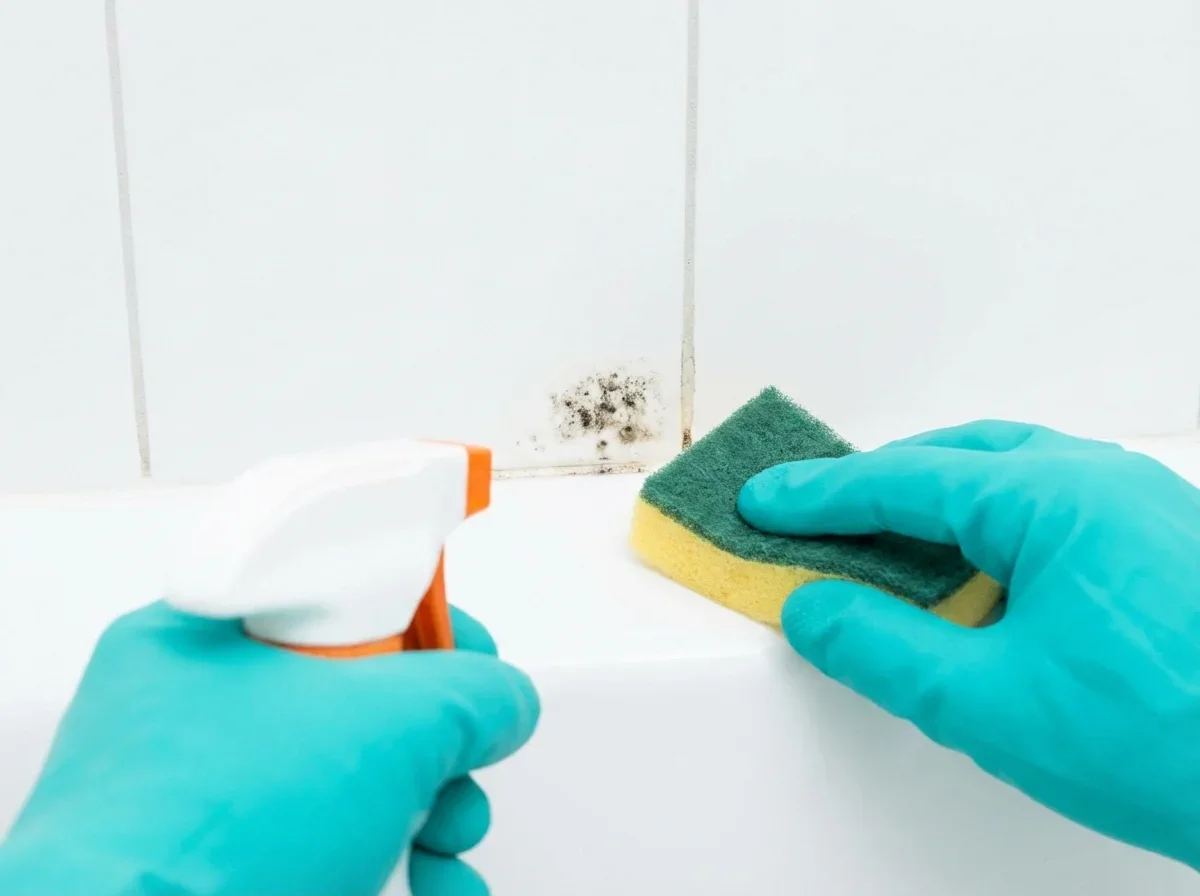
Mold removal is exactly what it sounds like: physically eliminating visible mold from a surface. A crew scrubs, sprays biocide, maybe cuts out a section of drywall, and calls it done.
No inspection of what caused the growth. No testing of air quality afterward. No containment to prevent spores from spreading to your living room while they work.
This approach works when you're dealing with surface mold on non-porous materials — like a small patch on bathroom tile that appeared after a shower leak you've already fixed. It fails catastrophically when moisture is still present, when mold has colonized porous materials like drywall or insulation, or when the problem extends beyond what you can see.
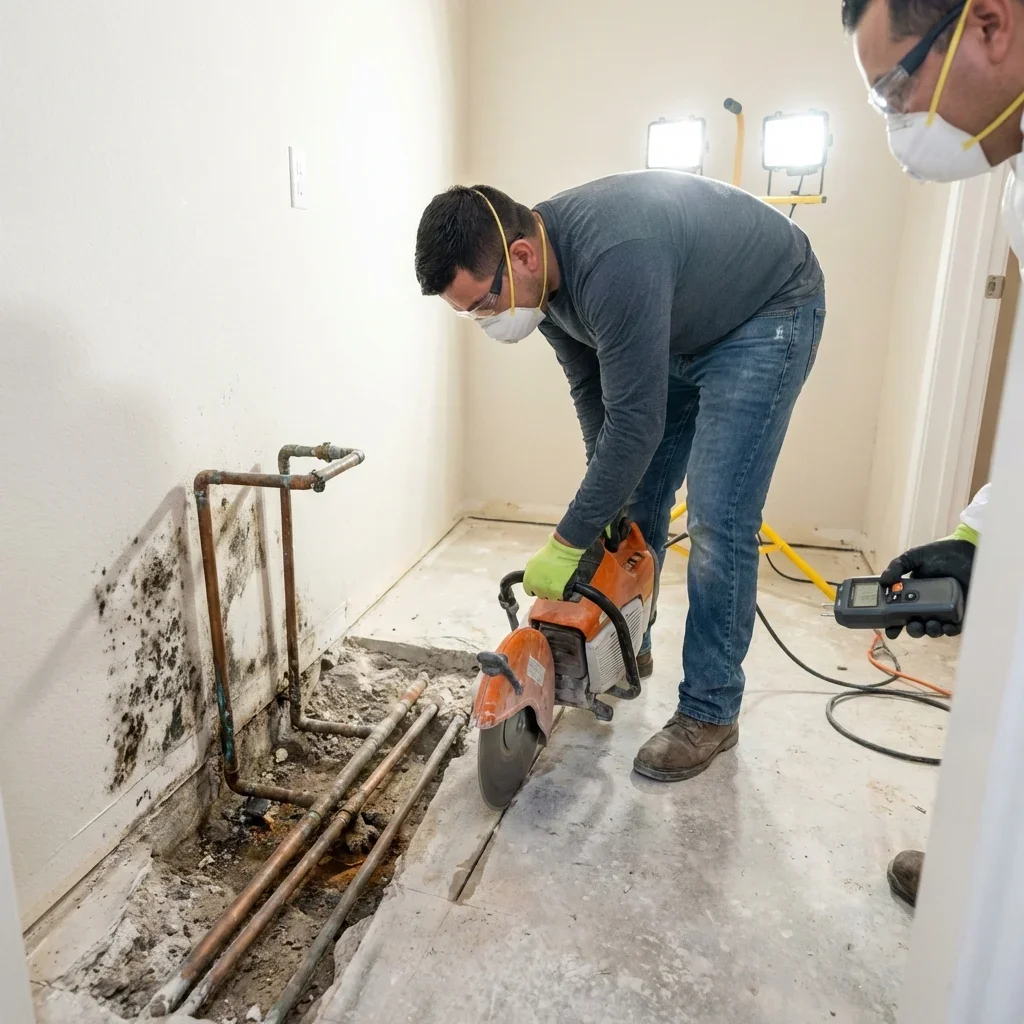
The average Texas home built after 1980 has copper or PEX plumbing running under a concrete slab. When clay soil shifts — and it does, repeatedly, across the Blackland Prairie from San Antonio through Austin to Dallas — those pipes crack. Water seeps into the slab. Mold grows in wall cavities and under flooring.
You see a stain in one spot. A removal crew treats that spot. The hidden leak keeps feeding growth you can't see.
What Mold Remediation Actually Includes
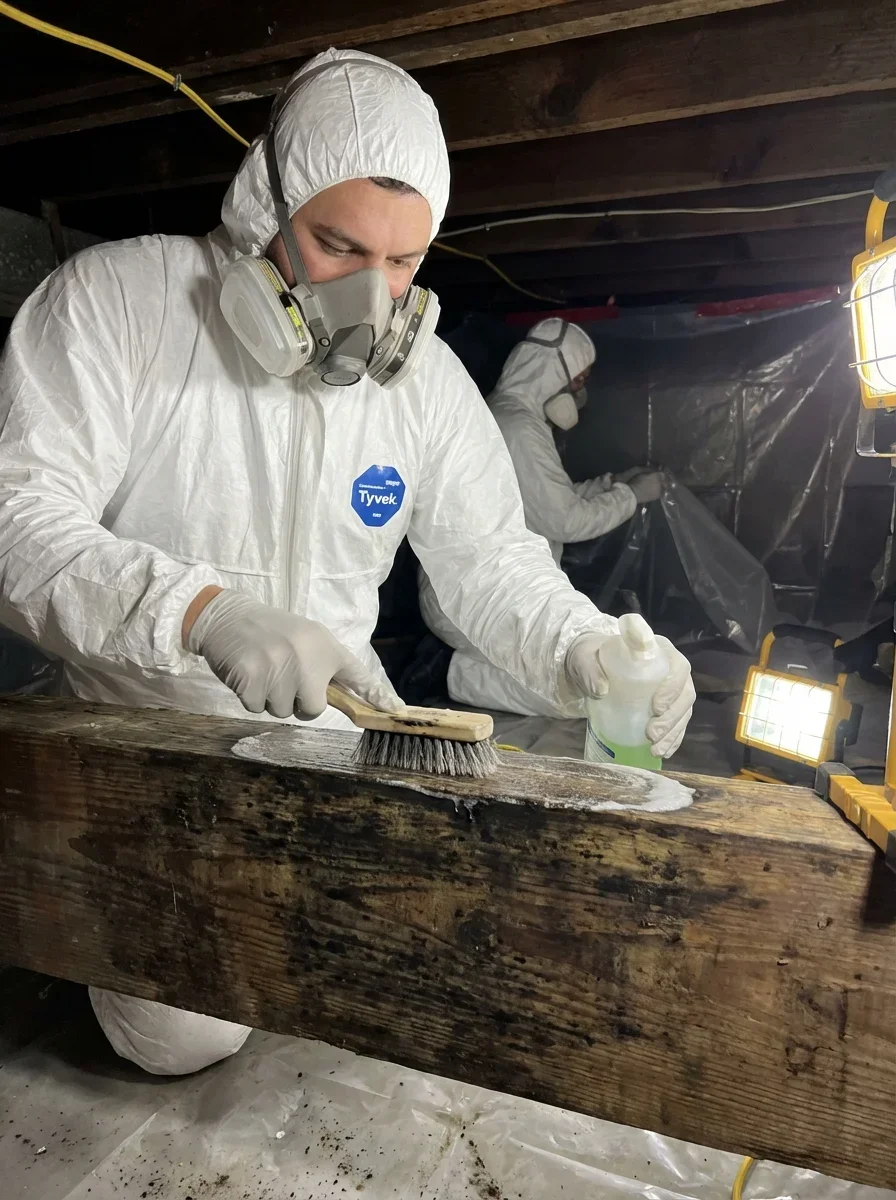
Remediation follows the IICRC S520 standard, which breaks work into three conditions based on contamination severity.[2] Condition 1 means normal fungal ecology — no work needed. Condition 2 indicates settled spores or small areas of growth — remediation warranted. Condition 3 means active, widespread contamination — full protocol required.
The process starts with inspection using moisture meters and thermal imaging to locate hidden water sources. Crews establish containment barriers with plastic sheeting and negative air pressure to prevent cross-contamination. They remove affected materials that can't be salvaged — drywall, insulation, carpeting. They HEPA-vacuum and treat surfaces. They dry the structure completely.
Then they fix the moisture source.
That might mean repairing the plumbing leak, improving crawl space ventilation in your pier-and-beam home in Houston's Heights, redirecting drainage away from your foundation, or replacing the rusted AC condensate pan that's been dripping into your attic for two years. Without this step, you haven't remediated anything — you've just hit pause.
Post-remediation verification confirms surfaces are visibly clean, dust-free, and odor-free, returning the space to "normal fungal ecology."[3] Many Texas homeowners request air quality testing at this stage, especially before closing up walls or when preparing documentation for insurance claims or real estate transactions.
| Factor | Mold Removal | Mold Remediation |
|---|---|---|
| Scope | Surface cleaning only | Complete assessment, containment, and source repair |
| Licensing | Not required in Texas (under 25 sq ft) | TDLR license required for assessor and remediator |
| Moisture Source | Rarely addressed | Always identified and fixed |
| Documentation | Minimal or none | Full protocol with post-verification |
| Typical Cost | $300-$1,500 | $1,500-$10,000+ |
| Effectiveness | Temporary if moisture persists | Long-term solution |
Why the Scope Decision Matters in Texas Homes
The EPA sets three action levels based on affected area: less than 10 square feet, 10-100 square feet, and over 100 square feet, with escalating containment and protection requirements at each tier.[1] A 2x2-foot patch on your shower grout falls into the first category — you can probably handle it yourself if there's no underlying moisture issue and you wear proper PPE.
But Texas construction hides problems.
Spray foam insulation in post-2000 tract homes traps moisture if vapor barriers were installed incorrectly. Complex two-story HVAC systems condensate inside ducts during summer months when outdoor temps hit 96°F and indoor temps stay at 72°F. Brick veneer on wood framing creates a cavity where water from roof or window leaks pools unseen.
The mold you see is rarely the mold you have. One homeowner in Pflugerville cleaned visible growth from a bedroom closet three times before discovering the real problem: a pinhole leak in PEX plumbing inside the wall, dripping every time someone used the upstairs bathroom.
The "removal" treated symptoms. Remediation would have found the leak during initial inspection.
How Texas Licensing Requirements Change the Game
Texas is one of few states that regulates mold work through the Texas Department of Licensing and Regulation (TDLR) under the Texas Mold Assessment and Remediation Rules (TMARR). You need separate licenses to assess mold (Mold Assessment Technician or Company) and to fix it (Mold Remediation Worker, Contractor, or Company).
The same company cannot legally do both — preventing conflicts of interest where assessors recommend unnecessary work they profit from.
This means legitimate remediation in Texas involves two parties: an assessor who creates the scope and a separate remediator who executes it. Verify both at tdlr.texas.gov/mol/mol.htm before signing anything. Companies offering "free inspections" with same-day remediation quotes aren't following TDLR rules.
Removal services often operate below this regulatory threshold, either because they're cleaning areas under 25 square feet (which don't require licensing) or because they're unlicensed and hoping you don't know better. If your project involves structural drying after a plumbing failure or post-remediation verification for a real estate closing, you need TDLR-licensed professionals.
Anything else creates liability.
When Removal Is Enough vs. When You Need Remediation
Small, visible mold on hard surfaces with a known, already-fixed moisture source — that's removal territory. You left a wet towel on tile for a week, grew mold, bleached it, and fixed your habits. You're done. The same logic applies to localized growth on metal ductwork near an AC register, assuming the condensation issue is resolved.
Remediation becomes non-negotiable when:
- Mold affects porous materials like drywall, insulation, or carpet
- The affected area exceeds 10 square feet
- You don't know the moisture source or haven't fixed it
- Mold returns after previous cleaning
- You're selling, buying, or refinancing and need documentation
- Anyone in the home has respiratory conditions, allergies, or immune compromise
- Growth appears in HVAC systems or wall cavities
Post-Harvey Houston taught thousands of homeowners this lesson at once. Flood water saturated wall cavities. Quick removal crews scraped visible mold. Three months later, families started reporting respiratory issues.
Proper remediation — cutting drywall 12 inches above the water line, drying studs to below 15% moisture content, treating framing, replacing insulation — prevented that. Removal just masked it.
Pro Tip: The mold you see is rarely the mold you have. In Texas homes with slab foundations and complex HVAC systems, visible growth is usually just the symptom of hidden moisture problems. Before treating any mold, use a moisture meter to check surrounding areas — or hire a TDLR-licensed assessor to do it properly.
What Happens When You Choose Wrong
Choosing removal when you needed remediation doesn't just mean the mold comes back. It means your insurance claim gets denied because the adjuster sees you hired an unlicensed company and didn't address causation. It means your buyer's real estate mold inspection flags elevated spore counts three days before closing. It means your daughter's asthma worsens because spores keep circulating through HVAC ducts you never cleaned.
One Dallas homeowner paid $600 for mold removal in a master bathroom, then $11,000 six months later for whole-house remediation when inspection revealed the original leak had soaked into adjacent bedroom walls and the attic space above. The removal company never used containment — spores spread through the return air vent. They never used moisture meters — the leak continued.
They never documented anything — insurance covered none of it.
Conversely, choosing remediation for a 1-square-foot patch of surface mold wastes money. If you've verified the moisture source is fixed, the material is non-porous, and no hidden growth exists, you're paying for infrastructure you don't need. This is where a legitimate mold inspection earns its fee — an assessor tells you the actual scope before you commit to work.
The Real Cost Calculation for Texas Homeowners
Removal typically runs $300-$1,500 depending on square footage and materials. It's faster — usually completed in a day. No tearout, no drying equipment, minimal labor.
Remediation costs $1,500-$10,000+ depending on scope, with projects in the 10-100 square foot range averaging $3,000-$5,000 when you factor in assessment, containment, material removal, drying, source repair, and verification.
Here's what the upfront math misses: removal that fails costs removal price plus eventual remediation price plus interim damage. That $600 bathroom job becomes $12,000 total when growth spreads into framing and requires structural work. Your homeowners insurance policy won't cover mold resulting from "continuous or repeated seepage" — which is exactly what unresolved leaks create.
Texas median home value sits at $305,000 as of 2026. Whole house mold remediation for severe contamination can reach $25,000-$40,000 in older homes with pier-and-beam construction and cast iron plumbing.
Spending $4,000 on proper remediation the first time protects that asset value. Cutting corners with removal invites compounding problems.
Key Cost Factors That Drive Remediation Pricing:
- Square footage affected — EPA thresholds at 10 sq ft and 100 sq ft trigger different protocols
- Material type — porous materials (drywall, carpet, insulation) require removal vs. cleaning
- Moisture source complexity — simple leak repair vs. foundation drainage or plumbing re-routing
- HVAC involvement — duct cleaning and system modifications add $1,500-$4,000
- Containment requirements — Condition 3 projects need full negative air and decontamination chambers
- Post-work verification — air quality testing adds $400-$800 but protects your investment
- Timeline urgency — emergency response within 24-48 hours costs 20-30% premium but prevents escalation
How Seasonal Patterns in Texas Drive Urgency
Mold remediation demand in Texas peaks May through October when humidity climbs and hurricane season brings flooding. Houston saw search volume triple in April 2025 after severe storms. AC systems running continuously create condensation. Afternoon thunderstorms dump 3-4 inches in an hour, overwhelming gutters and creating foundation seepage.
Many homeowners try removal first during these months because "everyone's booked" for remediation and they want a quick fix.
This backfires. By September, when companies have availability and you're calling for the second time, you've lost months of moisture exposure and your scope has doubled. The best time to start remediation is the day you discover the problem, regardless of season.
Emergency mold removal services exist for this reason. After a pipe burst or storm damage, you have 24-48 hours before mold colonizes wet materials. Emergency crews extract water, set up dehumidifiers, and establish containment while you wait for the full assessment. This prevents removal-scale problems from becoming remediation-scale disasters.
Regional Construction Factors That Complicate the Choice
Texas slab-on-grade construction makes remediation uniquely necessary because you can't access plumbing without breaking concrete. A slow leak from corroding copper pipe — accelerated by water averaging 200+ ppm hardness across most metros — seeps into the slab for months before you see a ceiling stain.
By then, remediation must include slab moisture testing, injection drying, and potentially re-routing plumbing.
Pier-and-beam homes in older neighborhoods present the opposite problem: accessible crawl spaces that homeowners neglect until humidity and poor ventilation create ideal mold conditions on floor joists. Crawl space mold removal requires remediation protocol even when surface area is small, because the mold affects structural wood and impacts indoor air quality through stack effect.
Rapid construction in Austin and San Antonio suburbs creates moisture management defects: missing flashing around windows, improperly sealed brick veneer, inadequate attic ventilation. New homes shouldn't have mold, but improper installation during boom periods means many do.
New construction mold inspection before your warranty expires identifies these issues while the builder is still liable. Waiting and attempting DIY removal later leaves you paying for remediation the builder should have covered.
Documentation Requirements That Force the Decision
If you're filing an insurance claim, selling, refinancing, or dealing with a rental property, documentation requirements effectively mandate remediation. Insurance adjusters want TDLR-licensed assessor reports with moisture readings, thermal imaging, and scope determinations. They want IICRC-certified remediators with containment protocols and post-work verification.
They want proof you addressed causation, not just symptoms.
Real estate transactions increasingly include mold contingencies. A buyer's inspector flags elevated moisture or visible growth. The seller tries quick removal to save money. The buyer's follow-up air test shows spore counts at 3x outdoor baseline. Deal dies or seller pays for full remediation anyway — plus lost time and buyer distrust.
Rental property owners face Texas Property Code requirements that habitability issues (including mold creating health hazards) be corrected promptly. DIY removal or unlicensed work that fails creates legal liability when tenants report health issues. Rental property mold inspection and proper remediation protect against lawsuits far better than cheap fixes.
What Changes When Mold Affects HVAC Systems
Mold in air ducts or on air handlers spreads spores throughout your home every time the system runs. Removal — spraying ductwork with biocide — treats the symptom. Remediation identifies whether the source is condensation from oversized equipment, blocked drain lines, missing insulation causing cold surface condensation, or contaminated supply air from a moldy attic.
Texas homes run AC systems 8+ months annually. If your system contributed to the problem, remediation must include HVAC-specific fixes: resizing equipment, insulating supply plenums, installing UV lights, sealing return air leaks.
Otherwise you're paying to clean ducts that will recontaminate within months. This work requires coordination between TDLR-licensed mold professionals and licensed HVAC contractors — not something removal services provide.
One San Antonio homeowner discovered this when persistent musty odors continued after duct cleaning. Proper assessment revealed the main return plenum in the attic had no insulation — summer attic temps at 140°F against 55°F supply air created heavy condensation. Mold grew on the metal surface and blew spores through every register.
Mold odor removal required remediation of the attic space and HVAC system modifications, not just cleaning.
How to Verify You're Getting What You Paid For
If a company uses the words "remediation" but doesn't mention moisture meters, containment, source repair, or post-work verification, they're selling removal at remediation prices.
Ask specific questions:
- "What TDLR license numbers will the assessor and remediator have?"
- "What IICRC S520 condition classification applies to my project?"
- "How will you establish containment and negative air?"
- "What moisture content threshold must materials reach before closeup?"
- "Who performs post-remediation verification and when?"
Legitimate remediation companies answer these instantly because they follow the same protocol on every job. The distinction between removal and remediation isn't about upselling — it's about following the IICRC S520 mold standards that define professional practice.
Companies offering "free inspections" with same-day work starts aren't doing either correctly.
Before hiring anyone, review questions to ask before hiring a mold company in Texas and understand what proper mold remediation process steps look like. The cheapest bid is rarely the best value when the work has to be redone six months later.
- U.S. Environmental Protection Agency (EPA). "Mold Remediation in Schools and Commercial Buildings." https://www.epa.gov/mold. Accessed April 02, 2026.
- Institute of Inspection, Cleaning and Restoration Certification (IICRC). "IICRC S520 — Standard for Professional Mold Remediation." https://www.iicrc.org. Accessed April 02, 2026.
- National Institutes of Health (NIH) Department of Health and Safety. "Moisture and Mold Remediation Standard Operating Procedures." https://ors.od.nih.gov/sr/dohs/Documents/moisture-and-mold-remediation-sop.pdf. Accessed April 02, 2026.