Mold vs Mildew at a Glance
Mildew is a common term for certain surface-growing molds. All mildew is mold, but not all mold is mildew. The EPA treats the word "mildew" as a generic label for mold growth, usually the flat kind.
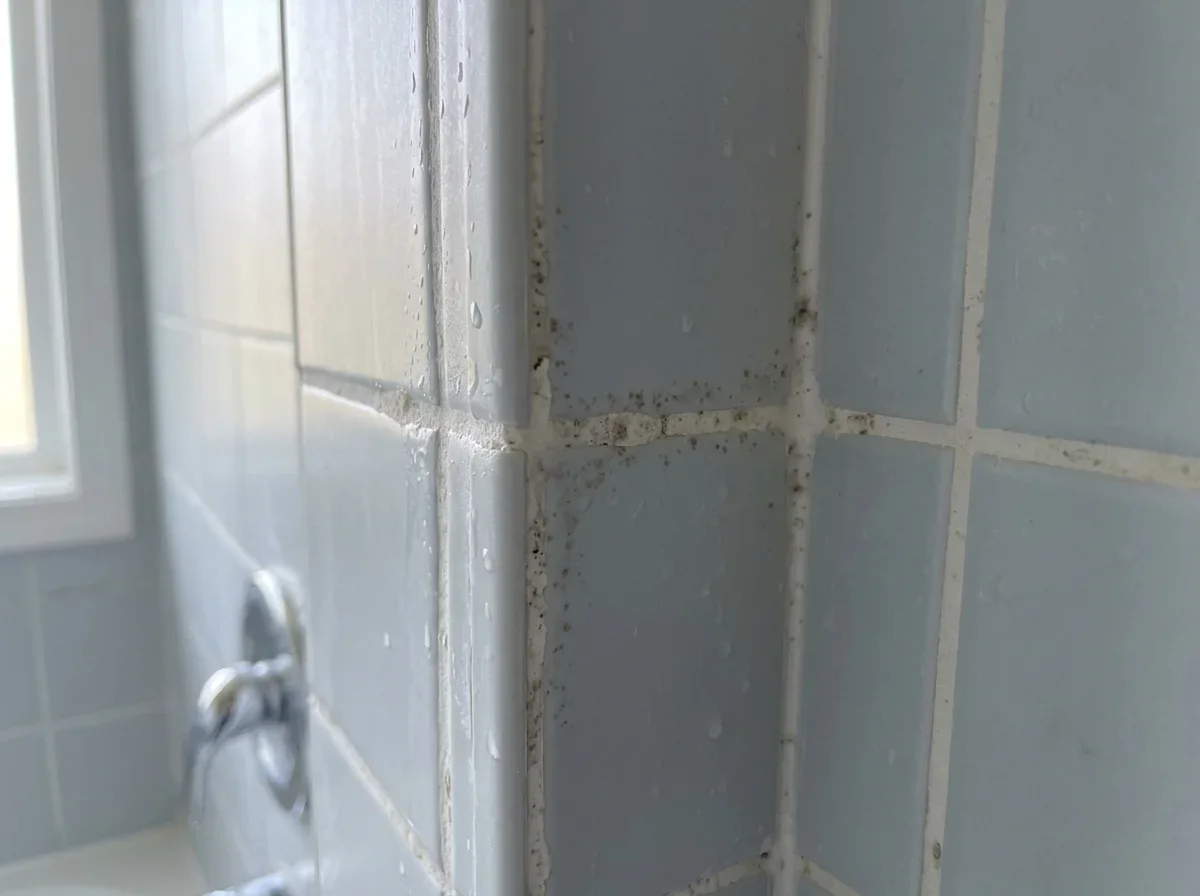
The practical question isn't the name. It's whether the growth is limited to a surface you can clean, or tied to a leak or ongoing moisture.
Key takeaways
All mildew is mold, but not all mold is mildew
Color does not identify a species
Mildew sits on the surface, while mold can penetrate porous materials
Recurring growth means finding the moisture source
Side-by-Side Comparison
| Feature | Mildew (typical) | Mold (typical) |
|---|---|---|
| Color | White, gray, yellowish | Green, black, brown, other colors |
| Texture | Flat, powdery or downy | Fuzzy, slimy or clustered |
| Growth pattern | Spreads in thin patches | Raised or spotty clusters |
| Typical surfaces | Tile, grout, caulk, glass, fabric | Drywall, wood, carpet, ceiling tiles |
| Smell | Musty | Musty, sometimes stronger |
| Depth | Sits on the surface | Can penetrate porous materials |
| Cleaning | Often wipes off hard surfaces | May not clean out of porous materials |
Color does not identify a species. Black growth is not automatically "toxic mold," and white growth is not automatically harmless.
How Each One Looks and Smells
Appearance changes with the surface, the moisture level and the age of the growth. Treat what follows as a rough guide.
Mildew Appearance
Mildew is typically flat and powdery or downy. It tends to be white, gray or yellowish, and it sits on top of the surface. On tile or a glass shower door, it often looks like a film.
Mold Appearance
Mold tends to look fuzzy, slimy or clustered, in green, black, brown or other colors. On porous materials like drywall, wood or carpet, it can work its way below what you see. That is why a dark stain on a ceiling deserves more suspicion than a gray film on grout.
Photos can show texture and pattern. They cannot tell you the species or how deep the growth goes.
Side by side
Mildew versus mold at a glance
Mildew
- Flat, powdery or downy
- White, gray or yellowish
- Sits on the surface
Mold
- Fuzzy, slimy or clustered
- Green, black, brown or other colors
- Can penetrate porous materials
Smell Differences
Both can smell musty. A stronger or persistent odor with no visible source points to hidden growth, perhaps behind a wall or in a crawl space.
If that sounds familiar, read about signs of mold in a Texas home for what to check next.
Where Each Grows in a Texas Home
Most Texas homes are slab-on-grade with no basement, and AC runs for eight months or more a year. The usual "damp basement" advice misses the real trouble areas.
Bathrooms and Showers
Bathrooms are where most people first see "mildew." Gulf Coast humidity pushes moisture into the house, weak exhaust fans let steam linger, and caulk and grout stay damp between showers.
A simple fan test helps: hold a tissue to the grille. If it doesn't cling, the fan is too weak to clear the room.
Pro tip
Test the bathroom fan with a tissue at the grille. If it doesn't cling, the fan is too weak to clear steam, so plan to replace it.
For ceiling growth in particular, see our page on professional bathroom mold removal.
Wood, Fabric and Clothes
Wood, drywall, carpet and clothing absorb moisture, so growth can sink in instead of sitting on top.
A light film on a sealed surface may wipe off. Fuzzy growth on unfinished wood or damp laundry usually means the material itself is holding moisture.
Slab Homes, Closets and AC Areas
Cooler surfaces are where humid air condenses. In air-conditioned homes, check these spots:
- Supply vents and ductwork
- Closets on exterior walls
- Window frames
- Baseboards near exterior walls
Slab plumbing leaks are a leading mold trigger in Texas. Expansive clay soil in Houston, DFW and San Antonio shifts slabs and plumbing, and slow leaks can go unnoticed for months.
Mildew often shows up on surfaces first. Mold may point to a leak or ongoing moisture, so recurring growth near a wall deserves a hunt for the source. Our guide to hidden mold covers why it returns.
Health Effects: Which Is Worse
Neither is something to live with. The health response depends more on the person and the level of exposure than on whether you call it mold or mildew.
The CDC lists typical complaints as nasal congestion, sore throat, coughing, wheezing, eye irritation and skin rash.[3] The CDC notes that people with allergies, asthma, chronic respiratory disease or weakened immunity may face greater risk during exposure or cleanup.[4]
Black growth is not proven to be uniquely dangerous just because of how it looks. For more depth, see black mold health risks.
If you or someone in your home has symptoms, see a doctor.
What You Can Clean Yourself
Plenty of small jobs are housekeeping. The trick is separating those from problems that only look small.
Quick Surface Check
Run three steps before you reach for a scrub brush:
- Wipe test. Wipe a small patch with a detergent-and-water cloth and dry the area fully. If the growth lifts off and stays gone in a spot with an obvious cause (like a steamy shower), it's likely a surface job.
- Moisture check. Ask why it's wet. Look for a weak fan, an exterior wall, a nearby supply vent, bubbling paint, a stain or soft drywall.
- Size and material check. Is it a small patch on a hard surface, or on drywall, carpet or insulation?
Does black mold just wipe off? Sometimes the visible part does. But wiping removes what you see, not the cause or any growth inside porous material.
Decide
Is it a surface job?
Does the growth wipe off a hard surface and stay gone?
If Yes
then: Likely a surface job; fix the moisture source
If No
then: Check for porous material or a leak and consider a professional
Basic Cleaning Steps and Safety
The CDC advises fixing the water problem first and drying the home and contents as quickly as possible, ideally within 24 to 48 hours. Hard surfaces can be cleaned with household products, soap and water, or a properly diluted bleach solution.[5]
Scrubbing, thorough drying and fixing the moisture source matter more than any single product.
Wear gloves, eye protection and a mask, and ventilate the room. Never mix bleach with other cleaning chemicals.[5] Anyone with asthma, allergies or respiratory disease should consider letting someone else do the work.[4]
Unlicensed people generally may clean visible mold covering less than 25 contiguous square feet, and owners may do work on property they own or lease.[1][2] That is roughly a 5 ft by 5 ft patch.
It's a licensing threshold, not a safety cutoff. For a fuller breakdown, see DIY mold removal vs professional remediation.
Two cases
Clean it yourself or call a professional
Case A: Clean it yourself
- Less than 25 contiguous square feet
- Hard surface with an obvious cause
Case B: Call a professional
- More than 25 contiguous square feet
- Drywall, carpet or insulation
- Growth keeps coming back
Signs It Is Time to Call a Professional
Stop scrubbing and make a call when you see any of these:
- Growth keeps coming back after cleaning, which points to a moisture source (see why mold keeps coming back)
- Visible growth covers more than 25 contiguous square feet
- Growth is on drywall, carpet or insulation, inside walls, or in the HVAC system
- A leak, roof problem, pipe failure, sewage backup or flooding is behind it
- A musty smell has no visible source
- Symptoms improve when you're away from home
Larger projects in covered residential properties require a licensed mold remediator, and TDLR licenses the professionals who assess, test and remediate.[1][2]
A licensed assessor writes a protocol, and a separate licensed remediator follows it. One company cannot do both on the same project.
Ask for the license number and type, and verify it with TDLR. For the full rules, see Texas TDLR mold licensing rules.
Do You Need Mold Testing to Tell the Difference
Not for a small, obvious bathroom patch. If you can see it, clean it and fix the moisture.
Testing or inspection makes sense when:
- Growth is hidden or the odor has no source
- Someone has symptoms
- You're in a real estate transaction
- The problem keeps returning
Our guide to how mold testing methods compare walks through the differences, and a licensed mold inspection is the next step for unclear cases.
Only a TDLR-licensed assessor can sample for mold in Texas.[1]
Prevent Both in Humid Texas Homes
Prevention is mostly about moisture control.
- Use exhaust fans. Run the bathroom fan during showers and for a while afterward, and replace it if the tissue test fails.
- Control humidity. Let the AC do its job, and consider a dehumidifier in damp rooms.
- Fix leaks fast. Dry wet materials quickly. The CDC recommends drying within 24 to 48 hours.[5]
- Reseal caulk and grout. Failed seals let water behind the surface.
- Dry towels and clothes promptly. Don't leave them damp in a hamper.
Scheduling can get tight in the warmer months, so book early if you can.
Checklist
Moisture control checklist
0 of 5 ticked
Tick them off as you go. Nothing is saved or sent.
FAQ
What is worse, mildew or mold?
Does black mold just wipe off?
The visible growth may wipe off a hard surface, but wiping doesn't fix the moisture source or growth inside porous material. If it returns or stains remain, investigate further.
What kills mold and mildew?
Scrubbing with detergent and water, drying fully and fixing the moisture source are the core steps. The CDC also lists a properly diluted bleach solution for hard surfaces, never mixed with other chemicals.[5]
How do you know if you have mold or mildew in your house?
Look for flat, powdery patches or fuzzy, clustered growth, plus a musty smell. A persistent odor with no visible source suggests hidden growth and may justify an inspection.
Is mildew dangerous?
Mildew is a type of mold, so it can cause the same irritation in sensitive people. Clean small patches safely and fix the moisture behind them.[3]
Can I tell mold from mildew by color alone?
No. White or gray growth is often called mildew and dark growth mold, but color doesn't reliably identify a species.
- Texas Department of Licensing and Regulation. "Mold Assessors and Remediators FAQs." https://www.tdlr.texas.gov/mld/mldfaq.htm. Accessed October 17, 2026.
- Texas Department of Licensing and Regulation. "Consumer Protection – Mold." https://www.tdlr.texas.gov/media/pdf/Consumer%20Protection%20-%20mold.pdf. Accessed October 17, 2026.
- Centers for Disease Control and Prevention. "Mold." https://www.cdc.gov/mold-health/about/index.html. Accessed October 17, 2026.
- Centers for Disease Control and Prevention. "Mold Clean Up Guidelines and Recommendations." https://www.cdc.gov/mold-health/about/clean-up.html. Accessed October 17, 2026.
- Centers for Disease Control and Prevention. "8 Tips to Clean Mold." https://www.cdc.gov/mold-health/communication-resources/8-tips-to-clean-mold.html. Accessed October 17, 2026.