What You'll Pay for Mold Remediation in Texas
Most Texas homeowners spend between $1,500 and $6,000 on professional mold remediation, with $3,200 as the typical project cost. Small, contained jobs — a bathroom corner, a single closet wall — start around $500 to $1,200. Large-scale remediation affecting multiple rooms, HVAC systems, or entire attics runs $8,000 to $20,000 or more.
The wide range reflects how different each situation is. A 10-square-foot patch of surface mold on a bathroom wall is a half-day job. A flooded crawl space with mold covering floor joists, insulation, and ductwork requires containment barriers, negative air machines, structural drying, and days of labor.
Geography matters too — Houston and Dallas metro pricing runs 10-15% higher than smaller markets due to labor costs and higher demand after repeated flooding events.
You'll see three main pricing models. Some companies charge by square footage ($10-$25 per square foot of affected area). Others use flat-rate pricing for specific scenarios — "$2,800 for standard attic remediation," for example. High-end companies quote project-based pricing after a detailed assessment, bundling labor, materials, disposal, and post-remediation verification.
The per-square-foot model sounds simple but can mislead. A 50-square-foot patch in a wall cavity costs far more per foot than 200 square feet of surface growth on drywall, because the wall has to be opened, insulation replaced, and the cavity treated.
Texas-specific regulations add a layer most states don't have. Under the Texas Mold Assessment and Remediation Rules (TMARR), the company that assesses your mold can't be the same one that remediates it.[3] That means you're paying for two separate companies — the assessor who diagnoses the problem and writes the protocol, then the remediator who executes it. Budget $300-$700 for the independent assessment before remediation even starts.
And don't forget the state notification fee of $25 your remediator must file with Texas TDLR for each project.[1]
How Texas Pricing Breaks Down by Project Size
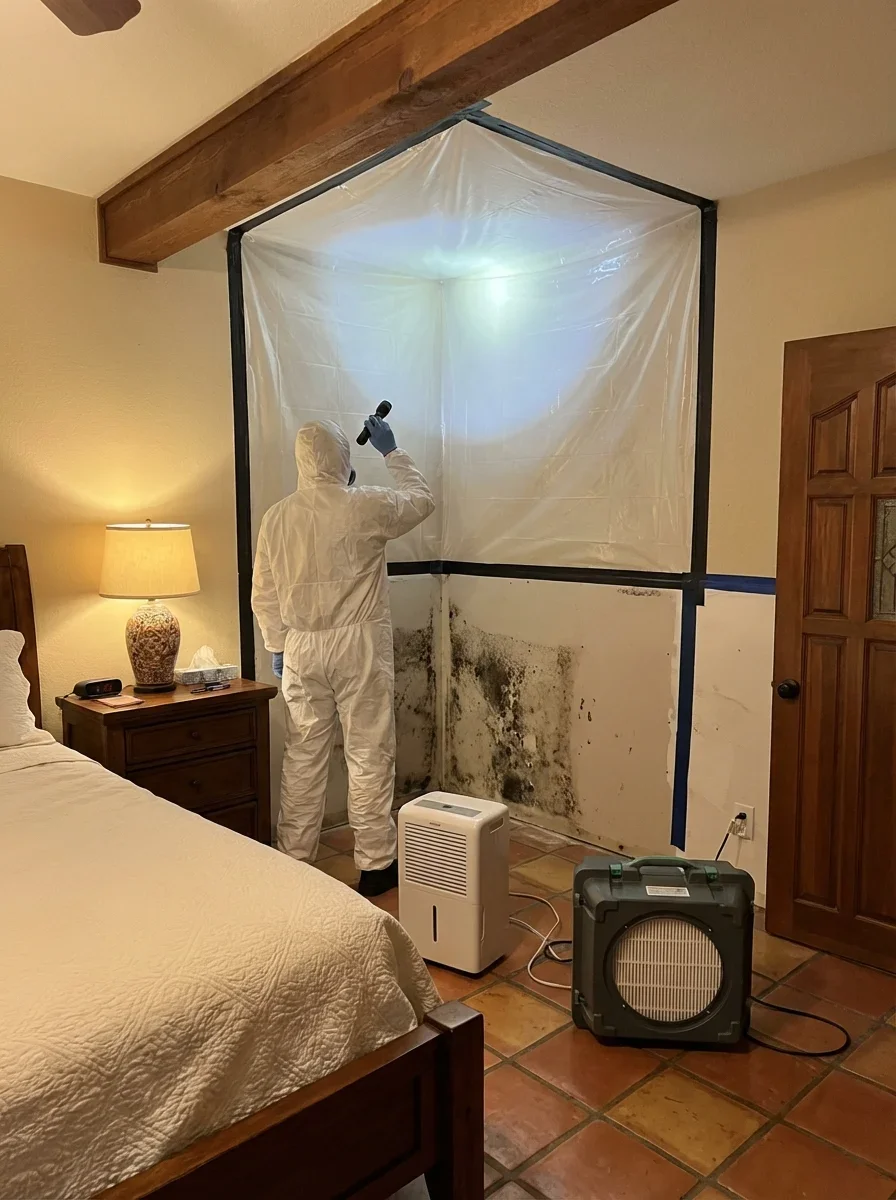
Small projects (under 25 square feet) cost $500 to $1,500. This covers a bathroom vanity, a closet corner, or a patch of ceiling mold from a minor roof leak. You're paying for containment setup, HEPA vacuuming, antimicrobial treatment, surface cleaning, and disposal.
Even small jobs require proper containment to prevent cross-contamination — plastic sheeting, negative air pressure, protective equipment. Reputable contractors don't skip these steps just because the area is small.
Medium projects (25-100 square feet) run $1,500 to $4,500. Common scenarios include mold spreading across multiple bathroom walls, bedroom closets with HVAC condensation damage, or attic sections where roof leaks went unnoticed. Labor increases because you're dealing with more material removal — drywall, baseboards, insulation — and longer equipment runtime.
If the source involves plumbing repairs or roof work, add those costs separately. The remediation company treats the mold; they don't fix the pipe or patch the roof.
Large projects (100+ square feet or whole-house) range from $5,000 to $20,000+. Entire attics with mold on sheathing and rafters, crawl spaces with saturated insulation and floor joists, or homes where HVAC systems spread spores throughout ductwork all fall here. You're looking at multi-day projects with extensive demolition, HEPA air scrubbing running 24/7, disposal of contaminated materials, structural drying, and thorough decontamination.
Post-Harvey remediation projects in Houston routinely hit $15,000-$25,000 because water sat for days before homeowners could access properties.
Whole-house remediation after catastrophic flooding or long-term hidden water damage is the top of the range. When mold colonizes wall cavities throughout a home — common in Texas slab homes with under-slab plumbing leaks — you're removing drywall, insulation, and baseboards in multiple rooms, treating framing, and rebuilding. These projects cost $20,000 to $50,000+ depending on square footage.
If your home qualifies, explore our whole house mold remediation service details.
| Project Size | Square Footage | Typical Cost Range | Common Scenarios | Timeline |
|---|---|---|---|---|
| Small | Under 25 sq ft | $500 - $1,500 | Bathroom vanity, closet corner, minor ceiling leak | 1 day |
| Medium | 25-100 sq ft | $1,500 - $4,500 | Multiple bathroom walls, bedroom closets, attic sections | 2-3 days |
| Large | 100-300 sq ft | $5,000 - $12,000 | Entire attic, crawl space, HVAC system contamination | 3-5 days |
| Whole-House | 300+ sq ft | $20,000 - $50,000+ | Widespread water damage, multiple rooms, structural issues | 1-2 weeks |
What Drives Your Quote Higher (or Lower)
The type of mold doesn't change the remediation process, but it changes how carefully contractors work. Stachybotrys chartarum (black mold) and Aspergillus species require more protective equipment and stricter containment because of health risks. Some companies charge a 15-20% premium for confirmed black mold, citing higher insurance costs and disposal fees for hazardous materials.
From a technical standpoint, the protocol is the same — remove contaminated materials, treat surfaces, verify clearance. But the liability and worker safety measures cost more.
Learn the health implications in our guide to black mold health risks.
Location within the home has a bigger impact than most people expect. Attic mold costs more per square foot than bathroom mold because access is harder, temperatures are brutal in summer (120°F+ in Texas attics), and ventilation is limited. Crawl space work adds another layer — confined spaces require specialized safety equipment and slower progress.
HVAC system contamination is expensive because every register, return, and duct section must be cleaned or replaced, and the air handler often needs full decontamination. If mold spread through your ductwork, expect $2,500-$6,000 for HVAC mold removal on top of the primary remediation.
Material removal and disposal varies wildly by what's affected. Surface mold on tile or sealed concrete? You're paying for cleaning and antimicrobial treatment, maybe $8-$12 per square foot. Mold penetrating drywall, insulation, and wood framing? Now you're removing and replacing those materials, $20-$35 per square foot including labor and disposal.
Texas landfills often charge tipping fees for mold-contaminated construction debris, and some projects require sealed bags or specialized disposal.
Moisture source complexity determines the total bill more than mold extent. Finding and fixing a leaking supply line costs $300-$800 for a plumber. Repairing a foundation crack that's allowing groundwater intrusion? $3,000-$8,000 for foundation work alone.
If your slab has shifted due to expansive clay soil movement — the norm in Houston, Dallas-Fort Worth, and San Antonio — and cracked the under-slab plumbing, you're looking at slab leak detection ($400-$600), plumbing repair via tunneling under the slab ($2,000-$4,500), and possibly foundation stabilization ($4,000-$12,000). The mold remediation might be $3,500, but the underlying cause costs three times that.
Containment and negative air requirements scale with project size. Small jobs use 6-mil polyethylene sheeting and a single HEPA air scrubber. Larger projects need full containment chambers with airlocks, multiple air scrubbers running continuously, and sometimes negative air ducting to vent filtered air outside.
Equipment rental alone runs $150-$400 per day for commercial-grade HEPA machines. Multi-day projects stack up these costs quickly.
Post-remediation verification is where Texas rules bite. After remediation, the independent assessor (not the remediation company) must perform clearance testing to confirm spore counts are back to normal levels. This costs $300-$600 and delays final payment until you pass.
If you fail, the remediation company returns to re-clean at their expense (if they're reputable), and you pay for another round of testing. Our post-remediation verification page explains what this inspection involves.
Texas-Specific Factors That Increase Costs
Slab-on-grade construction dominates Texas residential building — 85% of homes built after 1980 sit on concrete slabs with no basement or crawl space. Plumbing runs under the slab, encased in soil. When expansive clay soil swells and shrinks with moisture changes (which it does constantly in Houston, DFW, and San Antonio), it shifts the slab.
This movement cracks pipes buried underneath, creating slow leaks that feed mold inside walls for months before you notice.
The problem is invisible until it isn't. Water seeps up through the slab into wall cavities, soaking drywall from the bottom up, saturating insulation, and creating ideal conditions for mold. By the time you spot discoloration or smell mustiness, the mold has colonized several feet of wall cavity.
Remediation requires cutting drywall at least two feet above visible damage, removing insulation, treating the framing, and installing moisture barriers. Then you still have to fix the leak under the slab. This combination — slab leak detection, plumbing repair, and mold remediation — routinely costs $8,000-$15,000.
Air conditioning load creates another uniquely Texan mold vector. Running AC eight to ten months a year generates constant condensation. If your AC drain pan overflows (a common problem in older systems), water drips into the ceiling below the air handler, soaking insulation and drywall.
If ductwork in an unconditioned attic isn't properly sealed, humid attic air condenses on cold ducts, dripping onto insulation and ceiling joists. And if your installer didn't properly slope drain lines or installed undersized drip pans, you're creating mold habitat every cooling cycle.
Attic temperatures compound the issue. Texas attics hit 130-150°F in summer, then cool rapidly at night, creating temperature swings that cycle moisture in and out of materials. Roof leaks that would dry out in moderate climates stay wet longer here because the materials heat up so fast during the day that moisture gets trapped before it can evaporate.
Attic mold removal in Texas often requires replacing not just insulation but sheathing and sometimes rafters, driving costs to $5,000-$12,000 for a typical 1,500-square-foot attic.
Hurricane and flood exposure along the Gulf Coast makes Houston, Beaumont, Corpus Christi, and Galveston high-risk zones. Post-Harvey mold remediation in 2017 overwhelmed the market — demand spiked 400%, labor shortages drove prices up 30-50%, and unscrupulous contractors flooded in (pun intended) with inadequate licensing and substandard work.
Even now, Houston pricing remains 15-20% higher than inland Texas cities because insurers know the risk and contractors factor in the likelihood of repeat business. If you're in a flood zone, budget for the high end of every range.
TDLR licensing separation adds cost but protects you. The Texas Mold Assessment and Remediation Rules (TMARR) require the company performing your assessment to be separate from the one doing remediation.[3] This prevents conflicts of interest — an assessor can't inflate the scope to sell more remediation.
But it means two invoices. The assessment runs $300-$700 (often more for large homes or complex investigations), then remediation is a separate contract. Clearance testing after remediation is another $300-$600 paid to the assessor.
Verify every contractor's license at https://www.tdlr.texas.gov/mol/mol.htm — Texas requires separate licenses for Mold Assessment Technician, Mold Assessment Company, Mold Remediation Worker, Mold Remediation Contractor, and Mold Remediation Company. Working with an unlicensed contractor voids the regulatory protections and can complicate insurance claims.
Sales tax quirks create unexpected line items. Texas charges sales tax on mold remediation if more than 5% of the lump-sum charge involves taxable services (like cleaning, repair, or restoration work that isn't pure remediation).[2] Most remediation involves some taxable component — drywall replacement, painting, or cleaning — so expect sales tax (8.25% in most Texas cities) added to your quote.
A $4,000 remediation job could come with a $330 tax bill you didn't anticipate.
Key Texas-Specific Cost Factors:
- Slab foundation plumbing leaks require under-slab repair ($2,000-$4,500) plus remediation
- Year-round AC use creates persistent condensation and mold growth opportunities
- Gulf Coast pricing runs 15-20% higher than inland cities due to flood risk
- Mandatory two-company system: separate assessor ($300-$700) and remediator
- TDLR licensing verification required at https://www.tdlr.texas.gov/mol/mol.htm
- Sales tax (8.25%) applies to most remediation projects with repair components
- State notification fee of $25 per project required by law
What Your Quote Should (and Shouldn't) Include
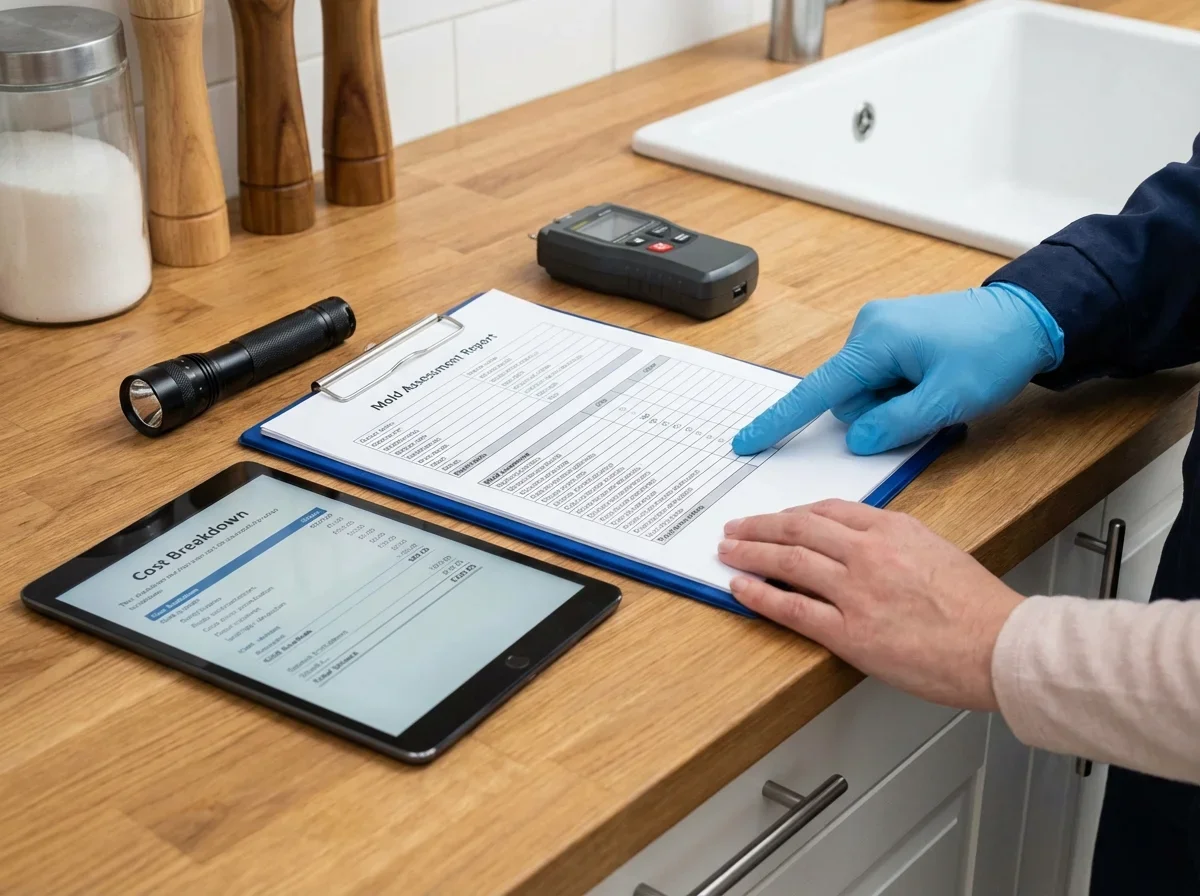
A legitimate remediation quote starts with a detailed assessment report from a licensed mold assessor. This document specifies the affected areas, the type of remediation required, and the clearance criteria you must meet. The remediation company bases their quote on this protocol — not on their own inspection.
If a company offers to assess and remediate for one flat price, they're violating Texas law.
The quote should itemize:
- Containment setup (polyethylene barriers, negative air chambers, airlocks if needed)
- Personal protective equipment for workers (respirators, Tyvek suits, gloves)
- HEPA air scrubbers and runtime (number of units, days of operation)
- Material removal (drywall, insulation, baseboards, trim — specified by square footage and type)
- Antimicrobial treatment (application method, product used, coverage area)
- Disposal fees (contaminated material removal, landfill tipping fees)
- Structural drying if moisture levels remain elevated (dehumidifiers, air movers, moisture monitoring)
- TDLR notification fee ($25, required by state regulation[1])
- Post-remediation cleaning (HEPA vacuuming, surface decontamination of unaffected areas)
What the quote should not include: fixing the underlying water source. Mold remediators treat mold. Plumbers fix leaks. Roofers repair roofs. HVAC techs fix condensation issues. General contractors handle foundation work.
You'll get separate quotes for these repairs. Some remediation companies coordinate with these trades and offer bundled project management, but the work is subcontracted and billed separately.
Also excluded: reconstruction. Remediation removes contaminated materials and treats surfaces. Putting the walls, ceilings, and finishes back is construction, typically handled by a general contractor or handyman after clearance testing confirms the mold is gone.
Some larger remediation companies offer in-house reconstruction, but it's a separate line item with separate pricing.
Insurance coverage is its own puzzle. Mold remediation is covered only if it resulted from a covered peril (sudden pipe burst, storm damage) and you mitigated quickly. Gradual leaks, deferred maintenance, and flooding from outside the home are typically excluded.
Read the fine print before assuming your homeowner's policy will pay. Our guide to insurance coverage for mold in Texas walks through what's covered and what isn't.
How to Reduce Costs Without Cutting Corners
Catching mold early is the single biggest cost saver. A $600 bathroom remediation can become a $4,500 multi-room project if you let it spread through wall cavities and into adjacent rooms.
If you smell mustiness, see discoloration, or notice persistent condensation, get an assessment before it colonizes further. The inspection might cost $400, but it caps your exposure.
Fix the moisture source immediately. Mold needs water. Cut off the supply and existing mold stops growing. If you can't afford full remediation right away but you fix the leak and dry the area thoroughly, you at least prevent expansion.
DIY drying with fans and dehumidifiers buys time, though it doesn't replace professional remediation. Just don't let "I'll get to it later" turn a $2,000 problem into a $10,000 disaster.
Handle demo and reconstruction yourself if you're handy. Remediation companies charge $50-$90/hour for labor that includes removing drywall and baseboards. If you're comfortable cutting out contaminated materials yourself (with proper PPE and disposal in sealed bags), you can hire the remediator just for containment, treatment, and clearance testing.
Get the assessor's protocol first so you know exactly what to remove. Some companies won't work with homeowner-assisted projects due to liability concerns, so confirm upfront.
Bundle services when you can. If you need both water damage mold removal and structural drying, a company that offers both under one roof saves coordination time and often discounts the combined work.
The same logic applies if you're addressing HVAC condensation — a company that handles both duct cleaning and remediation is more efficient than hiring two separate firms.
Get three quotes from TDLR-licensed companies. But compare scope, not just price. A $1,800 quote that skips containment, uses a shop vac instead of HEPA equipment, and doesn't include clearance testing is a disaster waiting to happen.
A $3,200 quote with full containment, commercial HEPA air scrubbers, proper antimicrobial treatment, and post-remediation verification is a better value. Ask what's included, what equipment they use, how long they've held their TDLR license, and whether they carry pollution liability insurance (most general liability policies exclude mold work).
Avoid peak season if the mold isn't an immediate health threat. May through October is peak remediation season in Texas — humidity climbs, storms roll through, and demand spikes. Companies charge 10-20% more during peak months, and scheduling takes longer.
If you discover mold in November and it's not in a living area or causing respiratory symptoms, waiting until January might save you money and get you faster service. Don't delay if anyone in your home has asthma, immune issues, or respiratory symptoms — health trumps cost savings.
Pro Tip: The most expensive mold remediation is the one you have to do twice. A $3,200 professional job that includes proper containment, HEPA filtration, and clearance testing will always cost less than a $900 budget job followed by a $5,000 emergency remediation when mold spreads throughout your home. Invest in doing it right the first time.
When DIY Is and Isn't an Option
Texas law and industry standards are clear: if the affected area exceeds 25 square feet, you need a licensed remediator. Below that threshold, you're legally allowed to DIY, but "allowed" doesn't mean "advisable."
Surface mold on a bathroom tile grout line? Sure, clean it yourself with detergent and water, fix the exhaust fan, and monitor for recurrence. Mold inside a wall cavity, even if it's only 10 square feet? You're dealing with hidden extent, potential structural damage, and airborne spore contamination that requires proper containment.
The IICRC S520 standard — the industry's remediation bible — recommends professional help for anything beyond cosmetic surface mold. If you can't see the full extent, if it's in HVAC systems, if it's on porous materials like drywall or insulation, or if anyone in the household has health vulnerabilities, hire a pro.
The $1,200 you save doing it wrong becomes a $5,000 do-over when mold returns or spreads.
Homeowners who've DIY'd and regretted it share a common pattern: they cleaned visible mold but didn't address the source, didn't remove contaminated materials, or didn't contain the work area. Spores spread to other rooms during cleaning. The mold reappeared within weeks.
And when they finally called a professional, the scope — and cost — had doubled. One Houston homeowner tried to clean attic mold himself after a roof leak, disturbed a massive colony, and ended up with respiratory issues that required medical treatment and a $9,000 emergency remediation.
If you're determined to DIY a small, contained area:
- Wear an N95 or P100 respirator (not a dust mask)
- Use disposable gloves and protective clothing
- Contain the area with plastic sheeting and tape
- Remove and bag contaminated materials (don't try to clean porous materials like drywall or insulation)
- Clean hard surfaces with detergent and water (bleach doesn't penetrate porous materials and creates toxic fumes)
- HEPA-vacuum everything in the work area and adjacent rooms
- Fix the moisture source or the mold will return
Understand that DIY cleanup doesn't come with clearance testing. You won't know if spore counts are back to safe levels. And if you're selling the home later, buyers will ask if mold was ever present and whether it was professionally remediated.
"I cleaned it myself" doesn't reassure buyers or their inspectors. For real estate transactions, professional remediation with documented clearance is worth the cost. Our real estate mold inspection guide covers what buyers and sellers should know.
What Happens if You Skip Remediation
Ignoring mold doesn't make it go away. It grows. Mold colonies double in size every 24-48 hours when moisture is present.
A 5-square-foot patch this week is 20 square feet next month, 80 square feet in two months. What starts as a bathroom corner project ends as a whole-bathroom or multi-room remediation.
Health risks escalate with exposure time and concentration. Short-term exposure to small amounts of mold causes allergic reactions in sensitive individuals — sneezing, coughing, skin irritation. Long-term exposure to significant mold growth, especially species like Stachybotrys or Aspergillus, can trigger chronic respiratory issues, asthma attacks, and immune system stress.
Children, elderly residents, and anyone with pre-existing respiratory or immune conditions are at highest risk. The cost of medical treatment, lost work, and diminished quality of life far exceeds the cost of remediation.
Structural damage accelerates. Mold digests organic materials — wood framing, drywall paper, insulation. Given enough time, it compromises structural integrity. Floor joists weakened by mold rot can fail. Ceiling drywall saturated with mold and moisture can collapse.
What could have been a $2,500 remediation becomes a $15,000 structural repair plus remediation.
Property value takes a hit. Texas requires sellers to disclose known material defects, including mold. If you've seen it and ignored it, you're legally obligated to tell buyers. Professional inspections will find it.
Buyers either walk away, demand full remediation before closing, or negotiate steep price reductions that dwarf the remediation cost. Trying to hide it is fraud and exposes you to post-sale lawsuits.
Insurance becomes complicated. If you knew about a leak or mold and didn't address it, and it later causes major damage, your insurer can deny the claim for "failure to mitigate." You're expected to act reasonably to prevent further damage once you're aware of a problem.
Ignoring a leaking pipe until the entire wall collapses isn't reasonable, and it's not covered.
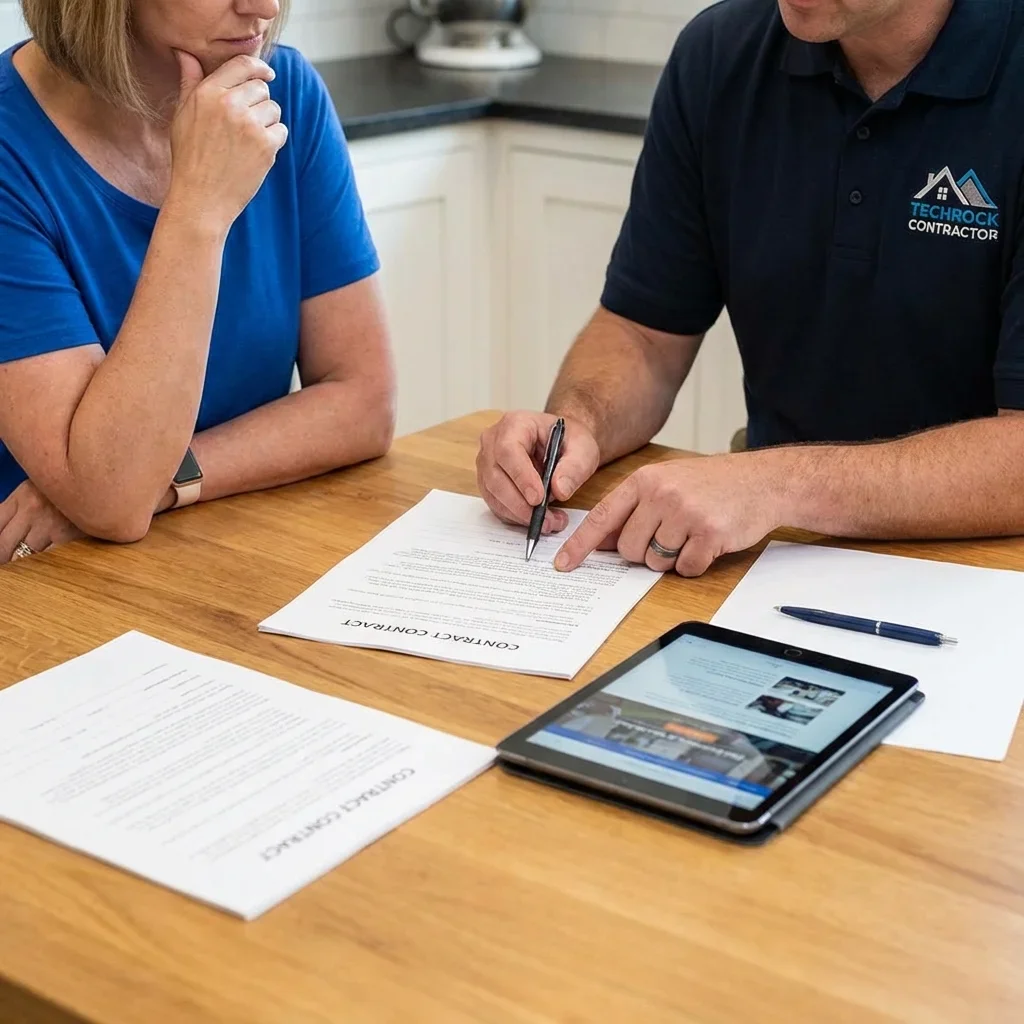
Questions to Ask Before Signing a Contract
Start with licensing. "Are you licensed with TDLR as a Mold Remediation Contractor and Mold Remediation Company?" Get the license numbers and verify them at https://www.tdlr.texas.gov/mol/mol.htm.
A legitimate contractor will have their license number on their website, business cards, and proposals. If they dodge this question or claim "we're certified but not licensed," walk away.
"Who's doing the assessment?" The answer should be an independent, TDLR-licensed Mold Assessment Company — not the remediation company. If they say "we do both," they're breaking Texas law.
Ask for the assessor's name, company, and license number. The assessment report drives the scope of work. If the same company writes the protocol and executes it, the separation TMARR requires is gone.
"What equipment are you using?" Look for specifics: commercial HEPA air scrubbers (CFM rating, number of units), 6-mil polyethylene sheeting for containment, HEPA vacuums for final cleaning.
If they mention shop vacs, box fans, or "we'll ventilate it," that's substandard. HEPA filtration is non-negotiable for professional remediation.
"What's your disposal process?" Contaminated materials should be double-bagged in 6-mil polyethylene bags, sealed, and removed from the property promptly. Ask where they're disposing of it and whether disposal fees are included in the quote.
Some contractors leave bagged materials in your garage or driveway "for you to handle" — unacceptable.
"Does this include post-remediation verification?" The answer must be yes, but clarify who's paying the assessor for clearance testing. Some contracts include it, others make you hire the assessor separately.
Get this in writing. Without documented clearance, you have no proof the work succeeded.
"What's your insurance coverage?" Mold remediation companies should carry general liability, pollution liability (mold is often excluded from standard GL policies), and workers compensation if they have employees. Ask for certificates of insurance.
If they're unlicensed or uninsured, you're liable if a worker gets hurt or if their work causes further damage.
"What's the timeline?" Legitimate contractors provide realistic schedules — containment and remediation for a medium-sized bathroom might be 2-3 days. Whole-house projects take a week or more.
Be wary of "we can start tomorrow and finish by end of day" promises for significant jobs. Proper remediation can't be rushed.
"What warranty or guarantee do you offer?" Reputable companies stand behind their work. Common terms: "If mold returns in the treated area within 1-2 years due to our workmanship, we'll re-remediate at no cost."
Make sure the warranty is conditional on you fixing the moisture source and maintaining the area properly. No contractor can guarantee mold won't return if you ignore a leaking pipe.
Our guide on choosing a mold remediation company covers red flags, credentials, and how to vet contractors thoroughly.
Cost vs. Value: What You're Really Paying For
Cheap mold remediation is expensive. A $900 quote that skips containment, uses inadequate equipment, and doesn't remove contaminated materials is worse than doing nothing — it spreads spores throughout your home and leaves the underlying problem untouched.
You'll pay again in 3-6 months when the mold returns, and the second remediation costs more because the scope has expanded.
Professional remediation buys you health protection. Proper containment and HEPA filtration prevent cross-contamination. Removing contaminated materials instead of just spraying them with bleach eliminates the source. Antimicrobial treatment prevents recurrence.
These aren't luxuries — they're the baseline for effective remediation.
You're paying for regulatory compliance. TDLR licensing requirements exist because unregulated mold work in the early 2000s led to widespread health complaints, shoddy work, and contractor fraud. Licensed companies follow TMARR protocols, submit required notifications,[1] and undergo continuing education.
Working with a licensed contractor means your remediation is defensible if you later sell the home or file an insurance claim.
You're buying documentation. A professional job includes the independent assessment report, the remediation protocol, daily logs, moisture readings, photos before and after, and post-remediation clearance testing results.
This paper trail proves to buyers, insurers, and health departments that the problem was identified, addressed properly, and verified resolved. Homeowners who DIY or hire unlicensed contractors have no documentation — just their word that it was "taken care of."
You're investing in recurrence prevention. The remediation company doesn't just kill mold and walk away. They identify the moisture source (or coordinate with the trades who fix it), recommend preventive measures (better ventilation, dehumidification, moisture barriers), and provide guidance on maintaining dry conditions.
Some offer mold prevention services as ongoing maintenance contracts — periodic inspections, moisture monitoring, minor corrections before mold takes hold. Spending $200/year on prevention beats spending $3,000 every few years on remediation.
The value equation is simple: professional remediation done right costs more upfront but solves the problem permanently (assuming the moisture source is fixed). Cutting corners costs less now but guarantees you'll pay again — and probably more — when the mold returns or spreads.
Navigating Insurance Claims for Mold Remediation
Texas homeowner policies cover mold only when it results from a covered peril. A pipe bursts suddenly and floods your bathroom overnight? Covered — the burst pipe is the peril, mold is the consequence.
A pipe has been leaking slowly for six months and you finally notice mold? Not covered — gradual leaks are excluded as maintenance issues.
Storm damage is covered if the storm directly caused the water intrusion (wind-driven rain through a damaged roof, for example) and you acted quickly to mitigate. "Quickly" means within days, not weeks. Insurers expect you to tarp a damaged roof, extract standing water, and start drying immediately.
If you wait three weeks and mold colonizes, they'll argue you failed to mitigate and deny the mold claim even if they cover the storm damage.
Flooding from outside the home — hurricanes, heavy rain overwhelming drainage, river or bayou overflow — is excluded from standard policies. You need separate flood insurance through NFEMA or a private carrier, and even then, flood policies have mold sub-limits (often $10,000-$25,000) and strict timelines.
If you're in a FEMA flood zone, understand what your flood policy covers for mold.
Filing a mold claim triggers scrutiny. Adjusters will ask when you first noticed moisture, what you did to address it, and whether you have maintenance records showing you kept up with roof, plumbing, and HVAC upkeep. They'll look for pre-existing mold or signs the damage was gradual.
Many homeowners discover their claim is denied because the adjuster determines the mold resulted from "long-term moisture" rather than a sudden event.
Document everything if you're filing a claim. Photos of the water damage immediately after discovery, receipts for emergency mitigation (water extraction, drying), written logs of when you notified the insurer and what actions you took, and the independent mold assessment report all support your claim.
The remediation company should provide detailed invoices and scope documentation. Some companies specialize in insurance claim mold services and know how to document for maximum claim success.
Expect fights over scope and cost. Insurers often hire their own assessors or remediators who lowball the estimate. You have the right to get your own estimates and challenge the insurer's numbers.
Texas law requires insurers to act in good faith, but "good faith" is a legal minefield. If your claim is denied or underpaid and you believe it's wrongful, consult a public adjuster or attorney who specializes in property insurance claims before accepting the decision.
Some remediation companies work directly with insurers and accept "assignment of benefits" — they bill the insurance company directly and you pay only the deductible. This simplifies cash flow but can lead to inflated pricing (the contractor knows the insurer will pay) or disputes if the insurer challenges the bill and the contractor looks to you for the balance.
Read any assignment carefully and understand you're ultimately responsible if the insurer doesn't pay.
Final Considerations Before You Hire
Mold remediation is a serious expense, but delaying rarely saves money. It usually costs more. Every week you wait, the mold spreads, the damage deepens, and the health risks compound.
The best time to remediate was when you first spotted moisture. The second-best time is now.
Don't choose based solely on price. The lowest bid often comes from the least qualified contractor — someone cutting corners on containment, using substandard equipment, or lacking proper licensing. The highest bid doesn't guarantee quality either; some companies overcharge because they can.
Focus on license verification, equipment quality, scope completeness, and documented results. A mid-range quote from a well-established, properly licensed company with good references is usually your safest bet.
Ask for references from recent projects similar to yours. A company that remediates commercial warehouses might not excel at residential crawl space work. Someone who specializes in post-flood whole-house remediation might overkill — and overcharge — a small bathroom job.
Find a contractor whose expertise matches your situation.
Understand that fixing mold is a two-part equation: remediation (removing the mold) and source repair (stopping the water). Budget for both. If you remediate but don't fix the leaking pipe, cracked foundation, or condensation-prone HVAC system, you're wasting money.
The mold will return. Some homeowners finance the total cost — remediation, plumbing, roofing, whatever it takes — to solve the whole problem at once rather than piecemealing it and risking recurrence.
Financing options exist if the cost is prohibitive. Some remediation companies offer payment plans. Home equity lines of credit, personal loans, or even credit cards with 0% intro APR can spread the cost over time.
Delaying because you can't afford it all upfront is understandable, but delaying while the problem worsens costs more in the long run.
Finally, use this as a learning moment. Most mold problems are preventable. After remediation, commit to proactive maintenance: fix leaks immediately, run exhaust fans during showers, monitor humidity (keep it below 60% indoors), inspect roofs and plumbing annually, and clean HVAC drain pans regularly.
Prevention costs far less than remediation. Our post-flood mold prevention guide applies to any moisture event, not just floods, and offers practical steps to keep your home dry and mold-free.
Texas mold remediation costs what it costs because the work is specialized, regulated, and essential. Cutting corners doesn't save money — it just postpones and enlarges the bill. Invest in doing it right, verify your contractor's credentials, address the underlying moisture issue, and move forward knowing your home is safe and your investment is protected.
- Texas Administrative Code. "16 Tex. Admin. Code § 78.80 - Fees." https://www.law.cornell.edu/regulations/texas/16-Tex-Admin-Code-SS-78-80. Accessed April 02, 2026.
- Texas Comptroller of Public Accounts. "Mold Remediation Services." https://comptroller.texas.gov/taxes/publications/94-187.php. Accessed April 02, 2026.
- VERTEX (summarizing Texas regulations). "Texas Mold Assessment and Remediation Rules (TMARR)." https://vertexeng.com/insights/texas-mold-assessment-and-remediation-rules-tmarr/. Accessed April 02, 2026.