Quick answer: Mold can start growing within about a day after a leak, according to the Texas Department of Insurance (TDI). Power loss makes it worse. Dry and document everything right away, and hire a TDLR-licensed assessor and a separate TDLR-licensed remediator for projects over 25 contiguous square feet.[1][2]
Why Hurricanes Create a Different Mold Problem
Water gets into a hurricane-damaged home by several routes at once. Wind-driven rain pushes through roofs, windows and soffits. Storm surge can reach ground level, so check your flood risk. Plumbing and appliance lines can fail too.
Then the power goes out. With no AC or dehumidifier running in humid Gulf Coast air, wet materials stay wet.
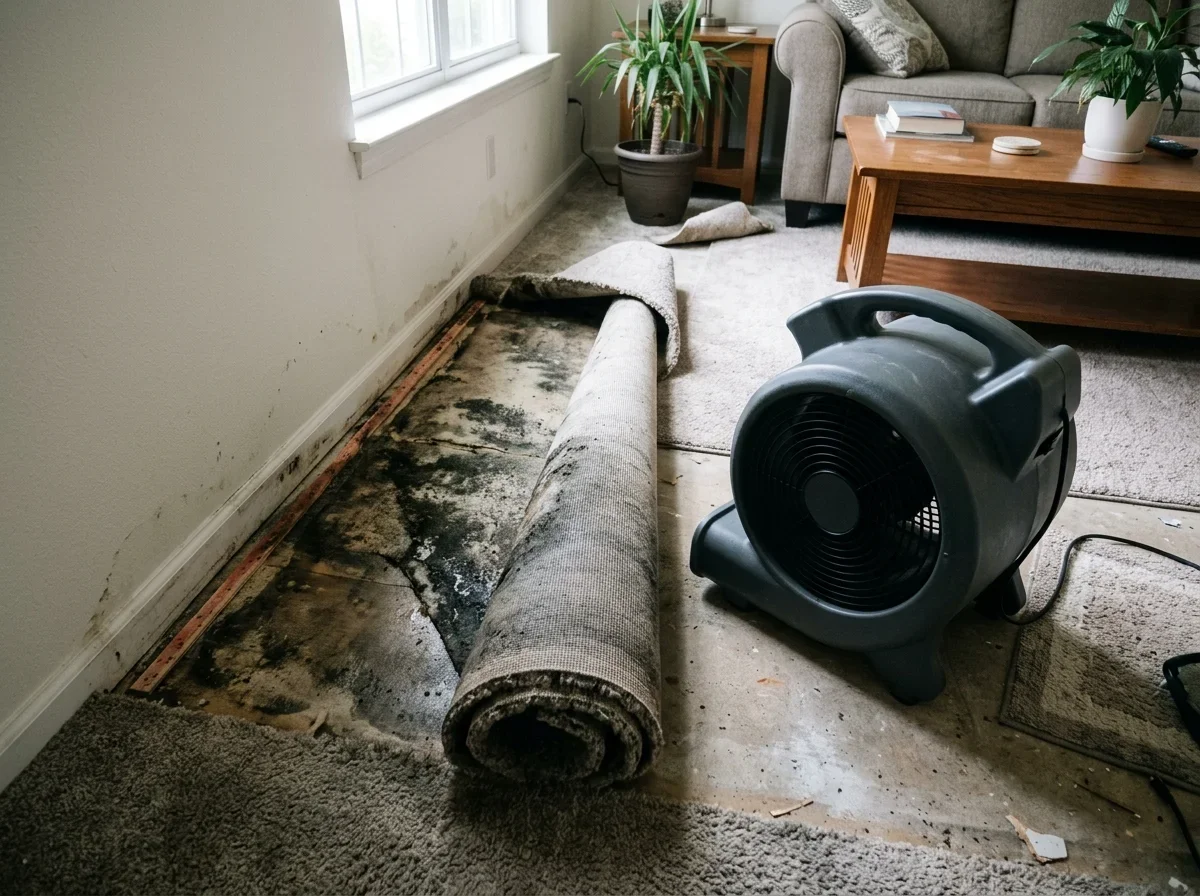
If your water came from rising floodwater or sewage, read our guide on cleanup steps after floodwater and sewage. The rest of this page focuses on everything else a hurricane does to a house.
The First 48 Hours After the Storm
EPA recommends drying the home and contents as quickly as possible, ideally within 24 to 48 hours.[4] Your first days are mostly about safety, proof and stopping new water.
Safety and Documentation
Don't go in until the structure and electrical system are safe.[4] Once it's safe, photograph and video every affected room before you move anything. Note dates and times.
Report the claim to your insurer in writing and keep notes of every call. TDI says the insurer must begin investigating within 15 days of a written claim.
Stopping Further Water Entry
Tarp the roof and cover broken windows as soon as it's safe. Keep every receipt, since temporary repairs are often part of a claim.
Then remove standing water and carry out wet soft items you can move. Open the house to air only if the outdoor air isn't saturated.
EPA's guidance centers on moisture control: remove standing water, dry the space, and discard materials that stay wet more than 24 to 48 hours.[3]
Drying a Home Without Power
A generator can run fans and a portable dehumidifier, but it stays outdoors, away from windows, and never in the garage or inside the house. The CDC publishes carbon monoxide guidance for post-storm generator use.
How it works
Drying with a generator
Step 1: Generator outdoors
Away from windows, never in the garage or house
Step 2: Fans move air across wet surfaces
Step 3: Portable dehumidifier pulls moisture from the air
Dry the materials that hold moisture longest first:
- Carpet and pad
- Insulation
- The bottom of drywall
- Cabinet bases
In slab-on-grade homes, which are the norm across Texas, water wicks into baseboards and the lower portion of walls even when the floor looks dry.
Pier-and-beam homes need a different check. Look in the crawl space for wet insulation sagging off the floor above and for a displaced vapor barrier.
Side by side
What to check by foundation type
Slab-on-grade
- Water wicks into baseboards
- Lower portion of walls stays wet
- Floor can look dry
Pier-and-beam
- Check the crawl space
- Look for wet insulation sagging off the floor above
- Look for a displaced vapor barrier
If walls are wet, materials are saturated, or you still have no power after a few days, bring in professional structural drying rather than hoping the house catches up.
Roof Leaks, Attics and Wind-Driven Rain Damage
Wind-driven rain gives you no standing water to warn you. It enters through missing shingles, damaged flashing and vents, then soaks insulation and decking above rooms that look perfectly dry.
TDLR lists roof leaks among the moisture sources that can lead to mold, and mold work requires fixing the source first.[2]
Hidden Moisture in Attics and Wall Cavities
Ceiling stains, a musty smell and sagging drywall are late signs. Moisture can sit in drywall, insulation and framing long after the surface looks fine.
Get into the attic early. Look at the underside of the roof sheathing, around vents and penetrations, and at any ductwork or air handler up there. Our pages on where hidden mold builds up after a leak cover what to look for.
Pro tip
Check the underside of the roof sheathing first. Wind-driven rain often soaks the decking and insulation above rooms that still look dry.
The First Steps: Assessment, Protocol and Hiring
Once the first emergency is over, the real decisions start. Hiring gets harder, because crews flood in after landfall and good local firms book up fast.
Our storm damage mold remediation listings can help you compare licensed providers. Questions to ask before hiring a mold company is worth a read first.
Contractor Surge and Checking Licenses
Texas requires TDLR licensing for mold assessment and remediation unless an exemption applies.[1] In most cases, visible mold covering less than 25 contiguous square feet can be cleaned by an unlicensed person, but larger projects require licensed professionals.[2]
Under-25 jobs don't get a certificate of mold remediation. For details, see our summary of Texas TDLR mold licensing rules.
Check any out-of-area crew in this order:
- Ask for the TDLR license number and license type.
- Confirm a Mold Remediation Company license for removal and a Mold Assessment license for testing.
- Verify the number with TDLR (the program page is tdlr.texas.gov/mld/, or call 800-803-9202 in state).
- Get the Consumer Mold Information Sheet before any work starts.[5]
- Ask for a certificate of insurance, and ask about workers' compensation, since most Texas private employers aren't required to carry it.
Assessor and Remediator Must Be Separate
One company may not both assess and remediate the same project. The assessor writes the protocol, and it must reach you at least one day before work begins. The remediator then follows it.
What the mold remediation process involves walks through each step.
Red flags: a contractor offering to waive your deductible, acting as your adjuster, or skipping the protocol. If a problem comes up, you can file a TDLR complaint (there is a two-year filing window).
Older home? If your house was built before 1978 and paint will be disturbed, you may also need an EPA lead-safe (RRP) certified firm.
Insurance After a Hurricane: What Is and Isn't Covered
Most Texas homeowner policies cover sudden and accidental water damage but usually exclude flood, which needs a separate policy. Many policies also exclude or cap mold remediation.
Usually covered
- Sudden and accidental water damage
- Wind-driven rain through a storm-created opening, depending on your policy language
Usually not covered
- Flood, which needs a separate policy
- Mold remediation, which many policies exclude or cap
Whether wind-driven rain through a storm-created opening is covered depends on your policy language. Ask your adjuster in writing and check TDI's guidance on when water damage and mold are covered.
What helps a claim:
- Written scopes of work
- Dated photos and video
- Moisture readings
- An inspection showing the mold was removed, done by a state-licensed mold professional, which TDI advises using
Contractors can't waive or absorb your deductible, and contracts of $1,000 or more tied to an insurance settlement must state that the deductible is yours to pay.
Our page on whether Texas homeowners insurance covers mold goes deeper.
Months Later: Verification and Spotting Regrowth
When remediation ends, the licensed assessor who wrote the protocol should perform clearance. You should receive the certificate of mold remediation within 10 days of completion. Keep it.
Regrowth is a real risk in Texas, where AC runs eight months or more a year. Check ducts and air handlers that ran or sat wet during the storm. Watch for a returning musty smell or new stains, especially when humidity climbs.
Key takeaways
Mold can start growing within about a day after a leak
Dry within 24 to 48 hours and discard materials that stay wet
Projects over 25 contiguous square feet need a licensed assessor and a separate licensed remediator
Keep the certificate of mold remediation, which should arrive within 10 days of completion
Keep a folder with:
- The certificate
- The protocol and assessment
- Your contract
- Photos
- Moisture readings
Permit rules for drywall replacement vary by city, so confirm with your local permit office. Mold remediation itself needs no building permit, but roof, plumbing and HVAC repairs usually do.
| City | Drywall permit note |
|---|---|
| Houston | Up to 100 aggregate sq ft of wall gypsum repair is no-permit |
| Austin | Up to 128 sq ft exempt for one- and two-family homes |
| Fort Worth | Permit required at 16 sq ft or more |
| Dallas | Nonstructural interior remodeling of one- and two-family homes with no added floor area is exempt |
| San Antonio | Sheet rock repair is on the no-permit list |
FAQ
How quickly does mold develop after water damage from a hurricane?
TDI says mold can begin growing within about a day after a leak. Start drying right away, and discard materials that stay wet beyond 24 to 48 hours.[3]
Does homeowners insurance cover mold after a hurricane?
It depends on your policy. Most cover sudden and accidental water damage, usually exclude flood, and often exclude or cap mold. Read your policy and ask your adjuster in writing.
Can you get over mold exposure?
Many people's symptoms ease once exposure ends, but responses vary. If you have breathing trouble or other symptoms, see a doctor and check CDC guidance on mold and health.
Is mold worse when it rains or after heavy storms?
Wet weather raises indoor moisture risk, mainly when water gets in or humidity stays high. Storm damage plus no AC is the more serious combination.
Do I need a licensed professional for mold after a hurricane in Texas?
Generally yes for visible mold over 25 contiguous square feet.[2] You need a TDLR-licensed assessor and a separate TDLR-licensed remediator.[5]
Should I clean my air vents myself after a storm?
Avoid disturbing suspected mold in ducts or air handlers. If your system was wet, follow EPA guidance and use a qualified professional.
- Texas Department of Licensing and Regulation. "Consumer Mold Information Sheet." https://www.tdlr.texas.gov/mld/pdf/cmis.pdf. Accessed October 17, 2026.
- Texas Department of Licensing and Regulation. "Consumer Protection — Mold." https://www.tdlr.texas.gov/media/pdf/Consumer%20Protection%20-%20mold.pdf. Accessed October 17, 2026.
- U.S. Environmental Protection Agency. "Hurricanes." https://www.epa.gov/natural-disasters/hurricanes. Accessed October 17, 2026.
- U.S. Environmental Protection Agency. "Emergencies and Indoor Air Quality." https://www.epa.gov/emergencies-iaq/emergencies-and-indoor-air-quality-iaq. Accessed October 17, 2026.
- Texas Department of Licensing and Regulation. "Mold Assessors & Remediators at a Glance." https://www.tdlr.texas.gov/media/pdf/mold-assessors-and-remediators-at-a-glance.pdf. Accessed October 17, 2026.