The Moisture Source Was Never Eliminated
Killing visible mold is the easy part. Stopping the water that feeds it is where most remediation projects fail.
A building that has suffered mold contamination can easily experience regrowth because microscopic spores remain everywhere — any new water intrusion creates the perfect breeding ground all over again.[1]
Texas homes face unique moisture challenges that most contractors miss. Slab-on-grade construction dominates the state, which means your plumbing runs under concrete. A slow leak beneath your foundation can saturate soil and wick moisture into flooring and walls for months before you notice discoloration.
Expansive clay soil in Houston, Dallas-Fort Worth, and San Antonio makes this worse — the clay swells when wet and shrinks when dry, creating constant foundation movement that cracks both slabs and the pipes embedded in them.
Even skilled remediators focus on the visible damage. They remove the moldy drywall in your bathroom but never question why moisture accumulated there. Was it a leaking shower pan? Condensation from an oversized AC unit? A roof leak three rooms away that's traveling through wall cavities?
If the root cause goes unaddressed, you're just paying to postpone the inevitable.
The most expensive recurring mold cases involve hidden plumbing failures. Cast iron drain lines in pre-1980 Texas homes corrode from the inside out, especially in areas with hard water exceeding 300 ppm (San Antonio and the Hill Country see some of the highest mineral content in the state). These pipes develop pinhole leaks that drip slowly enough to avoid flooding but consistently enough to keep framing damp.
You'll remediate the mold, pass the clearance test, and six months later it's back because 40-year-old plumbing is still weeping behind the walls.
Incomplete Material Removal Left Contaminated Surfaces
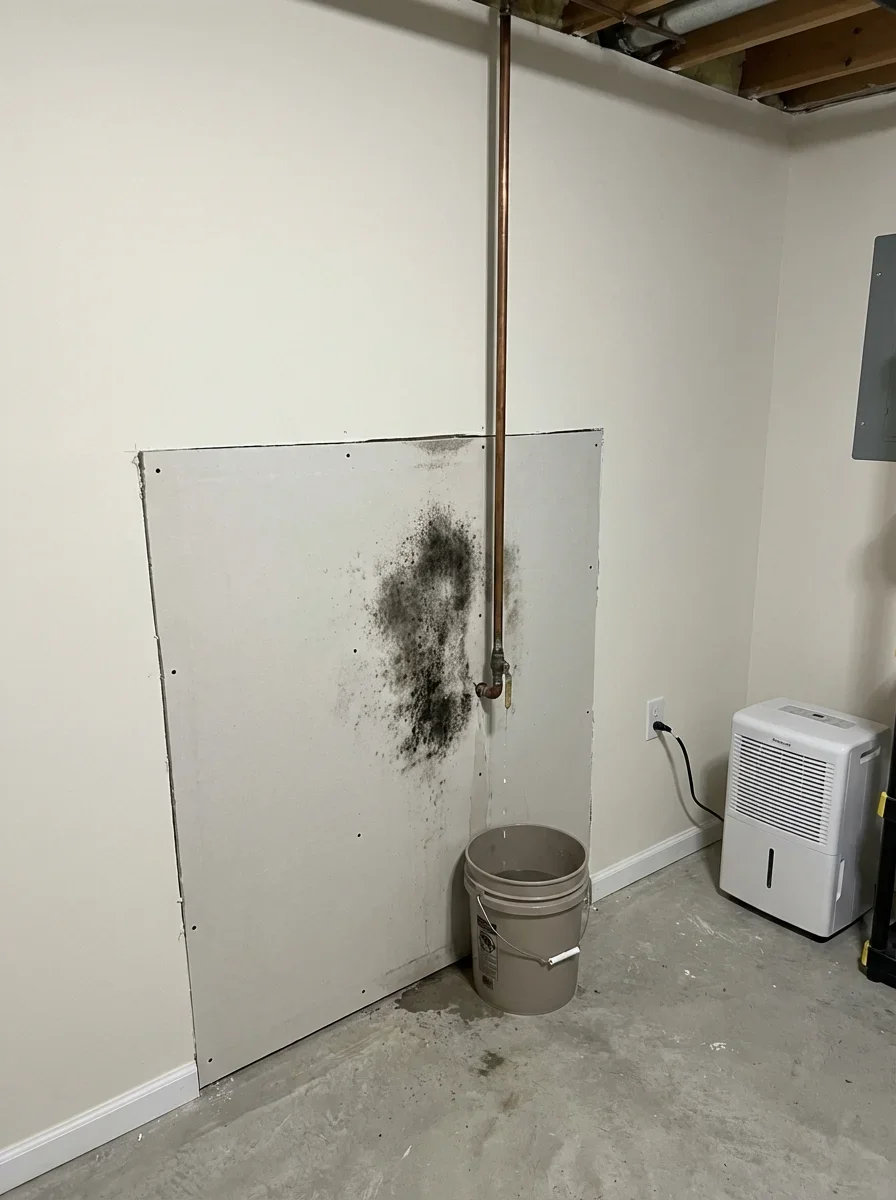
Mold grows into porous materials, not just on them. Drywall, insulation, ceiling tiles, and untreated wood absorb spores deep into their structure. Surface cleaning with bleach or antimicrobial spray might kill what's visible, but it doesn't extract what's embedded.
Remediation includes both the identification and correction of the conditions that permit mold growth, as well as the steps to safely and effectively remove mold-damaged materials — not just treat them.[2] The difference matters. If a contractor sprays a moldy stud with biocide and leaves it in place, they've disinfected the surface but left colonized wood fibers intact.
As soon as humidity climbs or a new leak develops, dormant spores activate and spread.
Texas summers bring sustained humidity that keeps indoor relative humidity above 60% even with AC running. Spray foam insulation in post-2000 homes creates tight building envelopes that trap moisture if ventilation is inadequate. Pier-and-beam homes in older neighborhoods have crawl spaces that see humidity spikes during our May-to-October rainy season.
All of this creates conditions where incompletely removed materials become reinfection points.
Some remediators cut corners by removing only the visibly damaged drywall. They leave the bottom plate of the wall frame, the insulation behind it, and the subfloor beneath it — all of which absorbed the same moisture. That's not remediation. That's cosmetic repair.
When mold returns in those cases, it's often spreading from materials that were contaminated in the first event but never addressed.
| Approach | What's Removed | What's Left Behind | Recurrence Risk |
|---|---|---|---|
| Surface Treatment | Nothing—spray only | All contaminated materials | Very High—90%+ |
| Partial Removal | Visible drywall | Framing, insulation, subfloor | High—60-70% |
| Complete Removal | All porous materials | Only cleaned structural elements | Low—10-20% |
| Full Remediation | All affected materials + HVAC cleaning | Nothing contaminated | Very Low—5% |
The Assessment Missed Hidden Contamination
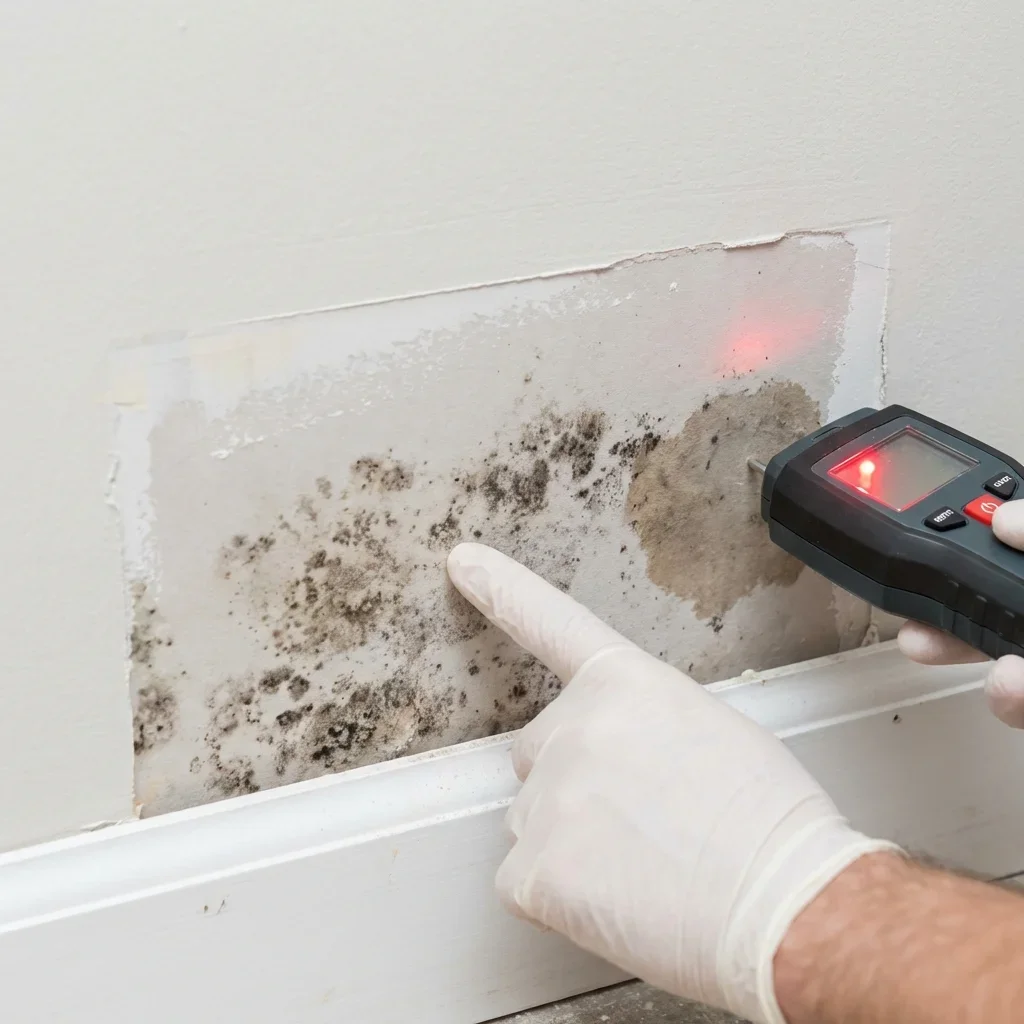
You can't remediate what you don't find. Mold assessment requires identifying the underlying causes of water intrusion and developing appropriate responses to prevent recurrence, not just documenting visible growth.[3] A proper assessment uses thermal imaging to detect temperature differentials that indicate moisture, moisture meters to measure content levels in building materials, and sometimes intrusive inspection (cutting small access holes in walls or ceilings) to examine hidden cavities.
Many Texas homeowners discover recurring mold because the original assessment was visual-only. The technician walked through, photographed the obvious bathroom mold, and called it a day. They never checked the attic above that bathroom, where a roof penetration has been leaking for years. They didn't pull back baseboards to inspect wall cavities.
They didn't examine the HVAC system, even though condensation in ductwork is one of the top three mold sources in Texas homes that run air conditioning eight months a year.
Wall cavity mold is especially common in Texas's rapidly built tract homes (think post-2000 subdivisions in Austin, North Dallas, and the San Antonio suburbs). Builders often skip proper flashing around windows, leave gaps in vapor barriers, or install bath exhaust fans that vent into attic spaces instead of outdoors. These defects create moisture accumulation inside walls that won't show up until someone opens them.
If your remediator only treated the surface mold in a bedroom, but moisture is still condensing inside the exterior wall from a missing vapor barrier, you'll see new growth within months.
Texas law requires separate companies to handle mold assessment and mold remediation — one company evaluates, another one fixes. This prevents conflicts of interest, but it also means your assessment needs to be thorough from the start. Verify your assessor holds a current Texas Department of Licensing and Regulation (TDLR) Mold Assessment Technician or Mold Assessment Company license at https://www.tdlr.texas.gov/mol/mol.htm.
An incomplete assessment locks you into a cycle of recurring remediation because the scope of work never addressed the full problem.
HVAC Systems Spread Contamination After Remediation
Your air conditioning system is a mold distribution network if it's not properly addressed during remediation. AC units in Texas homes run nearly continuously from April through October. Condensation forms on evaporator coils, collects in drain pans, and travels through ductwork.
If any part of that system was contaminated during the original mold event and wasn't cleaned or replaced, it's actively reintroducing spores into your living space.
The most overlooked component is the ductwork itself. Fiberglass-lined ducts absorb moisture and provide a porous surface for mold colonization. Flex ducts that sag or have tears create low-flow zones where condensation pools. Supply registers in humid rooms like bathrooms pull moist air back into the return system, spreading it throughout the home.
A remediation crew might seal off the affected room with plastic sheeting and run negative air machines, but if they don't address the HVAC system, contaminated air keeps circulating.
Drain line clogs are another recurring issue. AC condensate drains in Texas homes frequently back up because of algae growth in the PVC line. When the pan overflows, it saturates ceiling drywall or floods the air handler closet. Remediators clean up the water damage and remove the moldy drywall, but if they don't clear the drain line and treat the pan with algaecide tablets, the overflow happens again within weeks.
You end up remediating the same closet three times in two years — not because the work was poor, but because the underlying mechanical failure wasn't corrected.
Post-remediation HVAC cleaning should include coil treatment, drain line flushing, duct inspection (or replacement if contaminated), and fresh filter installation. Some situations call for HVAC mold removal as a separate scope of work.
Skipping this step is one of the clearest predictors of recurring mold, especially in two-story homes with complex duct runs and multiple air handlers.
Pro Tip: After any mold remediation, replace your HVAC filter immediately and again after 30 days. If the second filter shows visible mold or discoloration, your ductwork likely needs professional cleaning—spores are still circulating through your system.
Humidity and Ventilation Issues Were Never Addressed
Mold needs three things: moisture, food (organic material like wood or drywall), and the right temperature range. Texas homes provide the last two in abundance.
Controlling moisture is your only lever, and that means managing indoor humidity even after remediation is complete.
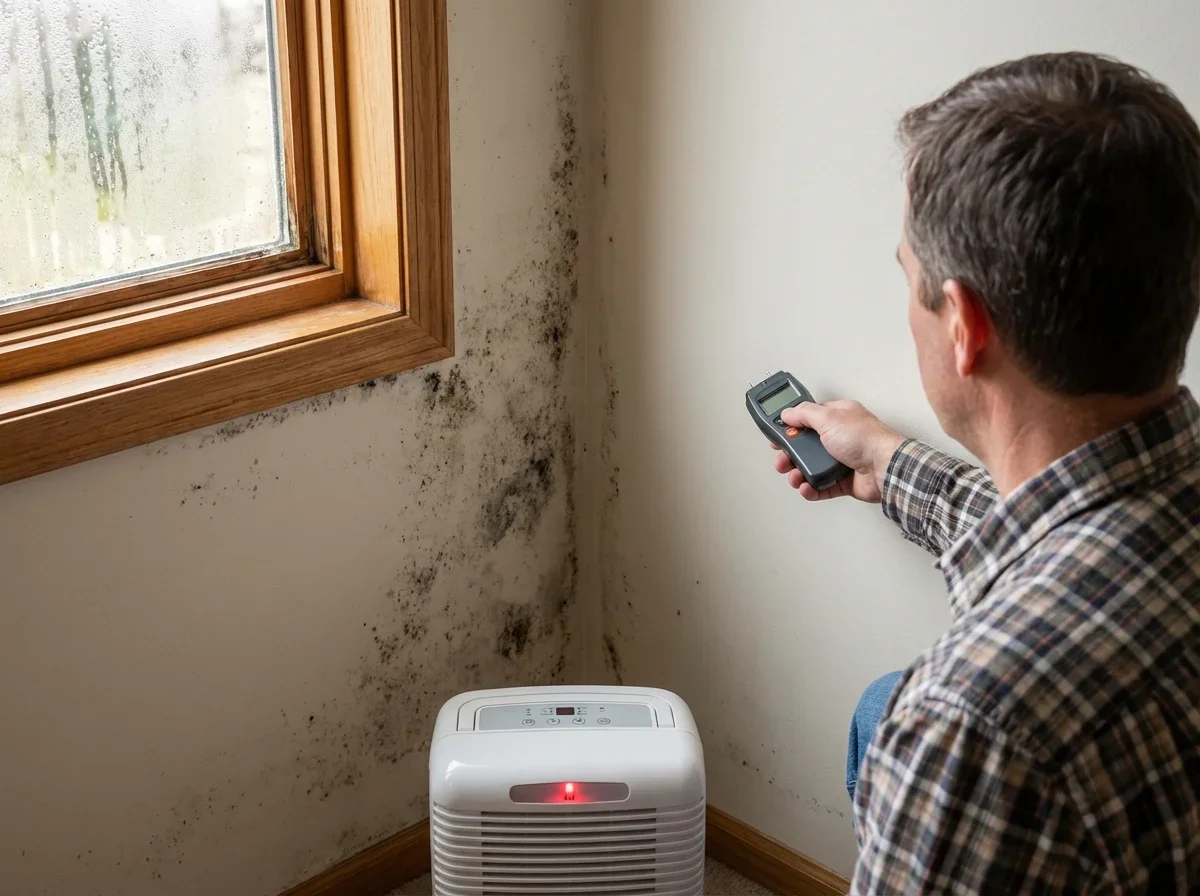
Relative humidity above 60% supports mold growth. Texas's Gulf Coast sees outdoor humidity regularly exceed 80% during summer mornings. Even with central AC, poorly ventilated bathrooms, laundry rooms, and kitchens can hit 70% or higher after showers, dishwashing, or cooking. If your home lacks exhaust fans or if existing fans vent into the attic instead of outdoors, you're creating localized humidity spikes that reactivate dormant spores or allow new colonization on clean surfaces.
Bathroom exhaust fans are required by the International Residential Code (adopted in Texas with amendments), but enforcement is inconsistent and older homes were often built without them. A remediator can remove every trace of mold from your shower surround, but if you don't run an exhaust fan during showers or leave the bathroom door closed afterward, moisture will condense on walls and ceilings within hours.
Mold returns in the same spot because the conditions that caused it never changed.
Dehumidifiers help in persistently humid rooms, but they're a band-aid if the real problem is insufficient ventilation or air sealing issues. Crawl spaces in pier-and-beam homes (common in older Houston, Dallas, and Austin neighborhoods) need vapor barriers and proper venting. Attics need ridge vents or gable vents to exhaust heat and moisture. Post-flood mold prevention requires managing humidity during the entire drying process, not just the first 72 hours.
Indoor air quality testing can pinpoint whether your mold problem is environmental (high humidity) or structural (hidden leaks). You can request indoor air quality testing to measure spore counts in living areas versus outdoor baselines.
If indoor counts remain elevated after remediation, it suggests either incomplete removal or ongoing moisture issues that are supporting new growth.
The Remediation Didn't Follow Industry Standards
Not all mold remediation is created equal. The IICRC S520 standard (published by the Institute of Inspection, Cleaning and Restoration Certification) provides detailed protocols for containment, removal, cleaning, and verification.
When contractors skip steps — inadequate containment, improper disposal, no post-remediation testing — you get incomplete work that looks fine initially but fails within months.
Containment prevents cross-contamination during removal. The affected area should be sealed with 6-mil polyethylene sheeting, and negative air machines should create pressure differentials that prevent spores from migrating to clean areas. If your contractor just opened up a moldy wall and started tearing out drywall without containment, they likely spread spores to adjacent rooms.
Those spores settle on furniture, inside closets, and in HVAC return vents. When conditions are right, they germinate and you're dealing with mold in new locations.
Proper disposal matters too. Moldy materials should be double-bagged and removed from the home immediately, not piled in your driveway for three days or shoved into your regular trash bin. Some Texas municipalities have specific disposal requirements for contaminated building materials — Houston's Solid Waste Management Department, for instance, requires contractors to use designated facilities for certain waste streams.
Post-remediation verification is the final checkpoint. An independent assessor (required by Texas law to be a different company than the remediator) should perform clearance testing before reconstruction begins. This includes visual inspection, moisture readings, and often air sampling to confirm spore counts have returned to baseline.
Skipping this step means you have no objective proof the work was successful. When mold returns, you won't know if it's new contamination or leftover growth from incomplete remediation.
If your original remediator didn't provide a post-remediation verification report, that's a red flag. Texas Department of Licensing and Regulation rules require specific documentation for mold work, including photos, moisture readings, and scope of work.
Companies cutting corners on paperwork are usually cutting corners on the actual remediation too.
IICRC S520 Critical Steps Often Skipped:
- Proper containment with 6-mil plastic and negative air pressure
- HEPA filtration during all material removal
- Double-bagging and immediate disposal of contaminated materials
- Cleaning and treating all surfaces in affected areas (not just visible mold)
- Independent post-remediation verification testing
- Documentation with photos, moisture readings, and clearance reports
Foundation and Structural Issues Keep Reintroducing Moisture
Texas's expansive clay soil is a silent driver of recurring mold. The Blackland Prairie soil across the Dallas-Fort Worth metro and parts of Central Texas can swell up to 10% when saturated, then shrink dramatically during droughts.
This cycle creates foundation movement — slabs crack, pier-and-beam structures shift, and plumbing connections shear.
A cracked slab allows groundwater and humid soil air to enter your home from below. Even if remediators eliminate existing mold and dry out the structure, the crack remains a moisture entry point. Every heavy rain or irrigation cycle introduces new water.
You'll see mold recurring along baseboards, in closets, or at the slab edge where flooring meets walls.
Plumbing leaks caused by foundation movement are especially insidious because they're often slow and hidden. A shifted foundation can stress a copper supply line or PVC drain line until it develops a pinhole leak. That leak might release just a few ounces of water per day — not enough to cause a puddle, but more than enough to saturate subfloor and wall framing over weeks. Mold grows in the hidden cavity. Remediation clears it. The leak continues.
Mold returns.
Foundation repair in Texas typically involves installing steel or concrete piers to stabilize the slab or pier-and-beam structure. Expensive — often $5,000 to $15,000 depending on severity — but if foundation movement is the root cause of your moisture intrusion, no amount of mold remediation will solve the problem permanently. You need to fix the structure first, then address the mold.
Doing it in reverse order just means you'll be remediating the same areas every year.
Proper moisture management also includes exterior grading. Soil should slope away from your foundation at a 5% grade for at least 10 feet. Downspouts should discharge water well beyond the foundation perimeter. French drains and sump pumps help in areas with poor natural drainage.
These aren't glamorous fixes, but they prevent the subsurface moisture that feeds persistent mold problems.
No One Tested the Water Intrusion Source
Water doesn't materialize out of nowhere. If mold returns, water returned first.
But here's what most homeowners miss: the water might not be coming from the same place it was before. Fixing one leak can shift water flow to a new weak point, especially in aging plumbing or deteriorating building envelopes.
A common scenario in Texas: you remediate mold in a master bathroom that was fed by a leaking shower pan. The contractor replaces the pan, waterproofs properly, and all seems well. Six months later, mold appears in the adjacent bedroom closet.
Turns out the shower leak was masking a separate roof leak above the bathroom. Water had been traveling along a rafter and dripping into the wall cavity. Once the shower leak stopped, the roof leak became the dominant moisture source and migrated to a new location.
Thermal imaging and moisture mapping during the initial assessment should identify all potential moisture sources, not just the obvious one. If your assessment only documented the bathroom leak and never scanned the rest of the home, you're vulnerable to these surprise recontaminations. Texas's severe weather — hailstorms across North Texas, hurricane remnants along the Gulf Coast, and intense thunderstorms statewide — creates roof damage that often goes unnoticed until mold appears months later.
Plumbing testing helps too. A hydrostatic test on drain lines can reveal whether pipes are holding pressure or leaking underground. Slab leak detection uses pressure testing, acoustic sensors, or helium detection to locate breaks beneath concrete. These diagnostics cost $300 to $800 but can pinpoint hidden leaks that visual assessment will never find.
If you're on your second or third round of remediation for the same area, invest in diagnostics before you pay for another round of drywall removal.
The Remediation Happened Too Quickly After Water Damage
Speed matters in water damage response — the 24-to-48-hour window to prevent mold growth is real. But remediation itself shouldn't be rushed.
Materials need to dry completely before encapsulation or reconstruction begins. If a contractor tears out visibly wet drywall but leaves damp framing and insulation in place, then immediately seals everything behind new drywall, they've just created a mold incubator.
Structural drying takes time. Lumber framing needs to reach below 20% moisture content (measured with a pin-type or pinless moisture meter). Concrete slabs can take weeks to dry depending on thickness and ambient conditions. Spray foam insulation is slow to release trapped moisture.
Rushing reconstruction before materials are fully dry is one of the most common causes of mold recurrence, particularly after flooding events.
Texas's hurricane season brings catastrophic water damage that overwhelms local contractors. After Hurricane Harvey in 2017, Houston saw thousands of homes with standing water for days. Many homeowners, desperate to move back in, hired the first available contractor — some of whom lacked proper TDLR mold licensing or training. Drywall went up while studs were still damp. Mold bloomed within weeks.
Those homes are still cycling through remediation years later because the initial response prioritized speed over thoroughness.
Professional structural drying uses commercial dehumidifiers, air movers, and moisture monitoring to ensure materials reach equilibrium before reconstruction. Documentation matters — your contractor should provide daily moisture logs showing readings dropping to acceptable levels before any surfaces are sealed.
If you don't have that documentation from your first remediation, your current mold problem might just be the original moisture finally manifesting.
Insurance Disputes Interrupted Proper Remediation
Texas homeowners insurance policies generally exclude mold coverage unless it's a direct result of a covered peril (like a sudden pipe burst). The ambiguity creates friction: insurers argue the mold resulted from long-term neglect, homeowners argue it followed a covered event, and contractors get caught in the middle.
When insurance disputes delay or limit remediation scope, you often get partial fixes. The adjuster approves removal of visibly damaged drywall but denies coverage for duct cleaning or replacement of contaminated insulation. The contractor does only what the claim covers.
Mold returns because the full scope was never completed.
This is especially problematic with slow leaks. If an insurance adjuster determines the leak was "gradual" rather than "sudden," the entire claim might be denied. You're left paying out of pocket, which often means choosing the cheapest contractor and the most limited scope of work.
That sets you up for recurrence.
Texas homeowners dealing with insurance-related mold issues should document everything: photos with timestamps, moisture readings, contractor estimates, and communications with the insurer. Engaging a public adjuster (who represents you, not the insurance company) can help secure broader coverage. Some mold remediation companies offer insurance claim mold services that include working directly with adjusters and providing documentation that meets insurer requirements.
If your remediation was insurance-funded and mold returned, review your original claim documents and scope of work. Insurance companies sometimes approve emergency water extraction and basic drying but deny the follow-up mold remediation that should have happened. You think the problem is fixed because the water is gone, but mold is colonizing inside walls the entire time.
By the time you notice, it's considered a "new" issue and coverage fights start all over again.
You're Dealing With a Different Mold Problem Entirely
Here's an uncomfortable truth: sometimes the mold that returned isn't a recurrence. It's a new outbreak in a different location, caused by a different moisture source, presenting in the same general area because your home's construction funnels moisture to predictable weak points.
Texas homes with complex rooflines — multiple valleys, dormers, skylights — develop leaks at flashing points that weren't involved in your original bathroom mold issue. Homes with brick veneer and missing or damaged weep holes trap moisture in the wall cavity, creating conditions for mold growth that has nothing to do with the plumbing leak you just remediated. Attic mold from inadequate ventilation can appear simultaneously with crawl space mold from poor vapor barriers — two separate issues requiring different solutions.
This is why assessment scope matters. If you paid for a bathroom mold inspection and remediation, but your home also has attic ventilation deficiencies and a slow roof leak, you only solved one of three problems.
The new mold you're seeing might be the other two problems finally becoming visible.
A whole-house moisture audit identifies all potential mold sources before you spend thousands on piecemeal remediation. More expensive upfront — typically $500 to $1,200 for a thorough evaluation — but it prevents the cycle of fixing the same symptom over and over while the real causes go undetected. Whole house mold remediation addresses the entire building envelope, not just the room where mold is currently visible.
Preventing Mold From Returning: What Works
Effective prevention requires addressing moisture, ventilation, and maintenance as an ongoing system, not a one-time fix. Here's what works in Texas homes:
Control indoor humidity to below 60%. Use bathroom exhaust fans during showers and run them for 20 minutes after. Kitchen range hoods should vent outdoors, not recirculate. Consider a whole-home dehumidifier if you're in a high-humidity region like Houston or Corpus Christi.
Maintain your HVAC system. Replace filters every 30-90 days. Have coils cleaned annually. Flush condensate drain lines twice a year with a vinegar solution or algaecide tablets. Inspect drain pans for standing water.
Monitor your foundation and plumbing. Walk your home's perimeter after heavy rains and look for standing water, cracks in the slab, or areas where soil is pulling away from the foundation. If you see recurring foundation movement, get a structural evaluation before you remediate mold again.
Check water meter readings when all fixtures are off — if it's still running, you have a leak somewhere.
Inspect your roof annually. Texas hail and windstorms create damage that isn't always obvious from the ground. Missing shingles, lifted flashing, and cracked pipe boots allow water intrusion that can take months to appear as interior staining or mold.
Verify contractor credentials. Texas Department of Licensing and Regulation requires separate licenses for mold assessment and remediation. Your assessor should hold a Mold Assessment Technician or Mold Assessment Company license. Your remediator should hold a Mold Remediation Worker or Mold Remediation Contractor license.
Confirm active status at https://www.tdlr.texas.gov/mol/mol.htm before signing any contract.
Don't skip post-remediation verification. Independent clearance testing confirms the work was successful. Required by Texas law and should include visual inspection, moisture readings, and air sampling.
If your contractor says "we don't need testing, I can tell it's clean," find a different contractor.
Address building defects. If your home was built in the post-2000 construction boom, have a qualified inspector check for common defects: missing flashing, inadequate vapor barriers, unsealed duct penetrations, and improperly vented exhaust fans. These problems won't fix themselves and they create conditions where mold returns regardless of how well remediation is performed.
Recurring mold is frustrating and expensive, but it's almost never random. Water is entering your home from somewhere, and materials are staying wet long enough for colonization.
Identifying the true source — not just the visible symptoms — is the only way to break the cycle. In Texas, that often means understanding how your home's construction, your region's climate, and your maintenance habits all intersect to create or prevent mold growth.
- Whole Building Design Guide (WBDG). "Mold Remediation Guidelines." https://www.wbdg.org/resources/mold-remediation-guidelines. Accessed April 02, 2026.
- Occupational Safety and Health Administration (OSHA). "SHIB 03-10-10 A Brief Guide to Mold in the Workplace." http://www.osha.gov/publications/shib101003. Accessed April 02, 2026.
- National Institutes of Health (NIH), Office of Research Services. "Moisture and Mold Remediation Standard Operating Procedures." https://ors.od.nih.gov/sr/dohs/Documents/moisture-and-mold-remediation-sop.pdf. Accessed April 02, 2026.