Visual Indicators: What Mold Actually Looks Like
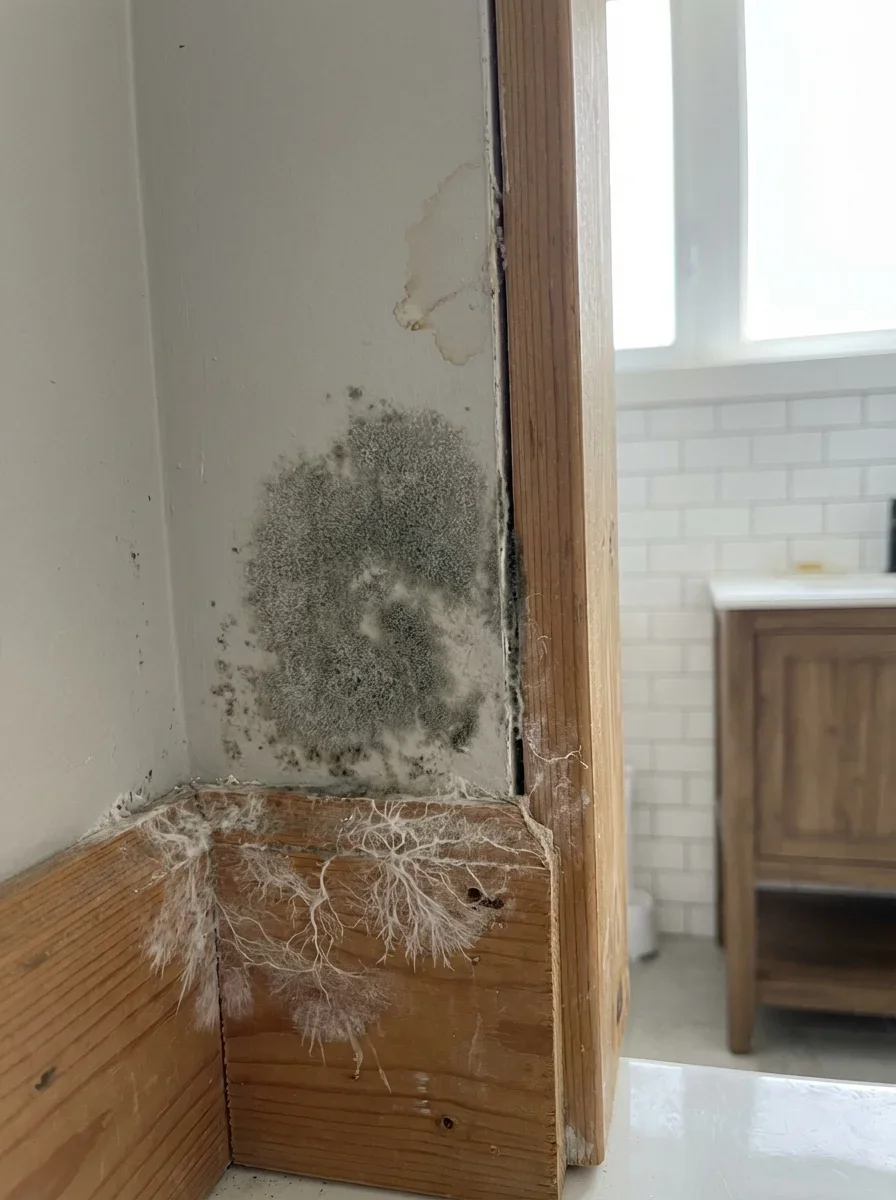
Mold doesn't always announce itself as the dramatic black stain you see in clickbait articles. It appears in dozens of colors — gray-green fuzz on drywall, white thread-like growth on wood framing, orange-pink biofilm in shower corners, even powdery yellow patches on insulation. The CDC confirms that mold "can look like spots of many different colors," which means you can't rely on appearance alone to identify the species.[3]
Texture matters as much as color. Some molds present as flat discoloration that looks like a stain, while others grow in raised, fuzzy colonies. You might see circular patches with defined edges or streaky growth that follows moisture gradients down a wall.
In Texas homes built on expansive clay, look for irregular patterns near baseboards — foundation movement cracks the slab, water seeps up, and mold follows the moisture path vertically.
Slab-on-grade homes have a vulnerability other regions don't deal with: plumbing runs under the concrete. When copper pipes corrode (accelerated by Texas hard water averaging 150–300+ ppm), slow leaks create puddles beneath your floors. The first visual sign is often buckling laminate, warped baseboards, or discoloration on carpet edges — by that point, the subfloor has been wet long enough for mold to establish itself.
If you see unexplained water stains on flooring with no obvious source above, assume the problem is below.
Check these high-risk zones every few months:
- Window sills and frames (condensation from AC overcooling)
- Ceiling corners in rooms with exterior walls (roof leak pathways)
- Behind toilets and under sinks (supply line connections fail)
- Attic sheathing near roof penetrations (flashing defects in post-2000 tract homes)
- HVAC supply vents (condensation from cold air meeting humid Texas summers)
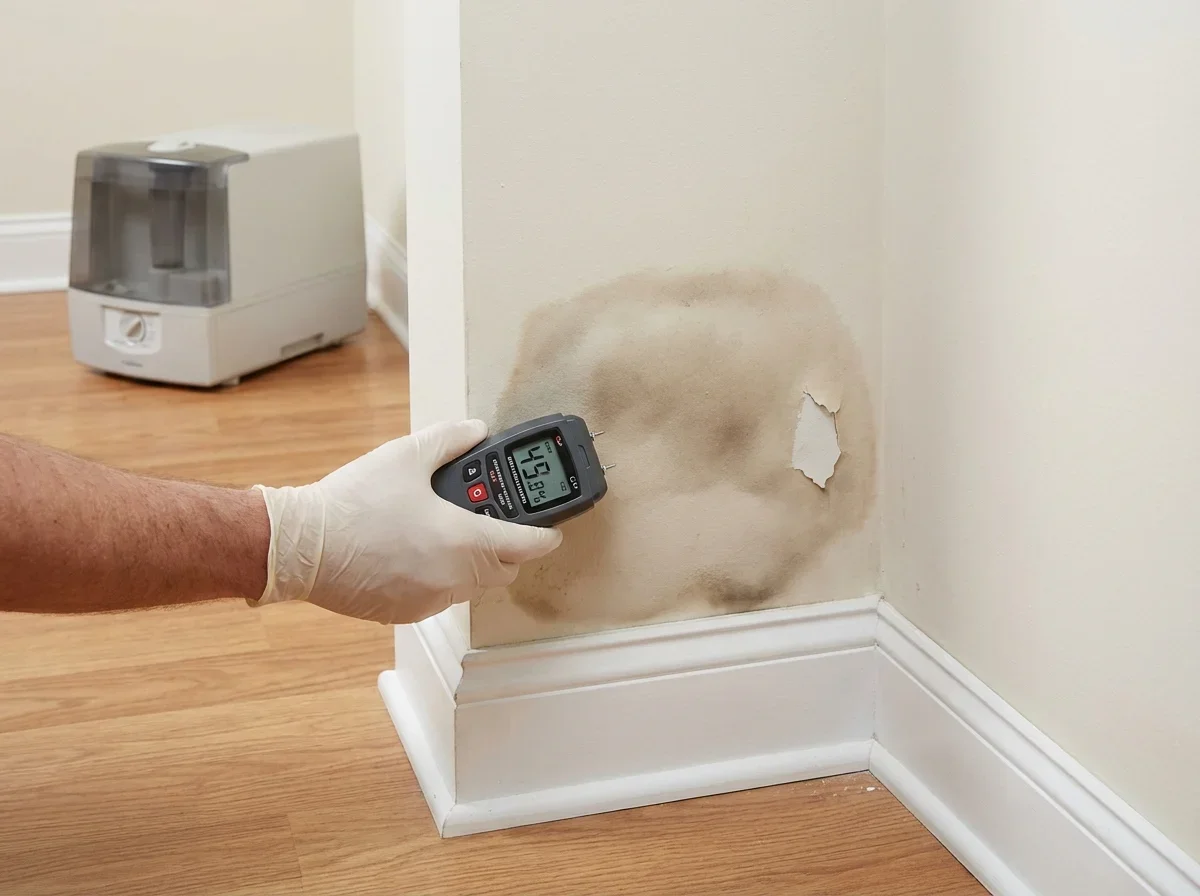
Discoloration doesn't confirm mold — it confirms moisture, which is the prerequisite. But if a stain keeps expanding or reappears after cleaning, you're not dealing with a one-time spill.
You're dealing with an active water source.
Pro Tip: If a water stain reappears within 48 hours of cleaning, you have an active moisture source. Surface cleaning won't solve the problem — you need to identify and fix the leak before mold colonizes the damp material.
The Musty Smell: Your Nose Knows Before Your Eyes
If your home smells like a damp basement even though you don't have a basement, trust that instinct. The EPA identifies musty or moldy odors as a primary alert that "should alert an investigator to the possible presence of mold," particularly when visual inspection turns up nothing.[2] That smell is microbial volatile organic compounds (MVOCs) — the gaseous byproducts of mold metabolism.
The odor is distinct. Not quite like mildew, not quite like rotting wood, but a combination of earthy, stale, and faintly sweet notes that lingers in specific rooms. It intensifies when you open closets, step into bathrooms after they've been closed up, or turn on the AC for the first time in months.
In Texas, where humidity spikes to 80%+ during summer mornings, smell often precedes visible growth by weeks.
Pay attention to where the odor concentrates. A smell localized to one bedroom suggests a problem in that room's exterior wall, attic space above, or plumbing chase. A smell that gets stronger near floor registers points to ductwork contamination — a common issue in Texas homes where condensation drips into fiberglass-lined ducts and sits undrained.
If the odor intensifies when the HVAC runs, you're circulating spore-laden air through every room.
Some homeowners describe the smell as "off" without being able to pinpoint it. Others notice it only when returning from a trip. That's because olfactory adaptation numbs you to smells you're exposed to daily. If guests comment on a musty odor you don't notice, believe them.
The EPA notes that hidden mold is likely when "a building smells moldy but you cannot see the source."[1]
In pier-and-beam homes — still common in older Houston, Austin, and Dallas neighborhoods — crawl space moisture creates a smell that rises through floor gaps. Texas humidity, combined with poor crawl space ventilation and expansive clay that holds moisture against foundation piers, turns these spaces into incubators. If you smell must strongest near floor vents or in rooms over the crawl space, crawl space mold removal is likely overdue.
Health Symptoms That Point to Mold Exposure
Your body often detects mold before your eyes or nose do. Persistent respiratory irritation, sinus congestion that won't clear, headaches that improve when you leave the house, and unexplained fatigue are all signs that indoor air quality has degraded.
These symptoms don't prove mold — dust mites, VOCs from new furniture, or poor ventilation can cause similar reactions — but when they correlate with visible moisture problems or musty odors, the evidence stacks up.
Mold sensitivity varies wildly. One person develops chronic coughing and wheezing while their spouse feels fine. Children and individuals with asthma or compromised immune systems react more severely. If your kid's inhaler use doubles after moving into a new room, or if seasonal allergies suddenly persist year-round, consider whether indoor mold exposure is the variable that changed.
Watch for symptom patterns. Do headaches start an hour after you wake up and ease when you're at work? Does congestion worsen overnight and clear by mid-morning?
That suggests nighttime exposure in the bedroom — check behind the headboard, in the closet, and around the HVAC return vent.
Mold doesn't cause symptoms immediately; it takes days of repeated exposure for respiratory irritation to build. Texans run into a specific scenario: AC condensation mold. When your system pulls humidity out of 95°F summer air, moisture collects in the drip pan, drain line, and ductwork. If the condensate line clogs (a near certainty in homes with aging HVAC), water backs up into the air handler or overflows into the ceiling cavity.
This creates hidden growth that distributes spores every time the blower runs. If your symptoms worsen when the AC cycles on, that's your clue.
Some people report skin irritation — rashes, itchiness, or hives — after prolonged contact with mold-contaminated materials. This is less common than respiratory symptoms but still significant. If you develop unexplained dermatitis and you've recently handled stored items from a humid garage or attic, consider mold allergen exposure.
The tricky part: symptoms are nonspecific. A doctor can't diagnose mold exposure from symptoms alone.
But if you're experiencing chronic respiratory issues, your home has a history of water damage, and you've ruled out other causes, indoor air quality testing can confirm whether airborne spore counts are elevated.
Common Mold Exposure Symptoms to Watch For:
- Persistent coughing or wheezing that worsens indoors
- Sinus congestion unresponsive to allergy medication
- Headaches that improve when leaving the house
- Chronic fatigue or difficulty concentrating at home
- Skin rashes or irritation after contact with stored items
- Increased asthma symptoms, especially at night or when HVAC runs
- Eye irritation or watery eyes in specific rooms
Water Damage History: The Precursor to Mold
Mold doesn't appear spontaneously. It needs water, organic material (drywall, wood, insulation), and time — usually 24 to 48 hours of sustained moisture.
If your home has experienced any of these events in the past year, assume mold is present somewhere:
- Roof leaks (even "minor" ones that drip into the attic)
- Plumbing failures (burst supply lines, sewer backups, toilet overflows)
- HVAC condensate line clogs or drain pan overflows
- Foundation flooding (grading issues, clogged gutters, heavy rain pooling against the slab)
- Hurricane or storm damage (Houston's April 2025 storms triggered a 3x spike in mold searches)
Texas slab-on-grade construction makes plumbing leaks particularly insidious. A pinhole leak in a copper water line under the slab doesn't announce itself with a puddle. It saturates the soil beneath the foundation, wicks up into the concrete, and eventually reaches the wood subfloor or bottom plate of interior walls.
By the time you notice baseboard warping or carpet discoloration, the leak may have been active for months.
Expansive clay soil amplifies the problem. When the soil swells during wet periods, it pushes against the slab. When it shrinks during drought, the slab settles unevenly. This constant movement stresses plumbing joints, cracks PEX connections, and splits older cast iron sewer lines. Foundation shifts also create gaps where exterior moisture enters — particularly in homes built before 2000, when vapor barriers and waterproofing were less rigorous.
Even minor water intrusion counts. A toilet supply line that drips onto tile doesn't look alarming, but if the water seeps under the tile and into the subfloor, you've created a mold-friendly environment.
One homeowner discovered growth behind their bathroom vanity after a slow leak went unnoticed for six months — the water pooled in the wall cavity, and mold colonized the back of the drywall before the first stain appeared.
Hurricane season (June through November) creates cyclical mold risk for Gulf Coast residents. Post-Harvey (2017), Houston saw thousands of homes flood, and even those that dried out quickly developed mold months later because hidden moisture remained in wall cavities and insulation. If your home flooded — even ankle-deep — and you didn't perform structural drying with commercial dehumidifiers and air movers, assume mold is present behind walls.
The timeline matters. Mold can begin growing within 24 hours of water exposure, but visible colonies take days to weeks.
That's why "we dried it ourselves with fans" rarely works. Professional drying targets moisture meters at <15% wood moisture content and <60% relative humidity before stopping. Anything short of that leaves conditions favorable for growth.
Hidden Mold: Where It Grows When You Can't See It
The EPA warns that mold may be hidden "in drywall, wallpaper, ceiling tiles, carpets, walls around pipes, behind furniture, ductwork, or roof materials" — all places you can't inspect without tearing something open.[1] In Texas homes, the most common hiding spots align with construction methods and climate stressors.
Wall cavities are prime real estate for hidden mold. Exterior walls in pre-2000 Texas homes often lack proper vapor barriers, so summer humidity condenses on the back of drywall when AC cools the interior. If a roof leak drips into the wall or a plumbing supply line inside the wall sweats, moisture soaks the drywall and insulation without leaving visible evidence on the finished side.
You'll smell it before you see it — often a musty odor near baseboards or outlets.
HVAC ductwork is another hidden zone. Fiberglass-lined ducts (common in 1980–2000 construction) absorb condensation. When the AC runs, cold air meets humid Texas air in poorly insulated attic ducts, and moisture condenses inside the duct. Fiberglass provides cellulose for mold to feed on, and the constant airflow distributes spores throughout the house. If you smell must at the supply vents or notice black speckling around registers, HVAC mold removal is warranted.
Attic sheathing hides mold in plain sight. Roof leaks rarely drip directly onto drywall — they run along rafters, pool on sheathing, and soak insulation. In Texas, attic temperatures reach 140°F in summer, creating a sauna when humidity intrudes.
Mold on roof sheathing appears as dark staining or fuzzy growth, often concentrated near ridge vents, valleys, or penetrations (chimneys, vent pipes).
If your attic smells like wet wood, you likely have active growth. Attic mold removal is one of the most requested services in Texas, particularly after hail damage or wind-driven rain.
Under flooring is a hidden zone unique to slab-on-grade homes. A slab leak doesn't always bubble up visibly. It saturates the subfloor, laminate underlayment, or carpet pad, creating a dark, warm environment perfect for mold. You might notice the floor feels spongy, or a room smells musty despite no visible moisture.
By the time you pull up flooring to investigate, black mold often covers the entire underside.
Behind baseboards and trim is where slow leaks reveal themselves. Water from a plumbing failure, roof leak, or foundation seepage follows gravity down the wall cavity and pools at the bottom plate. Mold colonizes the back of the baseboard and the drywall edge, hidden from view.
If you see baseboard warping or paint bubbling near the floor, pull it off — you'll likely find discoloration and growth.
Texas Department of Licensing and Regulation (TDLR) requires that mold assessors and remediators be separately licensed under the Texas Mold Assessment and Remediation Rules (TMARR). This means the inspector who finds hidden mold can't be the same company that removes it — a safeguard against conflict of interest. Verify credentials at https://www.tdlr.texas.gov/mol/mol.htm before hiring anyone to investigate hidden growth.
Testing vs. Visual Inspection: When Each Makes Sense
You don't need lab testing to confirm mold if you can see it and smell it. The CDC's guidance is unambiguous: "If you see or smell mold, clean it up and fix the moisture problem."[3]
Testing tells you the species and spore count, but it doesn't change the remediation protocol — all mold gets removed the same way, regardless of whether it's Aspergillus, Penicillium, or Stachybotrys (black mold).
Testing becomes useful in three scenarios:
Hidden mold with no visible source. If your home smells musty, you're experiencing health symptoms, and visual inspection turns up nothing, air sampling can confirm elevated spore counts and guide the search. This is common in homes with slab leaks, where moisture is under the foundation but hasn't surfaced yet.
Post-remediation verification. After a remediation company finishes work, clearance testing (also called post-remediation verification) confirms spore counts have returned to normal. TDLR doesn't mandate this in Texas, but reputable companies offer it as part of their warranty. Without clearance testing, you have no proof the work was effective.
Real estate transactions. If you're buying a home with a history of water damage or visible staining, mold testing provides leverage for price negotiation or repair credits. Sellers often claim "it's just a stain," but lab results distinguish between dead mold residue and active growth.
Air sampling and surface sampling serve different purposes. Air tests capture airborne spore counts, useful for detecting hidden mold or confirming HVAC distribution of spores. Surface tests (tape lifts or swabs) identify the species on a specific material, useful for differentiating mold from dirt or confirming black mold is Stachybotrys.
Texas-specific note: because TMARR requires separate licenses for assessment and remediation, you'll need two companies — one to test, one to fix.
Some assessment companies offer free visual inspections with paid air testing ($300–$600 for a whole-home panel). If the inspector finds visible mold, skip the testing and move straight to remediation.
| Test Type | Best For | Cost Range | What It Reveals |
|---|---|---|---|
| Air Sampling | Hidden mold, HVAC contamination, post-remediation verification | $300–$600 | Airborne spore counts, types of mold circulating |
| Surface Sampling | Identifying visible growth, confirming black mold species | $150–$300 per sample | Exact mold species, whether growth is active |
| Visual Inspection | Obvious moisture damage, visible colonies, post-storm checks | $0–$200 | Location and extent of visible growth, moisture sources |
Common Mold Locations in Texas Homes
Geography and construction methods dictate where mold appears most frequently. These are the zones Texas homeowners should inspect every six months:
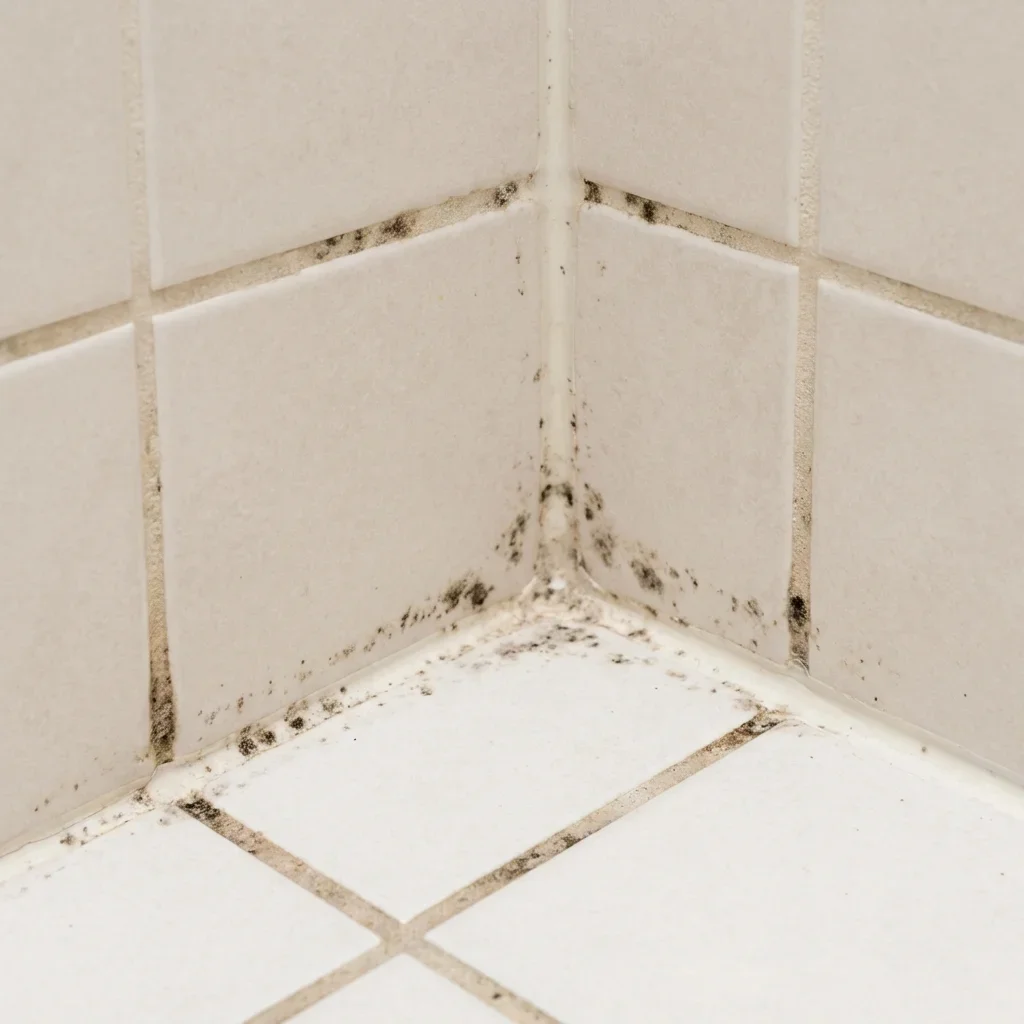
Bathrooms top the list. Shower enclosures, tile grout, caulk joints, and exhaust fan housings are constantly exposed to moisture. In Texas, where summer humidity hovers near 80%, bathrooms that lack exhaust fans (or have fans that vent into the attic instead of outside) trap moisture against drywall.
The result: mold colonies behind tile, under flooring, and inside wall cavities.
If your bathroom smells musty even after cleaning, the problem is behind the surface. Bathroom mold removal often requires opening walls to dry and treat hidden growth.
HVAC systems are the second-most common zone. Condensate drain pans, evaporator coils, and ductwork all collect moisture. In Texas, where AC systems run 8+ months per year, these components never fully dry out. A clogged drain line (inevitable if you don't flush it annually) causes water to back up into the air handler, soaking insulation and ceiling drywall.
Mold in the HVAC system distributes spores to every room when the blower runs — a problem you can't solve with surface cleaning.
Attics in Texas face extreme temperature and humidity swings. Summer heat turns attics into ovens, but when evening temperatures drop, humidity condenses on cool surfaces. Add a roof leak or improperly vented bathroom fan (venting into the attic is a code violation, but common in older homes), and you've got persistent moisture.
Attic mold shows up as black staining on sheathing, dark spots on rafters, or white fuzzy growth on insulation.
Crawl spaces (in pier-and-beam homes) are Texas mold factories. Expansive clay holds moisture against foundation piers, poor ventilation traps humidity, and organic debris (leaves, lumber scraps) provides food for mold. Crawl spaces in Houston, Austin, and East Texas are particularly vulnerable due to high annual rainfall (50+ inches).
If you smell must near floor vents or have sagging floors, your crawl space likely has moisture and mold.
Slab foundations hide mold in ways other regions don't encounter. Plumbing leaks under the slab create moisture that wicks up through concrete and into flooring, baseboards, and wall cavities. Because you can't see under the slab, these leaks go undetected until flooring buckles or mold appears at the base of walls.
Homes in areas with aggressive expansive clay (Houston, Dallas, San Antonio) experience foundation movement that cracks plumbing, compounding the problem.
Laundry rooms and kitchens have hidden mold risk. Washing machine supply lines fail, dishwasher drain hoses leak, and refrigerator ice maker lines drip — all slow leaks that soak subfloors and wall cavities. In Texas slab homes, a slow leak under a washing machine can saturate the concrete and travel several feet before surfacing.
Check behind and under appliances every few months.
What to Do When You Find Mold
Discovering mold triggers a predictable panic, but your first step is simple: stop the moisture source.
Mold is a symptom, not the disease. If you scrub away visible growth but don't fix the leak, repair the roof, or improve ventilation, the mold returns within weeks.
For small, contained areas (less than 10 square feet), EPA guidelines allow DIY cleanup using detergent and water, followed by thorough drying. You don't need bleach — it doesn't kill mold on porous surfaces like drywall or wood. Scrubbing removes surface growth, but if the material is saturated, it needs to be removed and replaced.
That's why bathroom tile mold often requires tearing out drywall behind the tile — cleaning the tile doesn't address the soaked backer board.
Anything larger than 10 square feet, anything involving HVAC systems, or any situation where mold growth is hidden (wall cavities, under flooring, in ductwork) requires professional remediation. In Texas, that means hiring a TDLR-licensed mold remediation company. The license ensures they follow IICRC S520 protocols (containment, negative air pressure, HEPA filtration, proper disposal) and carry the necessary insurance.
If mold is discovered during a real estate transaction, the Texas Real Estate Commission does not require sellers to remediate before closing — but lenders often do. FHA and VA loans will not close on homes with visible mold or active moisture issues.
If you're buying a home with mold inspection findings, negotiate remediation as a closing condition or request a credit to handle it post-sale.
Document everything. Take photos of visible mold, moisture stains, and damaged materials. If you hire a remediation company, get a detailed scope of work that specifies which materials will be removed, how containment will be set up, and what the final verification process looks like.
TDLR doesn't mandate post-remediation clearance testing, but you should require it. Without lab confirmation that spore counts have normalized, you're trusting the contractor's word.
Insurance coverage is a gray area. Texas homeowners policies typically exclude mold damage caused by long-term neglect (a slow leak you ignored for months) but may cover sudden, accidental events (a burst pipe). If mold results from a covered peril like storm damage, your policy might cover remediation up to the policy limit (often $5,000–$10,000).
Review your policy's mold endorsement and document the timeline — insurers scrutinize claims where the water damage predates the policy.
If you're dealing with black mold removal, don't assume it's more dangerous than other species. "Black mold" (Stachybotrys chartarum) has a reputation, but all mold should be treated seriously.
The color doesn't dictate the remediation approach — the extent of contamination does.
Preventing Mold Before It Starts
You can't eliminate mold spores from your home — they're everywhere, dormant, waiting for moisture. But you can control the conditions that allow them to germinate and spread.
In Texas, that means managing humidity, maintaining your AC system, and addressing water intrusion aggressively.
Keep indoor relative humidity below 60%, ideally 40–50%. Use dehumidifiers in high-moisture rooms (bathrooms, laundry rooms, kitchens) and run exhaust fans during and after showers. Texas summer humidity makes this a challenge — opening windows raises indoor humidity rather than lowering it. Your AC helps, but oversized systems (common in Texas) cool too quickly without removing enough moisture.
If your thermostat hits setpoint in 10 minutes, your system may be too large.
Inspect your HVAC condensate drain line quarterly. A $5 bottle of pan tablets or a vinegar flush keeps the line clear. If water backs up into the drip pan, you'll see rust stains, standing water, or ceiling damage below the air handler.
That's your warning that a mold problem is imminent.
Fix leaks immediately. A dripping faucet or "minor" roof leak isn't minor — it's a countdown to mold growth. In Texas expansive clay, foundation movement can crack plumbing, so watch for unexplained water meter activity, wet spots in the yard, or foundation cracks.
A slab leak repair averages $2,000–$4,000, but ignoring it leads to $10,000+ in mold remediation and flooring replacement.
Improve grading and drainage. Texas soil either floods (Gulf Coast, East TX) or doesn't drain at all (clay-heavy regions). Gutters should extend downspouts 6+ feet from the foundation. French drains, grading adjustments, and foundation waterproofing prevent exterior moisture from seeping through the slab or into crawl spaces.
Ventilate attics properly. Ridge vents, soffit vents, and powered attic fans reduce heat and moisture buildup. Bathroom and kitchen exhaust fans must vent outside, not into the attic — a common defect in pre-2000 Texas homes.
If your attic smells musty, your ventilation is inadequate.
For homes on pier-and-beam foundations, encapsulate the crawl space with vapor barriers and improve ventilation with foundation vents or a powered ventilation system. Texas humidity makes unconditioned crawl spaces a losing battle — sealing and conditioning (adding a dehumidifier or extending HVAC to the crawl space) is the permanent solution.
Regular inspections catch problems early. Walk your home quarterly: check window sills, inspect attic sheathing, smell for mustiness, look for water stains. After heavy storms, inspect your roof from the attic and check for ceiling discoloration.
Early detection turns a $500 drywall repair into a avoided $8,000 remediation.
- US Environmental Protection Agency (EPA). "A Brief Guide to Mold, Moisture and Your Home." https://www.epa.gov/mold/brief-guide-mold-moisture-and-your-home. Accessed April 02, 2026.
- US Environmental Protection Agency (EPA). "Mold Course Chapter 3." https://www.epa.gov/mold/mold-course-chapter-3. Accessed April 02, 2026.
- Centers for Disease Control and Prevention (CDC). "Mold." https://www.cdc.gov/mold-health/about/index.html. Accessed April 02, 2026.