Your Attic Shouldn't Be a Health Hazard
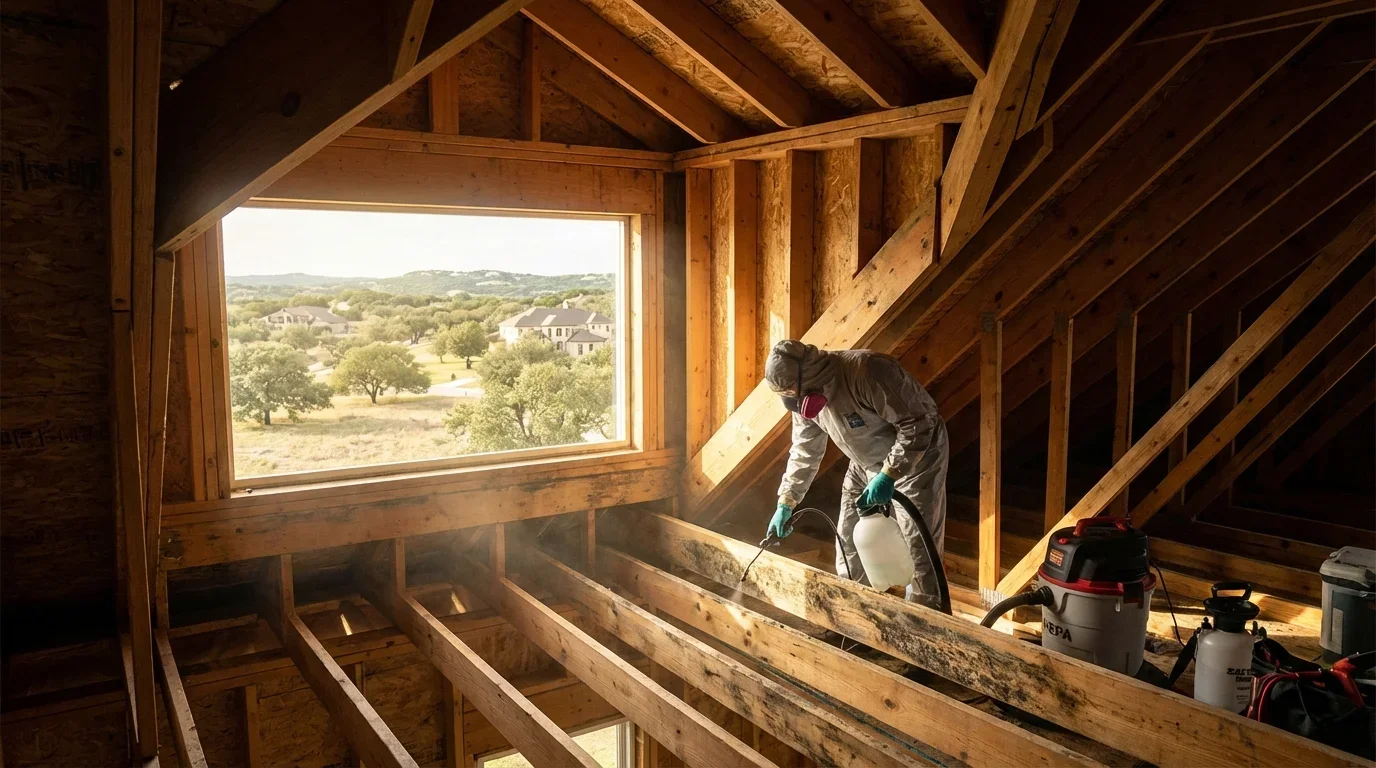
Roof leaks and poor ventilation turn Texas attics into mold factories fast. We eliminate contamination at the source before it spreads to your living space.
- Complete mold remediation and insulation replacement
- Fix ventilation issues causing moisture buildup
- Protect your family from airborne spores
⚠ Common Issues
When Do You Need Attic Mold Removal?
Warning Signs in Texas Homes
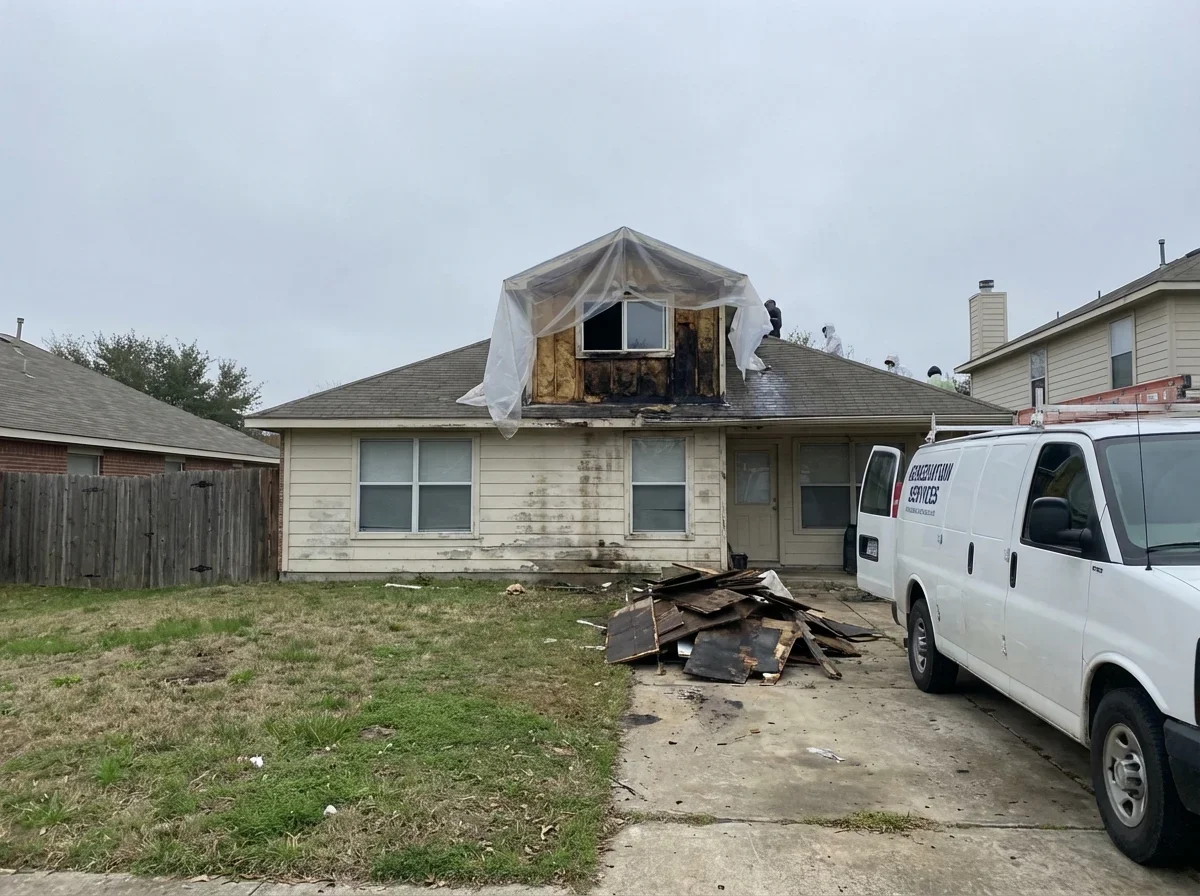
You notice dark streaks on roof decking during an attic inspection. Insulation feels damp near the HVAC unit. A musty smell hits you when the AC kicks on. These aren't cosmetic issues—attic mold contaminates the air circulating throughout your home.
Common triggers in Texas homes: roof leaks from hurricane-season storms along the Gulf Coast, HVAC condensation in Houston and Corpus Christi's year-round humidity, and poor ventilation in older Dallas and Fort Worth attics where ridge vents weren't installed to modern standards. Summer heat drives moisture into poorly ventilated spaces, creating ideal growth conditions.
Check for visible mold on roof sheathing, rafters, or insulation. Look for water stains near roof penetrations (chimneys, vents, skylights). Feel insulation for dampness—wet fiberglass or cellulose needs immediate attention.
Health Risks from Attic Mold Contamination
Attic mold poses unique risks because your HVAC system pulls air from this space. Contaminated ducts distribute spores to every room, triggering respiratory issues even when you never enter the attic.[2] Children and individuals with asthma face higher exposure risks when return air leaks exist near contaminated areas.
Attic contamination spreads fast. A small roof leak undetected for three months can contaminate 200+ square feet of insulation and require full HVAC cleaning.
Texas law requires licensed remediation for contamination affecting 25+ contiguous square feet—most attic projects exceed this threshold.[1]
$ Cost Guide
What Does Attic Mold Removal Cost in Texas?
Project Size and Contamination Severity
| Project Scope | Typical Cost Range |
|---|---|
| Small area (<100 sq ft), surface treatment only | $1,500 - $3,000 |
| Medium contamination (100-300 sq ft), partial insulation removal | $3,000 - $5,500 |
| Extensive contamination (300+ sq ft), full insulation replacement | $5,500 - $12,000+ |
Pricing depends on three factors: contamination extent, insulation replacement volume, and moisture source complexity. A contained patch from a slow roof leak costs significantly less than widespread growth from chronic HVAC condensation issues.
HVAC system involvement adds $800-$2,500 for duct cleaning and sanitization—required when return air pathways sit near contaminated zones.[2]
Insulation Replacement Costs
New insulation represents 30-40% of total project cost. Blown-in cellulose runs $1.50-$2.00 per square foot installed. Fiberglass batts cost $1.00-$1.50 per square foot. A 1,200-square-foot attic needs $1,200-$2,400 in insulation alone.
Contractors sometimes propose encapsulation (sealing treated surfaces) instead of full removal. This works only for surface mold on dry wood—never for wet insulation or active growth. Verify the approach matches contamination severity.
Roof Leak Repair and Prevention
Minor leak repairs (re-flashing around vents, replacing damaged shingles) add $300-$800. Structural roof sheathing replacement costs $600-$1,500 per section. Ventilation upgrades (ridge vent installation, additional soffit vents) run $800-$2,000 but prevent recurrence.
Insurance coverage varies—policies typically cover sudden damage (burst pipes, storm leaks) but exclude long-term neglect. Document everything for claims.
Total investment protects property value. Untreated attic mold creates mandatory disclosure issues during home sales and typically reduces offers by 5-10% in competitive Texas markets like Austin and Houston.
→ What to Expect
The Attic Mold Remediation Process
Inspection and Air Quality Testing
Licensed assessors identify contamination extent, moisture sources, and HVAC involvement. They test air samples to establish baseline spore counts and determine if ductwork requires cleaning. Thermal imaging reveals hidden moisture in insulation and roof decking.
Inspectors check ventilation adequacy—Texas attics need 1 square foot of ventilation per 150 square feet of attic space with balanced soffit-to-ridge airflow. Many older San Antonio and Austin homes lack proper ridge vents, creating moisture traps.
Containment and Removal
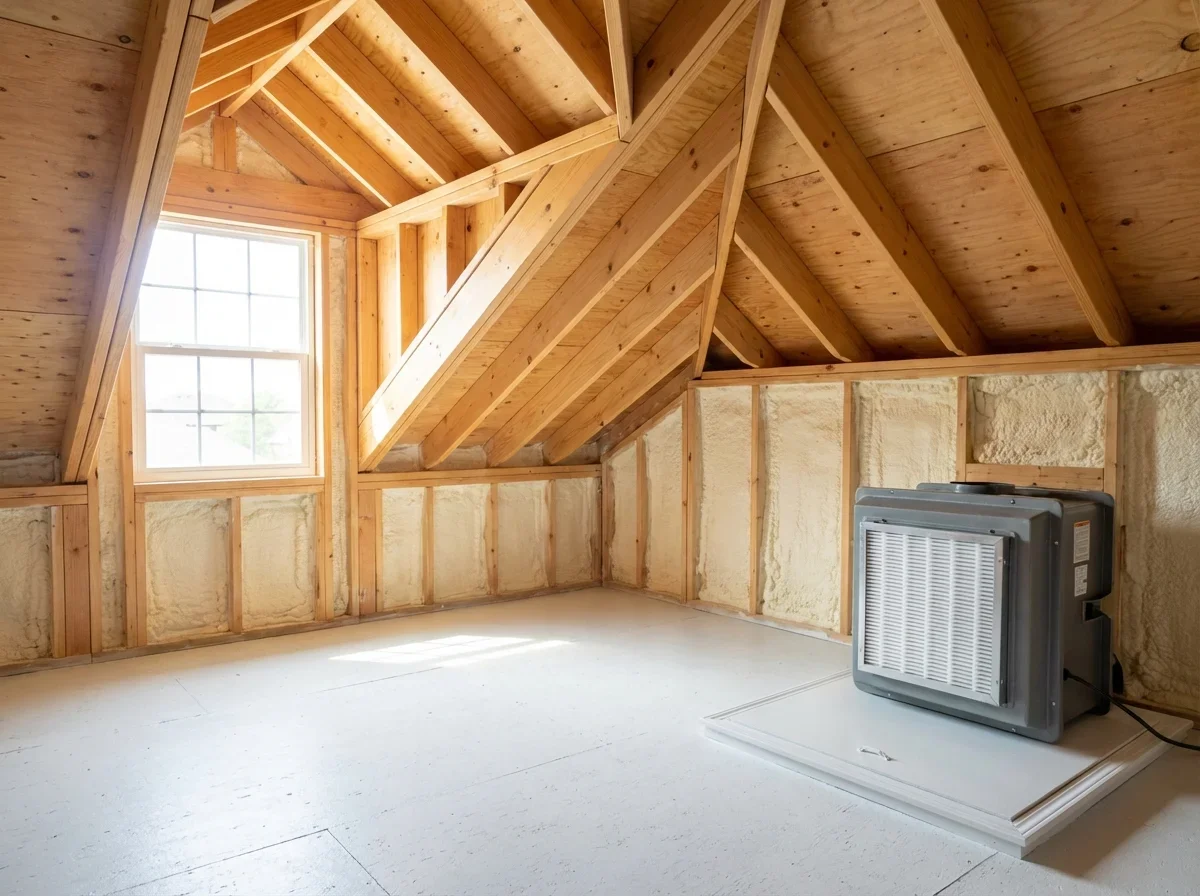
Remediation teams seal the attic from living spaces using plastic sheeting and negative air pressure machines. This prevents spore migration during work. Contaminated insulation gets bagged and removed—fiberglass exposed to active growth cannot be salvaged. Wet insulation loses R-value and harbors dormant spores even after surface treatment.
| Removal Method | When Used | Typical Timeline |
|---|---|---|
| Contaminated insulation removal | Wet/compressed material, visible growth | 1-2 days |
| Surface treatment (sheathing/rafters) | Dry wood with surface mold | Same day |
| HVAC system cleaning | Ducts/returns near contaminated area | 1 additional day |
Workers wire-brush or media-blast affected wood surfaces, then apply antimicrobial treatments. All debris exits through external chutes—never through living spaces.
Source Repair and Ventilation Upgrade
Before insulation replacement, contractors fix the moisture source. Roof leaks get patched with new shingles or flashing. HVAC drain pans receive proper condensate routing. Ridge vents and soffit vents get installed or upgraded to meet Texas climate requirements—critical in Plano and Arlington where summer attic temperatures exceed 150°F.
Post-Remediation Verification
Independent assessors (not the remediation company) conduct clearance testing. Air samples confirm spore counts match outdoor baseline levels. Visual inspection verifies complete removal and proper repairs. You receive documentation meeting Texas TDLR standards—essential for insurance claims and home sales.[3]
Most projects complete within 3-5 days from containment to clearance, weather permitting.
✓ Choosing a Contractor
How to Choose an Attic Mold Remediation Contractor
Texas TDLR Licensing Requirements
Verify dual licensing: Texas requires separate licenses for mold assessment and remediation.[1] Assessors hold TDLR "Mold Assessment Consultant" licenses. Remediators hold "Mold Remediation Contractor" licenses. The same company cannot perform both services on your project—this prevents conflict of interest.
Check license status at tdlr.texas.gov. Enter the contractor's name or license number. Active licenses show no disciplinary actions.
Insurance and Documentation Standards
Require general liability insurance ($1M minimum) and workers' compensation coverage. Request certificates naming your property. Licensed contractors carry professional liability insurance covering work quality.
Ask for written protocols following IICRC S520 standards (industry remediation guidelines). The proposal should detail containment methods, disposal procedures, and post-work verification steps.
Questions to Ask Before Hiring
- How do you prevent cross-contamination to living spaces? Look for negative air machine usage and sealed containment barriers.
- Who conducts post-remediation testing? Must be an independent third-party assessor, not the remediation company.
- What ventilation improvements do you recommend? Proper contractors address the moisture source, not just visible mold.
- Do you provide written moisture source reports? Essential for preventing recurrence and insurance documentation.
- What's your warranty on remediation work? Standard is 1-2 years on treated areas when moisture source gets properly addressed.
Red flags: Quotes without attic inspection, promises to "seal in" mold without removal, same company doing assessment and remediation, pressure to skip post-work testing.
Compare detailed proposals from multiple licensed Texas mold remediation contractors in your area. The lowest bid often skips critical steps like proper insulation replacement or HVAC cleaning.
Top Contractors for Attic Mold Removal
View all →

Frequently Asked Questions
- Texas Department of Licensing and Regulation (TDLR). "Consumer Protection - Mold." https://www.tdlr.texas.gov/media/pdf/Consumer%20Protection%20-%20mold.pdf. Accessed April 02, 2026.
- Texas Administrative Code. "16 Tex. Admin. Code § 78.130 - Mold Remediation of Heating, Ventilation and Air Conditioning (HVAC) Systems." https://www.law.cornell.edu/regulations/texas/16-Tex-Admin-Code-SS-78-130. Accessed April 02, 2026.
- Texas Department of Licensing and Regulation (TDLR). "Texas Mold Assessment and Remediation Rules (TMARR)." https://texreg.sos.state.tx.us/public/readtac$ext.TacPage?sl=R&app=9&p_dir=&p_rloc=&p_tloc=&p_ploc=&pg=1&p_tac=&ti=16&pt=2&ch=78&rl=30. Accessed April 02, 2026.