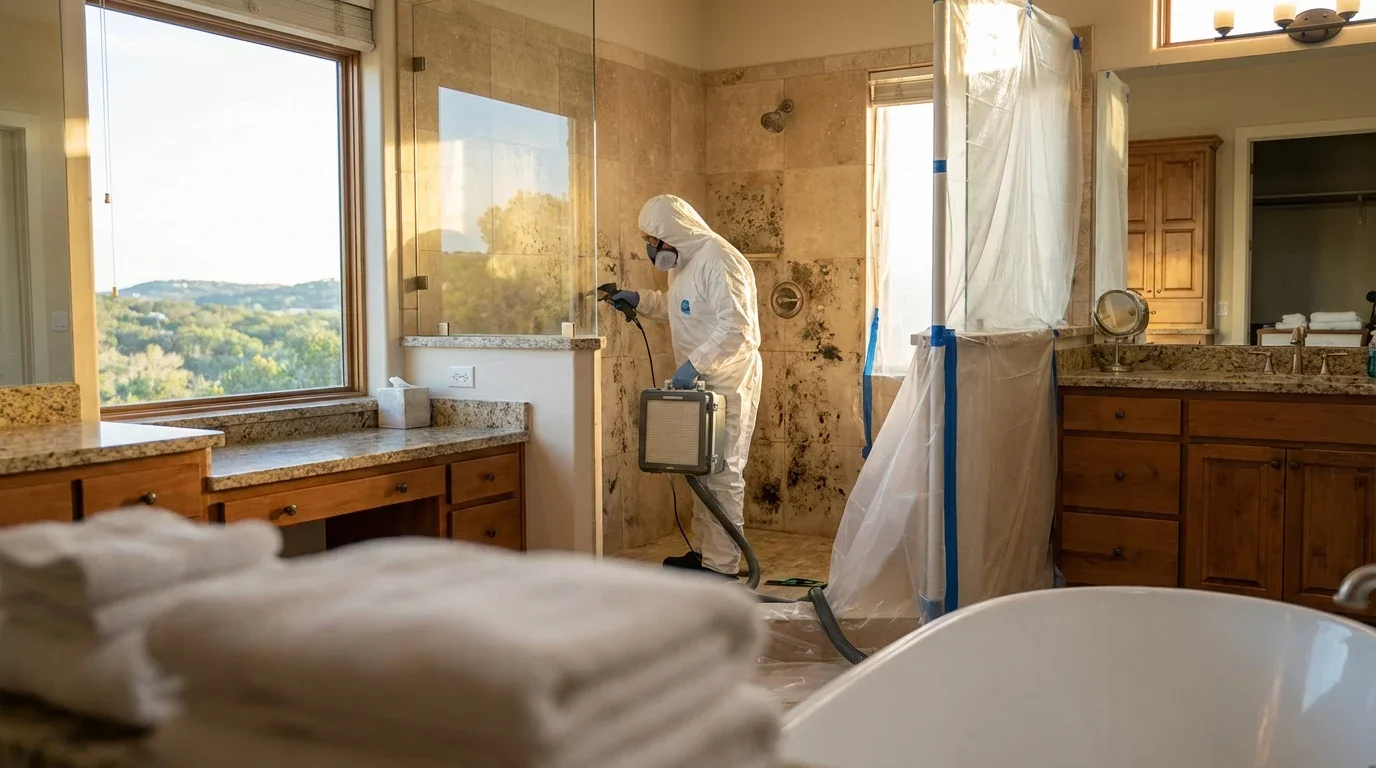
Black Mold in Your Shower Won't Go Away Alone
Texas humidity turns bathrooms into mold factories. That dark grout and musty smell? It's a health hazard spreading behind your tiles.
- Stop scrubbing what needs professional removal
- Protect your family from toxic spores
- Fix it right before it reaches the drywall
⚠ Common Issues
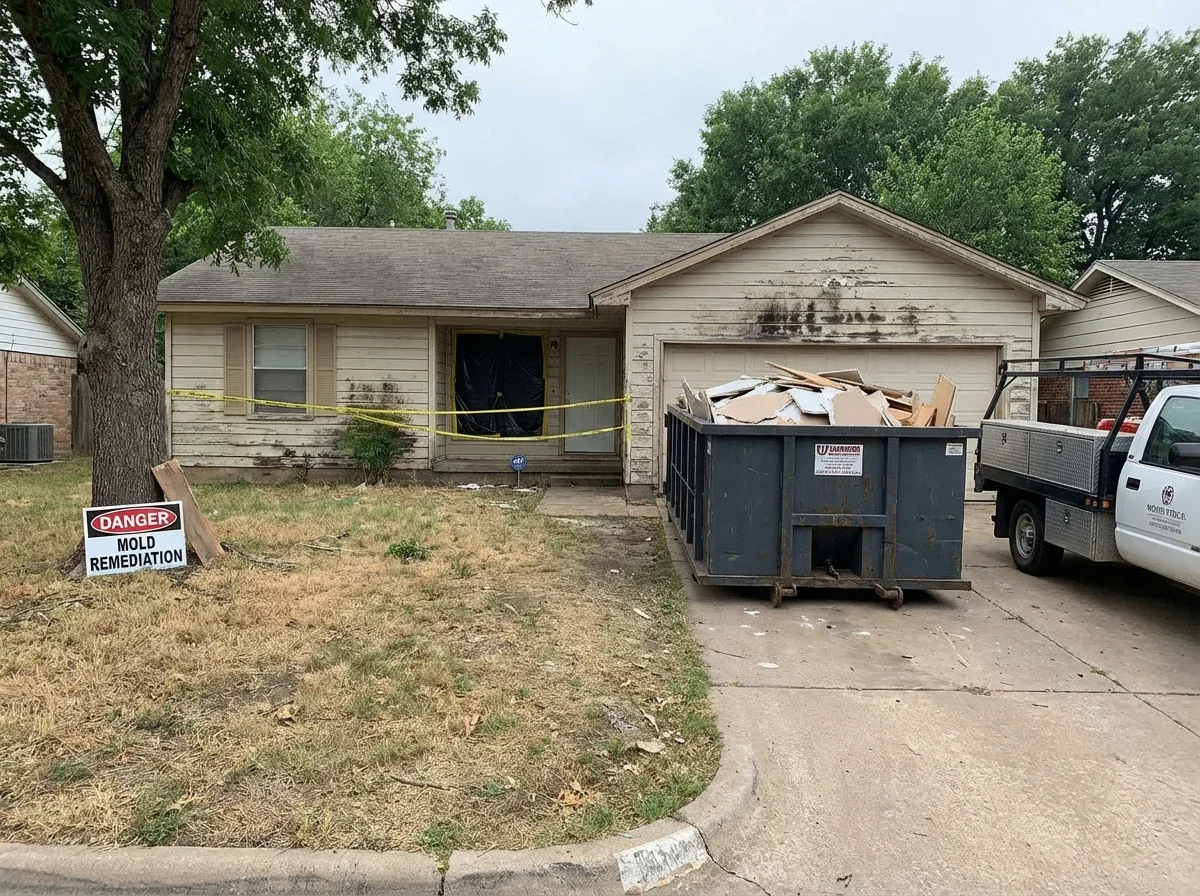
When Do You Need Professional Bathroom Mold Removal?
Surface mold on shower grout or caulk lines looks manageable with bleach spray. The real problem hides behind tile and inside walls — where chronic moisture feeds colonies you can't see.
You need professional help when mold extends beyond what you can wipe down. Discoloration spreading across ceiling drywall near the exhaust fan. Dark patches appearing behind toilet tanks or under sink cabinets. Grout lines that turn black again within days of scrubbing. These signal moisture intrusion, not just surface grime.
Houston and Corpus Christi bathrooms face year-round humidity challenges that accelerate growth. A small patch discovered in June often reveals extensive contamination behind shower walls by August. Texas requires licensed remediation for 25 contiguous square feet or more[2] — roughly a 5x5 area on your bathroom wall.
Health symptoms matter too. Persistent coughing, eye irritation, or respiratory issues that improve when you leave the house indicate airborne spore exposure. Children and immune-compromised family members react first.
Hidden growth escalates fast. A slow shower pan leak can contaminate wall cavities and subflooring within 2-3 months, turning a $500 surface job into $3,000+ structural remediation.
If you smell mold but can't locate the source, the colony likely sits inside wall cavities or above ceiling drywall. Professional mold inspection with moisture meters and thermal imaging finds these hidden reservoirs before demolition starts.
$ Cost Guide
What Does Bathroom Mold Removal Cost in Texas?
Expect to pay $500 to $5,000 depending on contamination extent and required demolition. Most bathroom projects fall in the $1,200-$2,500 range.
| Project Scope | Typical Cost Range |
|---|---|
| Surface mold on grout/caulk (under 10 sq ft) | $500 - $900 |
| Shower wall tile removal + drywall replacement | $1,200 - $2,200 |
| Ceiling mold from exhaust/roof leak (25-50 sq ft) | $1,500 - $2,800 |
| Whole bathroom remediation (walls, ceiling, subfloor) | $3,000 - $5,000+ |
| Structural repairs (joists, framing, plumbing access) | Add $1,500 - $4,000 |
Project Size and Scope
The 25-square-foot TDLR licensing threshold[2] marks the dividing line between small surface jobs and full remediation projects. A 5x5 ceiling section crosses this threshold and requires licensed contractors — not handymen.
Containment setup adds $300-$600 to any project requiring plastic barriers and negative air machines. San Antonio and Fort Worth contractors include this in base pricing for jobs over $1,000.
Inspection, Testing, and Remediation Costs
Pre-work mold testing runs $250-$450 when species identification or extent mapping is needed. Post-remediation clearance testing adds another $200-$350 to verify successful removal.
Moisture source repairs drive final costs more than mold removal itself. Replacing a failed shower pan averages $1,200-$1,800. Rerouting bathroom exhaust through the roof (instead of venting into the attic) costs $600-$1,200. These fixes prevent the mold from returning within months.
Most projects finish in 2-4 days once moisture sources are addressed:
- Day 1: Containment setup, demolition, disposal
- Day 2: Antimicrobial treatment, structural drying
- Day 3-4: Clearance testing, reconstruction prep
Insurance coverage depends on the water source. Sudden pipe bursts typically qualify; long-term seepage from poor maintenance usually doesn't. Insurance claim mold services help document acute vs. chronic moisture for adjuster review.
→ What to Expect
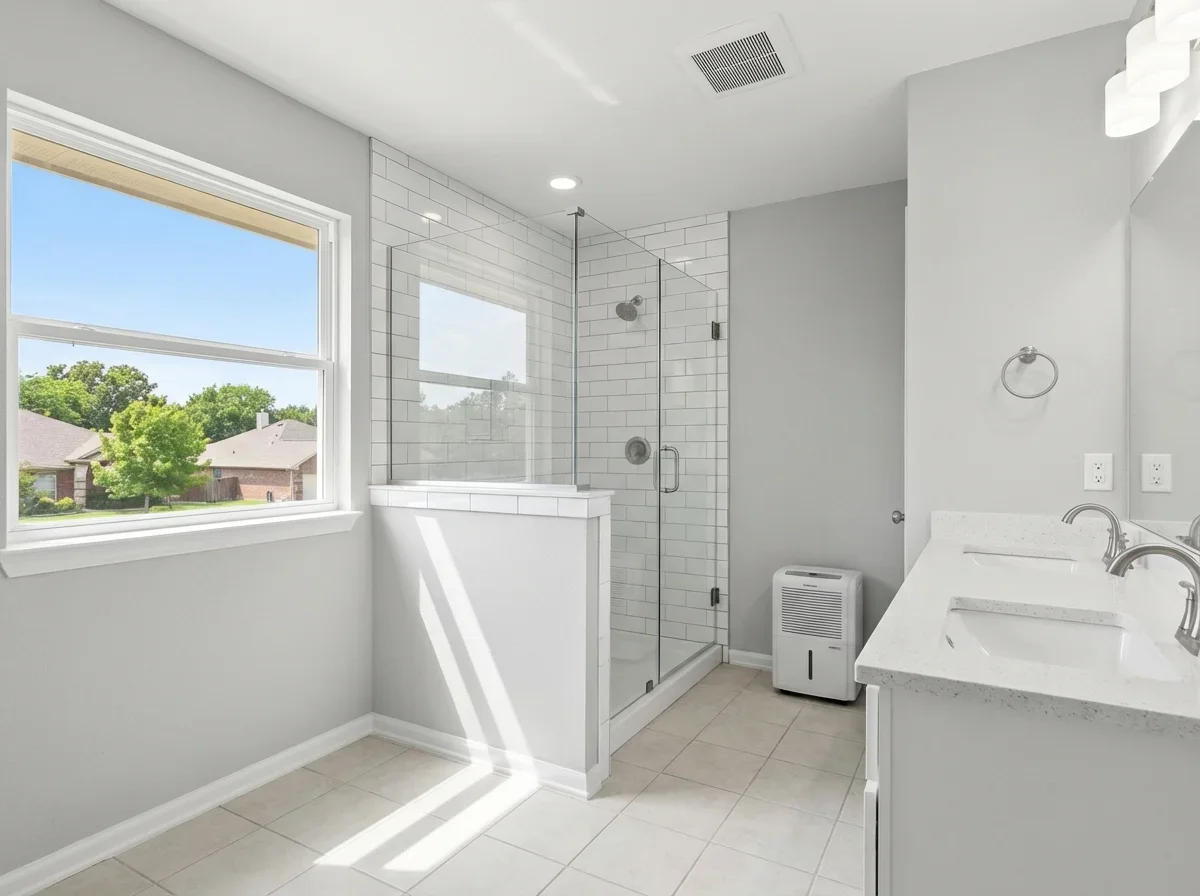
The Bathroom Mold Remediation Process
Licensed contractors follow TDLR-mandated protocols that protect your home from spore contamination during removal.
Inspection and Moisture Source Identification
Technicians map visible mold locations and use moisture meters to detect hidden saturation. Infrared cameras identify cold spots indicating water intrusion behind tile or inside exterior walls. Testing determines mold species when health concerns exist or contamination extent remains unclear.
The inspection pinpoints moisture sources: failed shower pan waterproofing, inadequate exhaust ventilation, leaking supply lines, AC condensation dripping onto ceiling drywall. You can't fix mold permanently without fixing the water source first.
Containment and Removal
Contractors seal the bathroom with plastic sheeting and negative air pressure systems that prevent spores from spreading to bedrooms or living areas[1]. HEPA air scrubbers filter contaminated air during demolition.
Removal methods depend on surface type:
| Surface | Remediation Method |
|---|---|
| Tile grout/caulk | Remove and replace contaminated sections; reseal with mold-resistant products |
| Drywall/ceiling | Cut out affected sections plus 12-18" margin; treat framing with EPA-registered antimicrobial |
| Subflooring | Remove compromised areas; dry structural lumber to <15% moisture before replacement |
| Wall cavities | HEPA vacuum insulation; treat studs; verify clearance before closing walls |
Non-porous surfaces like tile and fixtures get cleaned with EPA-registered disinfectants. Porous materials — drywall, insulation, wood trim — get removed and disposed of in sealed bags.
Post-Remediation Verification
After removal, contractors conduct clearance testing to verify spore counts return to normal background levels. Documentation includes moisture readings confirming the bathroom dried to acceptable levels (typically <15% in wood, <17% in drywall).
Dallas and Austin contractors often recommend exhaust fan upgrades to code-compliant CFM ratings during reconstruction. This prevents recurrence in Texas's humid climate.
✓ Choosing a Contractor
How to Choose a Bathroom Mold Removal Contractor in Texas
Texas law requires specific licensing for mold work — verify credentials before signing contracts.
TDLR Licensing Verification
Check that contractors hold active Texas Department of Licensing and Regulation mold remediation licenses for projects over 25 square feet. Verify online at tdlr.texas.gov using the company name or license number. Licenses separate into two categories:
- Mold Assessment Consultant: inspects and tests
- Mold Remediation Company: performs removal work
Many firms hold both. Ask which services they're licensed to provide.
Questions to Ask Contractors
- What containment protocols do you use? (Look for negative air pressure, sealed barriers, HEPA filtration[1])
- Do you provide written work plans before starting? (Required by TDLR at least one day before work begins)
- What moisture testing do you perform pre- and post-remediation? (Specific moisture content percentages, not just visual assessment)
- How do you address the underlying water source? (Mold removal without fixing leaks wastes money)
- What clearance testing confirms successful remediation? (Third-party air sampling preferred)
- Do you handle reconstruction or coordinate with separate contractors? (Streamlines timeline if one company manages both)
Red Flags to Avoid
- Offering to remediate without identifying moisture sources first
- Skipping containment setup for "small" jobs that still exceed 25 square feet
- Using only bleach or household cleaners instead of EPA-registered antimicrobials
- No mention of TDLR licensing or work plan documentation
- Pressure to start immediately without moisture mapping or testing
Valid general liability insurance and workers' compensation coverage protect you from liability if technicians get injured or accidentally damage plumbing during wall demolition. Request certificates before work starts.
Compare at least three licensed contractors in your area. Post-remediation verification by independent consultants adds confidence that bathroom air quality returned to safe levels after work completes.
Top Contractors for Bathroom Mold Removal
View all →

Frequently Asked Questions
- Cornell Law School (Texas Administrative Code). "16 Tex. Admin. Code § 78.120 - Minimum Work Practices and Procedures for Mold Remediation." https://www.law.cornell.edu/regulations/texas/16-Tex-Admin-Code-SS-78-120. Accessed April 02, 2026.
- Texas Department of Licensing and Regulation (TDLR). "Consumer Protection - Mold." https://www.tdlr.texas.gov/media/pdf/Consumer%20Protection%20-%20mold.pdf. Accessed April 02, 2026.
- Texas Department of Licensing and Regulation (TDLR). "Texas Mold Remediation Notification Requirements." https://www.tdlr.texas.gov/mld/mldnotifications.htm. Accessed April 02, 2026.