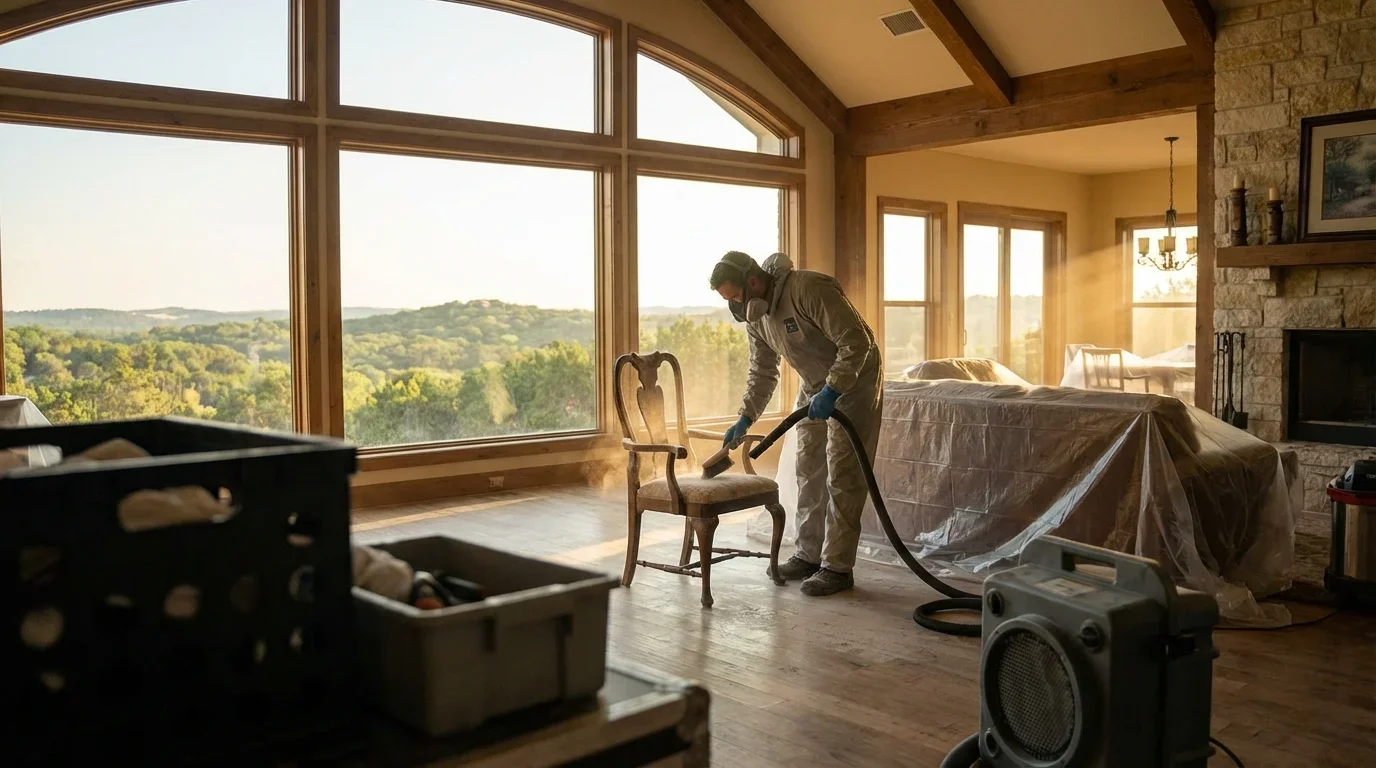
Your Treasures Deserve More Than a Trash Bag
Mold doesn't just damage your home—it threatens irreplaceable belongings, family heirlooms, and expensive electronics. Texas families shouldn't have to choose between their health and their memories.
- Professional cleaning saves what you thought was lost
- Specialized treatments eliminate mold spores and odors
- Pack-out services protect contents during remediation
⚠ Common Issues
What Can Be Saved After Mold Contamination?
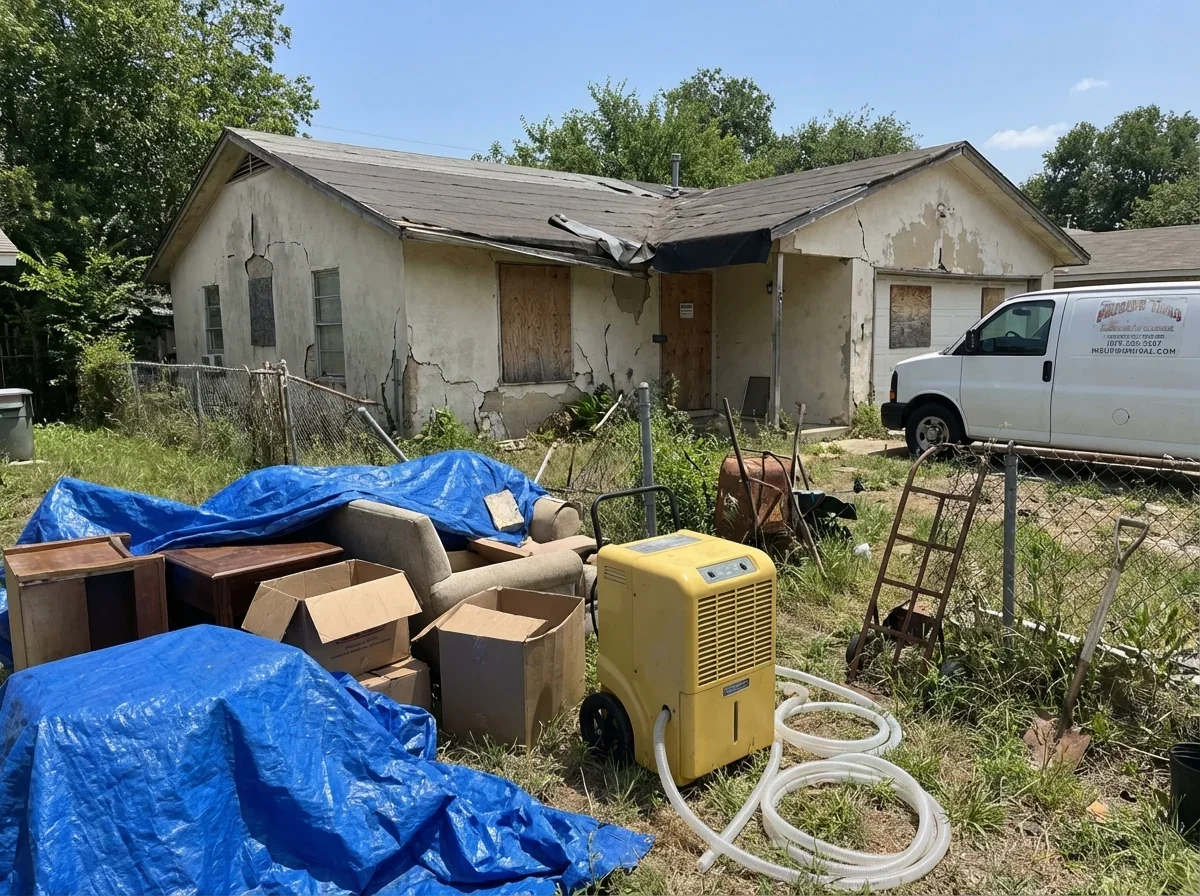
You're staring at a room full of belongings after discovering mold growth. What stays, what goes, and who decides?
Non-porous items like metal, glass, and hard plastics clean successfully in most cases. Electronics, wood furniture, and upholstered pieces require professional assessment — colonization depth determines salvageability, not just surface appearance. Porous materials like mattresses, particleboard furniture, and carpeting often face disposal if contamination extends beyond surface layers.
Texas humidity accelerates mold penetration into fabrics and wood. What looks like surface growth in Houston or Corpus Christi often extends deeper than visible staining suggests. Professional assessment within 48 hours of discovery prevents guessing games that end in disposal.
Material type matters more than sentimental value. Hard surfaces clean; soft furnishings penetrated by growth cannot be fully decontaminated without destroying the item itself.
TDLR-licensed remediators in Dallas and San Antonio use moisture meters and borescopes to check colonization depth before recommending cleaning versus replacement.[1] That assessment determines your insurance claim value and restoration budget.
$ Cost Guide
What Does Contents Cleaning Cost in Texas?
Pack-out and restoration pricing varies by item count, contamination severity, and storage duration. Here are working numbers for Texas projects.
Cost by Item Category
| Item Type | Price Range | Notes |
|---|---|---|
| Small items (books, dishes) | $5-$15 each | Minimum 25-item batch |
| Medium furniture (chairs, dressers) | $75-$200 per piece | Depends on material |
| Large furniture (sofas, beds) | $200-$500 per piece | Upholstery adds cost |
| Electronics | $50-$300 each | Testing adds $50-$100 |
| Document restoration | $2-$8 per page | Batch minimums apply |
| Clothing | $3-$12 per item | Professional laundering |
Minimum project fees run $500-$2,000 for assessment, pack-out labor, and transportation — even if you only restore 20 items. Houston and San Antonio companies charge toward the higher end due to insurance documentation requirements and transportation costs.
Factors That Affect Restoration Pricing
Storage duration drives total cost more than cleaning itself. Climate-controlled warehouse rates in Texas run $50-$150 per month for a 10×10 space. If your whole house mold remediation takes six weeks instead of two, storage fees double.
Contamination severity determines treatment complexity. Surface-level growth on furniture costs $100-$150 per piece for HEPA cleaning. Deep colonization requiring ozone treatment or specialized antimicrobial application runs $250-$400 per piece.
Insurance coverage varies by policy type. Actual Cash Value (ACV) policies depreciate your 8-year-old couch before paying. Replacement Cost Value (RCV) pays full restoration without depreciation — but requires professional documentation. Expect to pay upfront and seek reimbursement unless your contractor works directly with your carrier.
High-value items (artwork, antiques, collectibles) need specialized restoration beyond standard mold cleaning. Budget $500-$2,000+ for conservation-grade treatment of irreplaceable pieces. Your contents specialist coordinates with conservators for items requiring expert handling.
→ What to Expect
The Contents Restoration Process
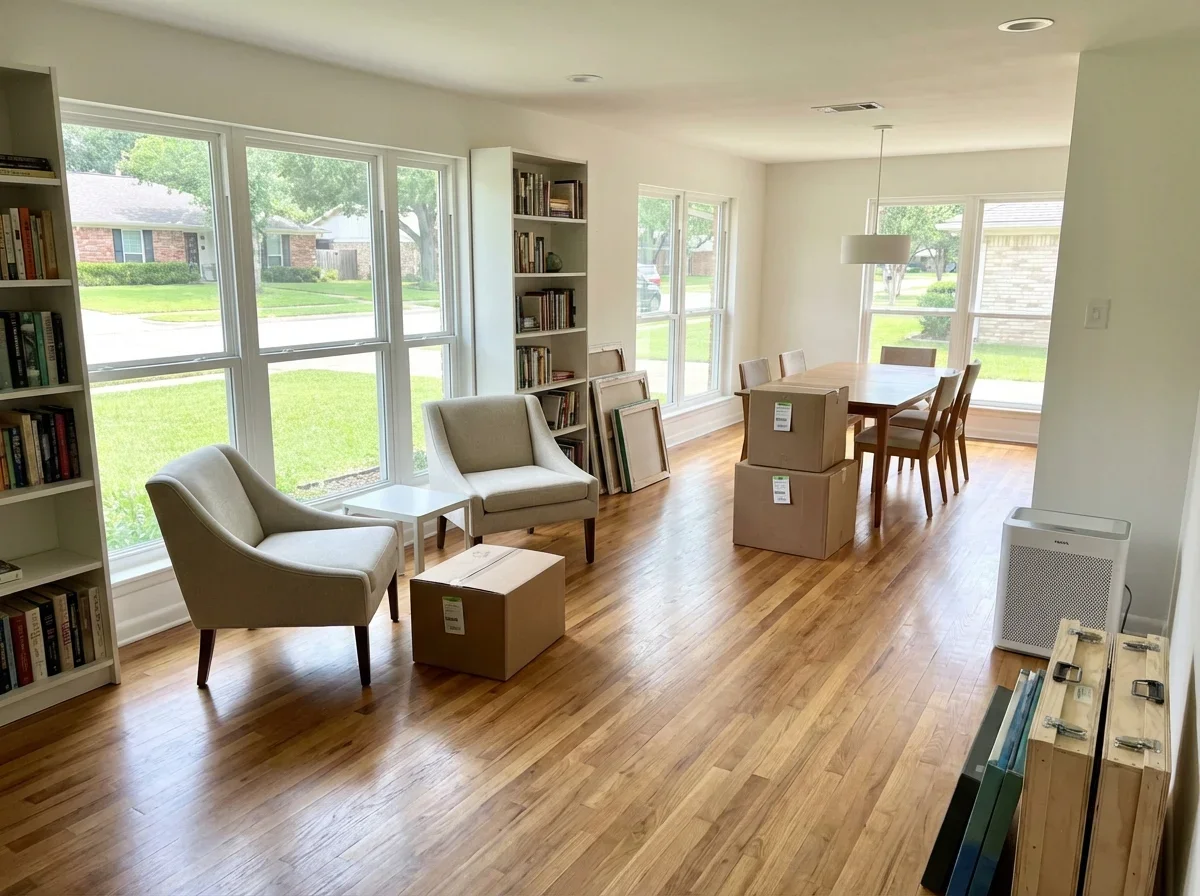
Professional contents work follows strict protocols — this isn't hauling boxes to a storage unit and wiping things down.
Initial Assessment and Inventory
The crew photographs every item before touching it. Digital inventory systems track condition, location, and restoration method for insurance documentation. High-value items get individual condition reports with close-up photos showing contamination extent.
Your adjuster needs this documentation. Missing it delays claims.
Pack-Out and Transportation
HEPA-filtered trucks transport contaminated items to climate-controlled facilities. Cross-contamination prevention starts here — clean and contaminated items never share transport space. Sealed containers prevent spore release during loading.
Cleaning and Treatment Methods
Different materials require different protocols:
| Material Type | Treatment Method | Typical Timeline |
|---|---|---|
| Hard surfaces (metal, glass) | HEPA vacuum + antimicrobial wipe | 1-2 days |
| Wood furniture | HEPA sanding + antifungal treatment | 3-5 days |
| Upholstery/fabrics | HEPA vacuum + ozone chamber | 5-7 days |
| Electronics | Specialized dry cleaning + testing | 7-10 days |
| Documents/photos | Freeze-drying + antimicrobial spray | 10-14 days |
IICRC S520 standards guide treatment selection based on contamination severity.[3] Fort Worth and Austin contractors certified in contents restoration follow these protocols to meet insurance requirements.
Storage and Return
Items stay in humidity-controlled storage (45-55% RH) until your property passes post-remediation verification. Texas summer heat makes climate control non-negotiable — 85°F warehouses reactivate dormant spores.
Return happens only after clearance testing confirms safe re-occupancy. The crew inventories everything back into your home using the original photographs.
✓ Choosing a Contractor
How to Choose a Contents Restoration Specialist
Not every mold remediation company handles contents professionally. These criteria separate qualified specialists from basic pack-out services.
Licensing and Insurance Requirements
Texas requires TDLR licensing for mold remediation work, including handling contaminated contents.[1] Verify the company holds both assessment and remediation licenses — not just one. Contents work falls under remediation licensing.
Ask these questions upfront:
- Do you carry contents restoration insurance separate from general liability?
- What's your procedure for high-value items over $5,000?
- Which IICRC certifications do your technicians hold?
- How do you handle electronics and documents differently from furniture?
- What's your claims documentation process for my insurance company?
- Can you provide references from recent contents projects in El Paso or Plano?
Storage Facility Standards
Tour the storage facility before signing contracts. Climate-controlled means consistent 65-75°F and 45-55% humidity — not just "we have AC." Texas heat makes this critical for preventing secondary growth during storage.
Red flags in storage facilities:
- Visible moisture staining or musty odors in the warehouse
- Mixed storage of contaminated and cleaned items without separation
- No humidity monitoring or control systems
- Outdoor or non-climate controlled buildings
- Lack of security cameras or access control
Documentation and Inventory Systems
Professional operations use digital inventory platforms with photo documentation at every stage. You should receive a detailed manifest before items leave your property, during cleaning, and upon return.
The company should coordinate directly with your adjuster and provide itemized restoration invoices matching insurance claim categories. This documentation determines whether your claim gets paid quickly or drags through disputes.
Compare multiple mold remediation contractors offering contents services. The cheapest bid often skips critical steps like proper storage or antimicrobial treatment — costing you more when items can't be salvaged or insurance denies claims for insufficient documentation.
Top Contractors for Contents Cleaning and Restoration
View all →
Frequently Asked Questions
- Texas Department of State Health Services. "Texas Mold Assessment and Remediation Rules." https://www.environmentaleducation.com/documents/Mold%20Agency%20Documents/MoldRules.pdf. Accessed April 02, 2026.
- Texas Commission on Environmental Quality (TCEQ). "Remediation Rules." https://www.tceq.texas.gov/remediation/remediationrules.html. Accessed April 02, 2026.
- Institute of Inspection, Cleaning and Restoration Certification (IICRC). "IICRC Standards." https://iicrc.org/iicrcstandards/. Accessed April 02, 2026.