Stop Mold Before It Comes Back
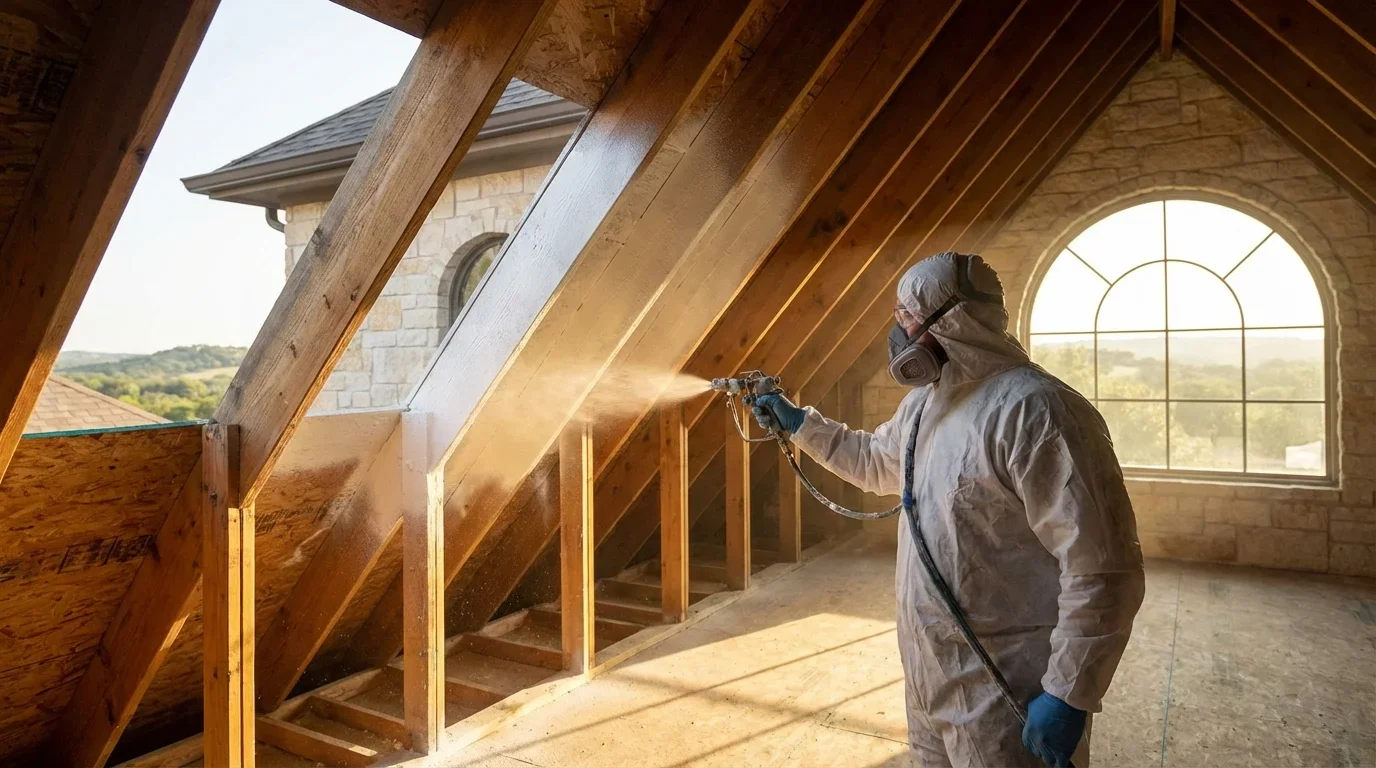
You've treated the mold, but without encapsulation, spores can reactivate the moment conditions are right. Our antimicrobial sealant creates a permanent barrier on treated surfaces.
- Prevents mold from returning after remediation
- Protects high-moisture areas long-term
- Locks out future spore growth at the source
⚠ Common Issues
What Is Mold Encapsulation?
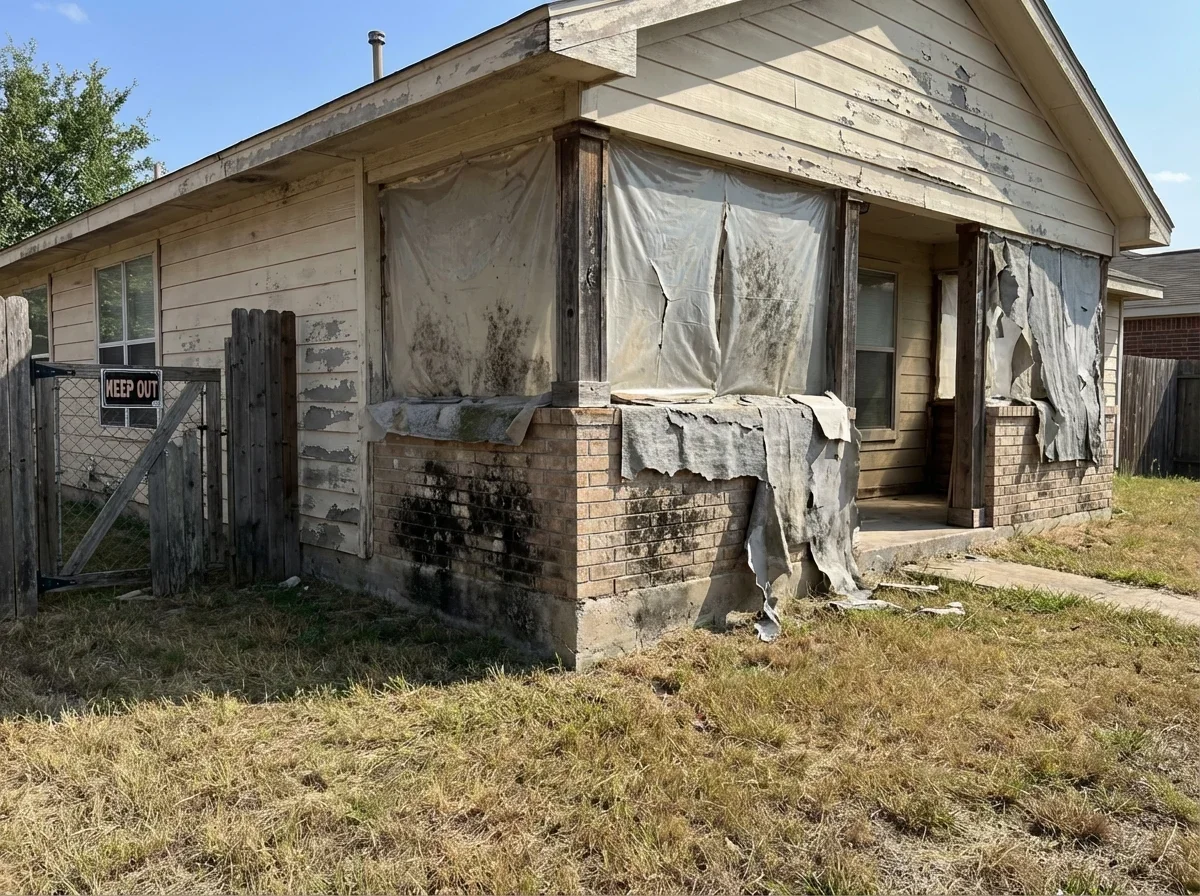
Mold encapsulation is the application of a specialized antimicrobial coating over surfaces that have been professionally remediated. It's not a treatment for active mold — it's the protective finish applied after removal to prevent recurrence.[2]
The confusion is common: encapsulation doesn't kill or remove existing mold. Active contamination must be remediated first. Only after clearance can encapsulation coatings be applied as a preventive barrier. Texas regulations explicitly position these coatings as post-remediation measures, not standalone solutions.
Encapsulation vs. Mold Removal
Removal addresses active growth through physical extraction and cleaning. Encapsulation seals the clean surface to block future colonization. In Houston and other Gulf Coast cities where humidity averages 75% year-round, that barrier becomes critical — moisture will return, and untreated porous surfaces remain vulnerable.
When Encapsulation Is Used (and When It Isn't)
Encapsulation works on non-porous or semi-porous surfaces: concrete foundations, wood framing, drywall backing, HVAC ductwork. It's commonly required after attic mold removal or crawl space remediation where moisture exposure is ongoing.
It's not appropriate for heavily damaged drywall, compromised insulation, or surfaces where structural integrity is questionable. Those materials get removed and replaced — no coating can salvage them.
Encapsulation is prevention, not remediation. Texas code requires active mold to be cleared before antimicrobial coatings are applied — skipping remediation voids insurance claims and resale documentation.
Post-remediation protocols in Texas often mandate documented encapsulation, especially for insurance settlements or property transfers. Buyers and underwriters want proof that treated areas won't recontaminate.
$ Cost Guide
What Does Mold Encapsulation Cost in Texas?
Pricing splits into surface preparation and coating application. Expect combined costs between $5–10 per square foot for most residential projects, with commercial work scaling based on square footage and accessibility.
| Project Type | Typical Cost Range |
|---|---|
| Small residential area (50–100 sqft) | $400–$1,000 |
| Full attic encapsulation (800–1,200 sqft) | $4,000–$9,600 |
| Crawl space coating (400–600 sqft) | $2,000–$4,500 |
| Commercial facility (per 1,000 sqft) | $6,000–$12,000 |
Residential Encapsulation Pricing
Surface prep runs $2–4/sqft: cleaning, light sanding, moisture testing. Coating application adds $3–6/sqft depending on product grade and number of coats. Most projects in Dallas or San Antonio use two-coat systems for durability.
Attic encapsulation after remediation typically costs $4,000–$7,500 for an average 1,000-square-foot space. Crawl spaces run lower due to reduced square footage but may add costs if access is difficult.
Commercial Project Costs
Larger facilities benefit from economies of scale — a 5,000-square-foot warehouse might cost $7–9/sqft versus $10+/sqft for a small office suite. Multi-story buildings in Austin or Fort Worth add equipment and labor costs for scaffolding or lifts.
Factors That Affect Price
Surface condition matters most. Rough concrete or exposed wood framing requires more prep than smooth drywall backing. High ceilings, tight crawl spaces, and HVAC component coating increase labor hours. Premium encapsulants with 10-year warranties cost more upfront but reduce long-term reapplication needs.
Texas climate drives product selection — Gulf Coast contractors in Corpus Christi use vapor-permeable formulas that handle extreme humidity without trapping moisture. Insurance-required projects add documentation fees ($150–$300) for certified application records.
→ What to Expect
The Mold Encapsulation Process
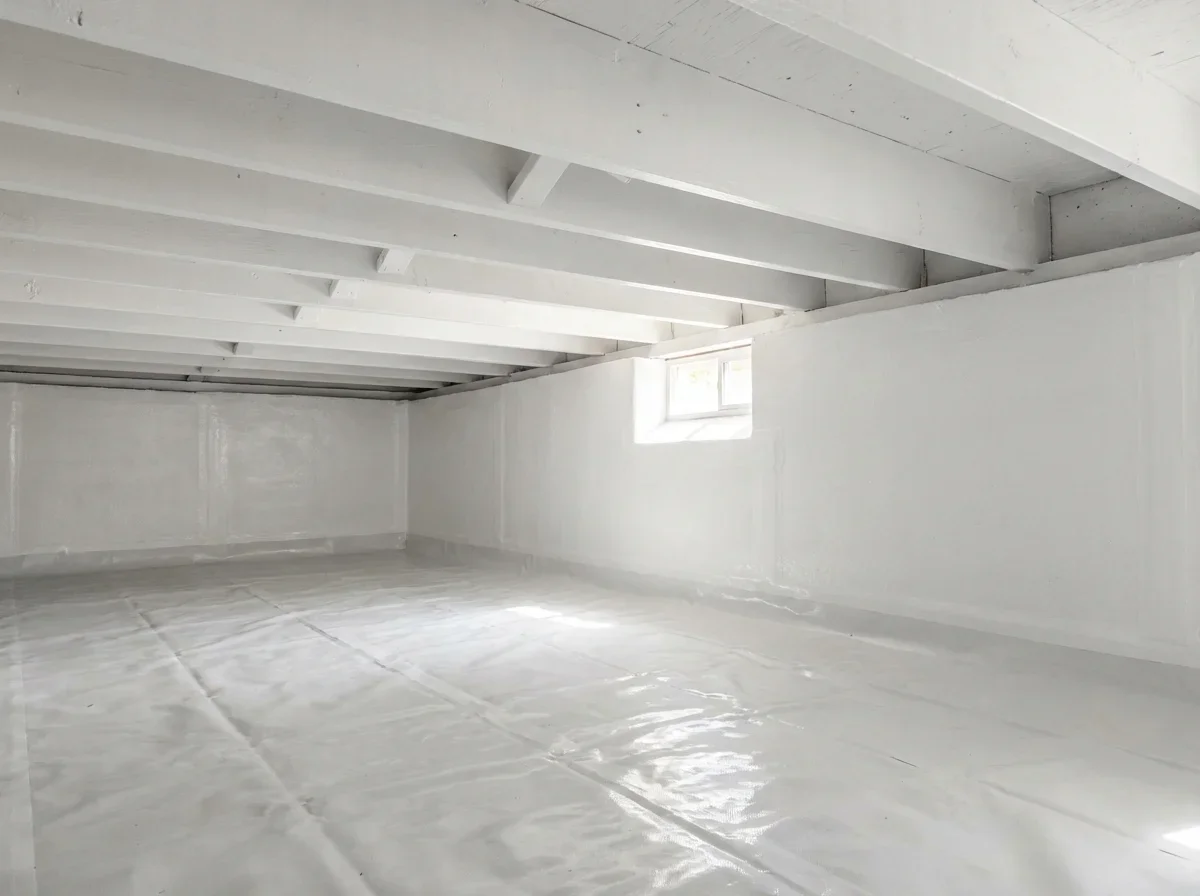
Encapsulation follows a strict sequence. Active mold must be fully remediated and cleared before coatings touch surfaces.[2] Contractors who suggest encapsulating over visible growth aren't following Texas standards.
Pre-Application Requirements
- Remediation completion: All contaminated materials removed, surfaces cleaned with antimicrobial solutions
- Clearance testing: Post-remediation verification confirms spore counts meet acceptable levels
- Moisture correction: Leaks repaired, humidity controlled — coating won't stop new water intrusion
- Surface assessment: Substrate must be structurally sound and dry (moisture meters confirm <15% content)
Attempting encapsulation without addressing the moisture source just seals in a recurring problem. Texas contractors licensed under TDLR know this — unlicensed applicators often skip these steps.
Surface Preparation and Application
Clean surfaces get light sanding or wire brushing to improve adhesion. Dust and debris are vacuumed with HEPA filtration. First coat goes on with airless sprayers for even coverage — brush application works for small areas but spraying ensures consistent mil thickness.
Most systems require two coats: primer/sealer followed by topcoat. Wait times between coats range from 2–6 hours depending on temperature and humidity. Plano contractors working in air-conditioned attics during summer achieve faster drying than El Paso crews in swamp cooler-only spaces.
Drying Time and Post-Application Inspection
Full cure takes 24–72 hours. High humidity extends this — coastal projects may need dehumidifiers running during cure. Contractors document wet mil thickness with gauges and photograph coverage for insurance records.
Final inspection confirms uniform coating with no holidays (bare spots). Many Texas policies require photographic evidence of application for claim closure.
✓ Choosing a Contractor
How to Choose a Mold Encapsulation Contractor in Texas
Texas law restricts who can perform encapsulation on mold-affected areas. Licensing, insurance, and documentation standards separate legitimate contractors from handymen with a paint sprayer.
TDLR Licensing Requirements
Any mold remediation project affecting 25 contiguous square feet or more requires a licensed mold remediator under Texas Occupations Code Chapter 1958.[1][3] Encapsulation following remediation falls under this scope — the contractor applying coatings must hold a valid TDLR mold remediator license.
Questions to ask:
- What's your TDLR mold remediator license number? (Verify at tdlr.texas.gov)
- Will you provide a three-year record retention guarantee as required by Texas code?
- Do you use EPA-registered antimicrobial encapsulants?
- What's your protocol if moisture returns post-encapsulation?
- Can you provide references from recent insurance-required projects?
Insurance and Documentation Standards
General liability insurance ($1M+ coverage) and workers' comp protect you if something goes wrong. Documentation matters for resale and claims: expect dated photos, product data sheets, application certifications, and moisture readings.
Contractors experienced with insurance claim mold services know what adjusters require. Missing documentation can void coverage or complicate property transfers.
Red Flags to Avoid
- Offering encapsulation without prior remediation clearance
- Using generic "mold-resistant paint" instead of certified encapsulants
- No TDLR license or expired credentials
- Verbal-only quotes without written scope of work
- Pressure to skip moisture testing "because coating will handle it"
Compare multiple licensed contractors through verified directories. The lowest bid often means shortcuts on prep, single-coat application, or inferior products that fail within two years.
References
- Texas Legislature Online. "Texas Occupations Code Chapter 1958. Mold Assessors and Remediators." https://statutes.capitol.texas.gov/docs/OC/htm/OC.1958.htm
- Texas Administrative Code. "16 Tex. Admin. Code § 78.120 - Minimum Work Practices and Procedures for Mold Remediation." https://www.law.cornell.edu/regulations/texas/16-Tex-Admin-Code-SS-78-120
- Texas Department of Licensing and Regulation. "Texas Mold Remediation Notification Requirements." https://www.tdlr.texas.gov/mld/mldnotifications.htm
Top Contractors for Mold Encapsulation
View all →

Frequently Asked Questions
- Texas Legislature Online. "Texas Occupations Code Chapter 1958. Mold Assessors and Remediators." https://statutes.capitol.texas.gov/docs/OC/htm/OC.1958.htm. Accessed April 02, 2026.
- Texas Administrative Code. "16 Tex. Admin. Code § 78.120 - Minimum Work Practices and Procedures for Mold Remediation." https://www.law.cornell.edu/regulations/texas/16-Tex-Admin-Code-SS-78-120. Accessed April 02, 2026.
- Texas Department of Licensing and Regulation (TDLR). "Texas Mold Remediation Notification Requirements." https://www.tdlr.texas.gov/mld/mldnotifications.htm. Accessed April 02, 2026.