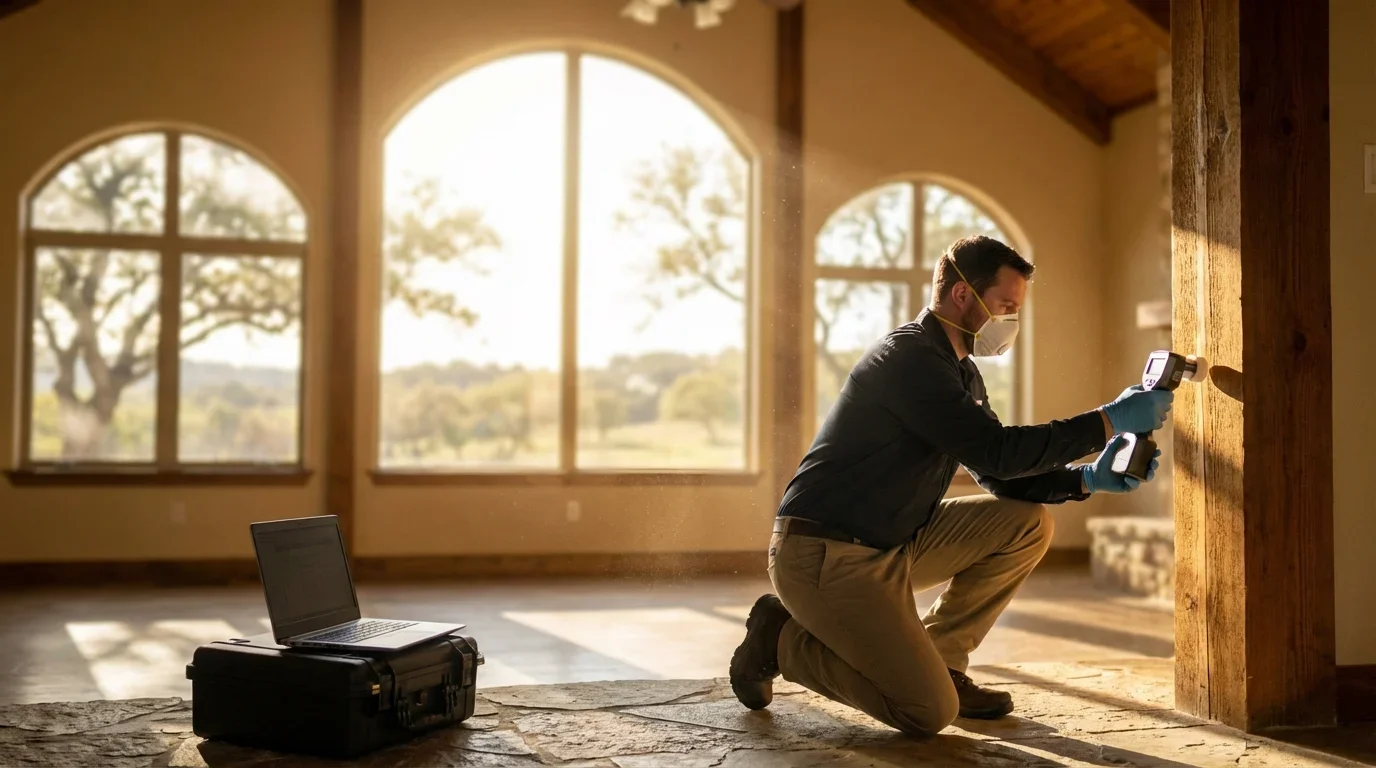
Know Exactly What's Growing in Your Texas Home
Hidden mold spreads fast in our humid climate. Professional lab testing identifies the species, concentration levels, and health risks lurking behind your walls.
- Pinpoint toxic mold before symptoms worsen
- Get EPA-certified laboratory analysis
- Protect your family with hard data
⚠ Common Issues
When Do You Need Mold Testing?
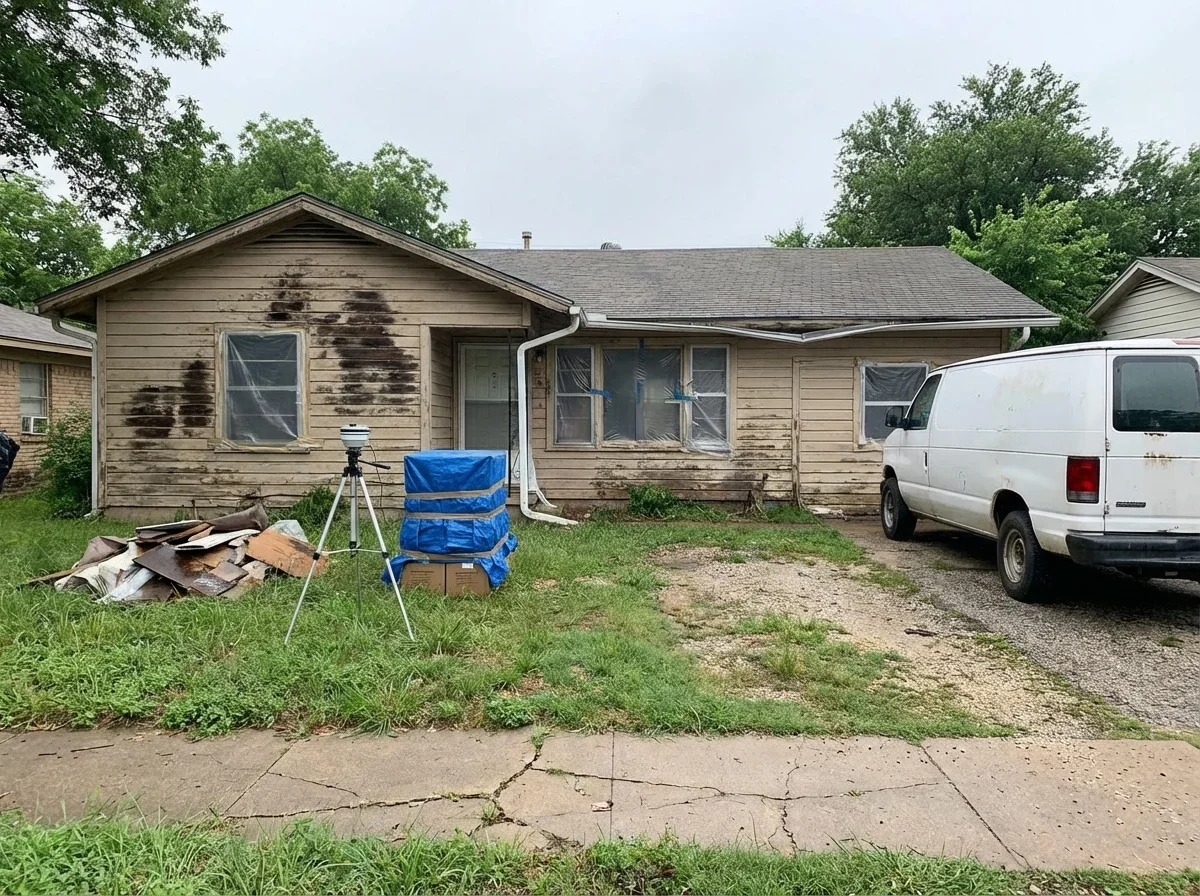
You need lab testing when visual inspection isn't enough to make critical decisions. Testing provides documented evidence — genus identification, spore counts, and contamination extent that insurance adjusters, real estate agents, and remediation contractors require.
Testing becomes necessary in four scenarios. After water damage in Houston or Dallas homes, testing determines whether moisture intrusion triggered active growth beyond what you can see. For insurance claims, adjusters demand lab reports showing species identification and concentration levels before approving remediation coverage.[2] During real estate transactions, buyers request baseline testing to assess contamination before closing — particularly common in humid Gulf Coast markets like Corpus Christi where mold disclosure is scrutinized.
Post-remediation clearance testing verifies the work succeeded. Texas separates testing from remediation to ensure independence — the contractor who removed the mold cannot legally test their own work.[1] Clearance sampling confirms spore levels returned to baseline after remediation in Austin or San Antonio properties.
Testing also answers health concerns. When occupants experience respiratory symptoms but mold isn't visible, air sampling detects elevated spore concentrations from hidden sources — wall cavities, HVAC systems, or attic spaces where Texas humidity accelerates growth.
$ Cost Guide
What Does Mold Testing Cost in Texas?
Expect to pay $300-$800 for comprehensive residential air sampling in most Texas markets. Single-room testing starts lower; whole-home protocols with multiple sampling points reach the higher end.
Testing Cost Breakdown
| Sample Type | Typical Cost Range | Turnaround Time |
|---|---|---|
| Air sampling (per location) | $300-$500 | 3-5 business days |
| Surface swab/tape lift | $150-$400 per sample | 3-5 business days |
| Bulk material analysis | $200-$500 per sample | 5-7 business days |
| Post-remediation clearance | $400-$800 | 3-5 business days |
Air sampling drives most residential testing costs. Standard protocols require at least three samples: one from the affected area, one from an unaffected room, and one outdoor control sample. Properties in Fort Worth or Plano with multiple moisture zones may need 5-7 sampling locations, increasing total costs to $1,200-$1,500.
Surface sampling costs less but provides limited scope. At $150-$400 per sample, swabs identify species on visible growth but don't reveal airborne spore concentrations or hidden contamination. Bulk material testing — cutting drywall or insulation sections — adds $200-$500 per sample and typically applies when surface growth suggests deeper penetration.
Four factors affect your final price: property square footage (larger homes need more sampling points), contamination extent (widespread growth requires comprehensive coverage), laboratory selection (accredited labs charge premium rates for detailed species identification), and urgency (rush analysis adds 30-50% fees).
Post-remediation clearance testing costs $400-$800 for most Texas homes. Clearance is non-negotiable — it's the only way to verify remediation succeeded and spore levels dropped to safe concentrations.[3] Insurance claims often require clearance reports before closing out remediation approvals.
Real estate transaction testing averages $450-$650 for standard three-point sampling. Buyers in humid El Paso or Lubbock markets routinely request testing during inspections, particularly for properties with prior water damage history or visible moisture staining.
→ What to Expect
The Mold Testing Process
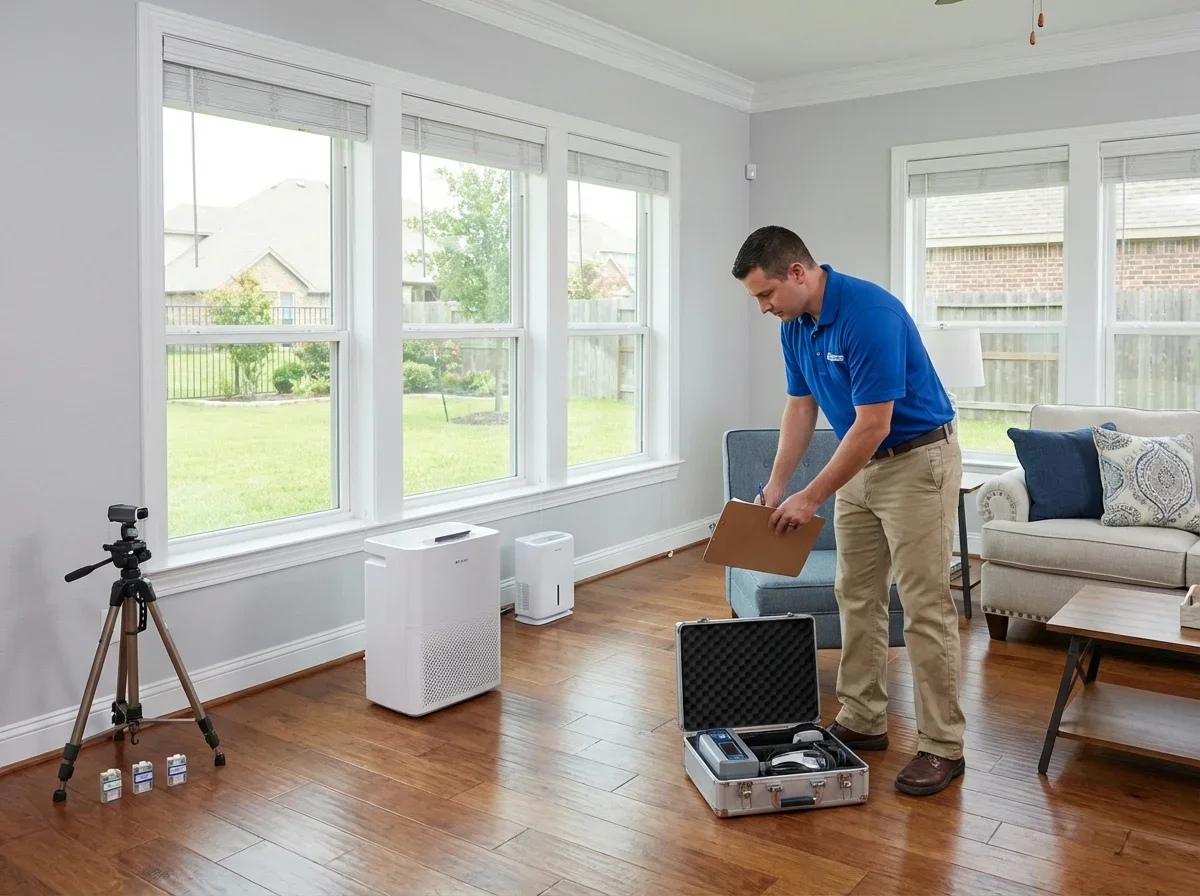
Testing begins with a pre-assessment site visit. The TDLR-licensed consultant documents moisture readings, identifies potential contamination zones, and develops a sampling plan based on property size and complaint areas. They determine how many samples to collect and which methods to use.
Three Testing Methods
| Method | Application | What It Measures |
|---|---|---|
| Air Sampling | Hidden contamination, baseline assessment | Airborne spore concentration per cubic meter |
| Surface Sampling | Visible growth identification | Species on walls, ceilings, materials |
| Bulk Material | Deep contamination in drywall, insulation | Embedded mold within building materials |
Air sampling captures spores using calibrated pumps and cassettes. The consultant collects samples from affected areas and outdoor control samples for comparison. Surface swabs or tape lifts gather visible growth for species identification.[2] Bulk samples involve cutting small material sections for lab analysis when mold penetrates drywall or wood.
Samples ship to accredited laboratories. Analysis takes 3-5 business days for standard reporting. Labs identify genus and species (Aspergillus, Penicillium, Stachybotrys), quantify spore counts, and compare indoor levels against outdoor baseline.
Reports detail findings room by room. Elevated spore concentrations trigger remediation recommendations. Post-remediation clearance testing follows the same protocol — new samples verify counts dropped to acceptable levels after cleanup.[3] Texas humidity means clearance testing often occurs 48 hours after final drying to ensure moisture levels stabilized.
✓ Choosing a Contractor
How to Choose a Mold Testing Professional
Start with TDLR licensing verification. Texas requires mold assessment consultants to hold individual licenses — check their license number at tdlr.texas.gov before hiring.[1] Testing and remediation must remain separate — state law prohibits consultants from performing both services on the same project to prevent conflicts of interest.
Questions to Ask Before Hiring
- What is your TDLR mold assessment consultant license number?
- How many sampling locations do you recommend for my property size?
- Which laboratory analyzes your samples, and are they AIHA-accredited?
- Do you provide genus/species identification or just spore counts?
- What is your turnaround time for standard reports?
- Can you explain clearance testing protocols for post-remediation verification?
Request detailed sampling plans before work begins. The consultant should explain why specific locations were chosen, which methods apply to your situation, and what the lab report will include. Beware of vague "comprehensive testing" claims without documented sampling strategies.
Red Flags
- Offering both testing and remediation services (illegal in Texas)
- Unable to produce current TDLR license
- Pressure to start remediation before receiving lab results
- No outdoor control samples in their protocol
Verify laboratory credentials. Reputable consultants use AIHA-LAP or EMLAP accredited labs that follow standardized analysis methods. Ask to see sample reports from previous projects — they should include detailed spore count data, species identification, and comparison to outdoor baseline levels.
For post-remediation clearance or real estate transactions, confirm the consultant provides written certification suitable for insurance adjusters or title companies. Compare at least three licensed Texas mold testing professionals with documented experience in your property type before making a decision.
Top Contractors for Mold Testing
View all →

Frequently Asked Questions
- Texas Department of Licensing and Regulation (TDLR). "Mold-Related Services Rules." https://www.tdlr.texas.gov/mold/mold-rules.htm. Accessed April 02, 2026.
- Texas Department of Licensing and Regulation (TDLR). "Mold Abatement License Requirements." https://www.tdlr.texas.gov/mold/mold-license.htm. Accessed April 02, 2026.
- New York City Department of Health and Mental Hygiene. "Guidelines on Assessment and Remediation of Fungi in Indoor Environments." https://www.nyc.gov/assets/doh/downloads/pdf/epi/moldrpt.pdf. Accessed April 02, 2026.