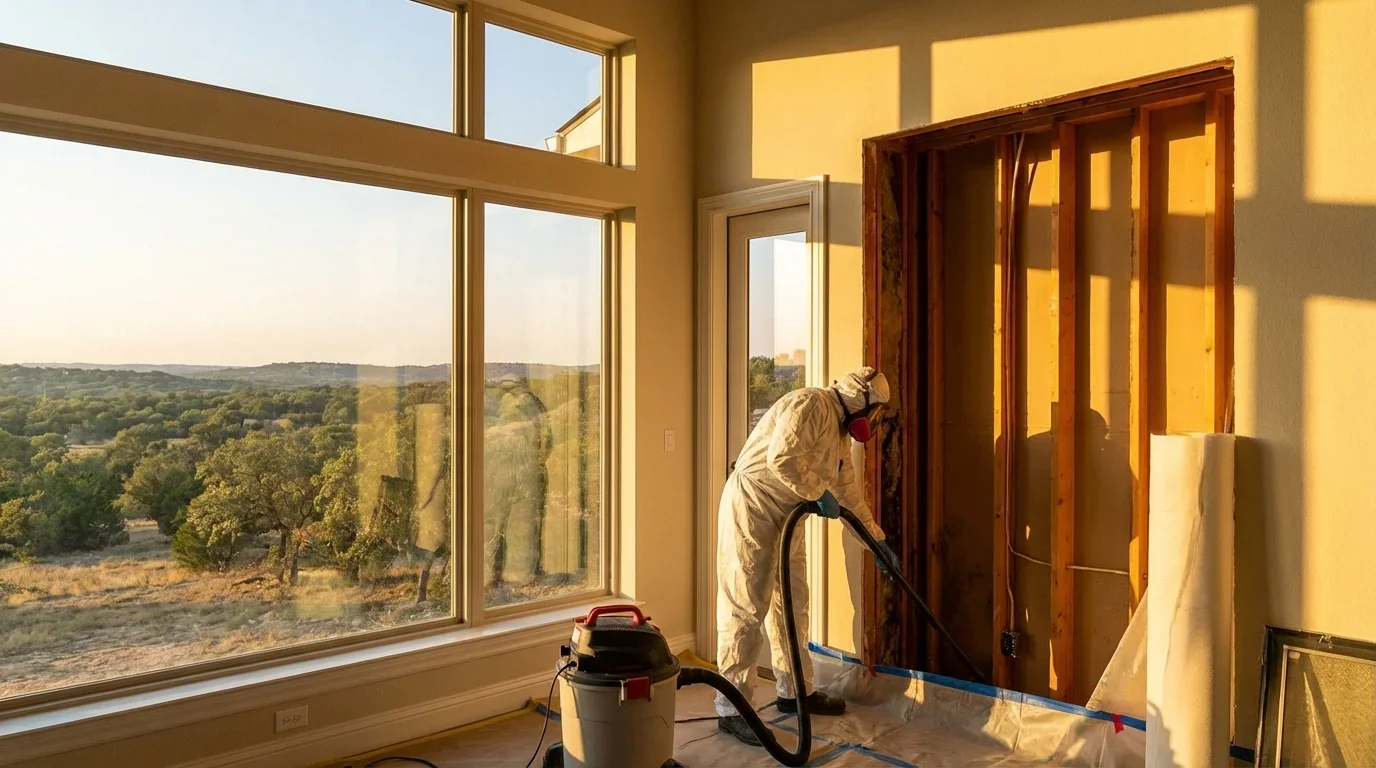
Hidden Mold Behind Your Walls Won't Go Away Alone
Mold growing inside wall cavities spreads fast, destroys insulation, and threatens your family's health. We open it up, remove it completely, and rebuild it right.
- Complete cavity remediation and structural drying
- Safe insulation removal and replacement
- Prevent recurring mold and wood rot
⚠ Common Issues
When Do You Need Wall Cavity Mold Removal?
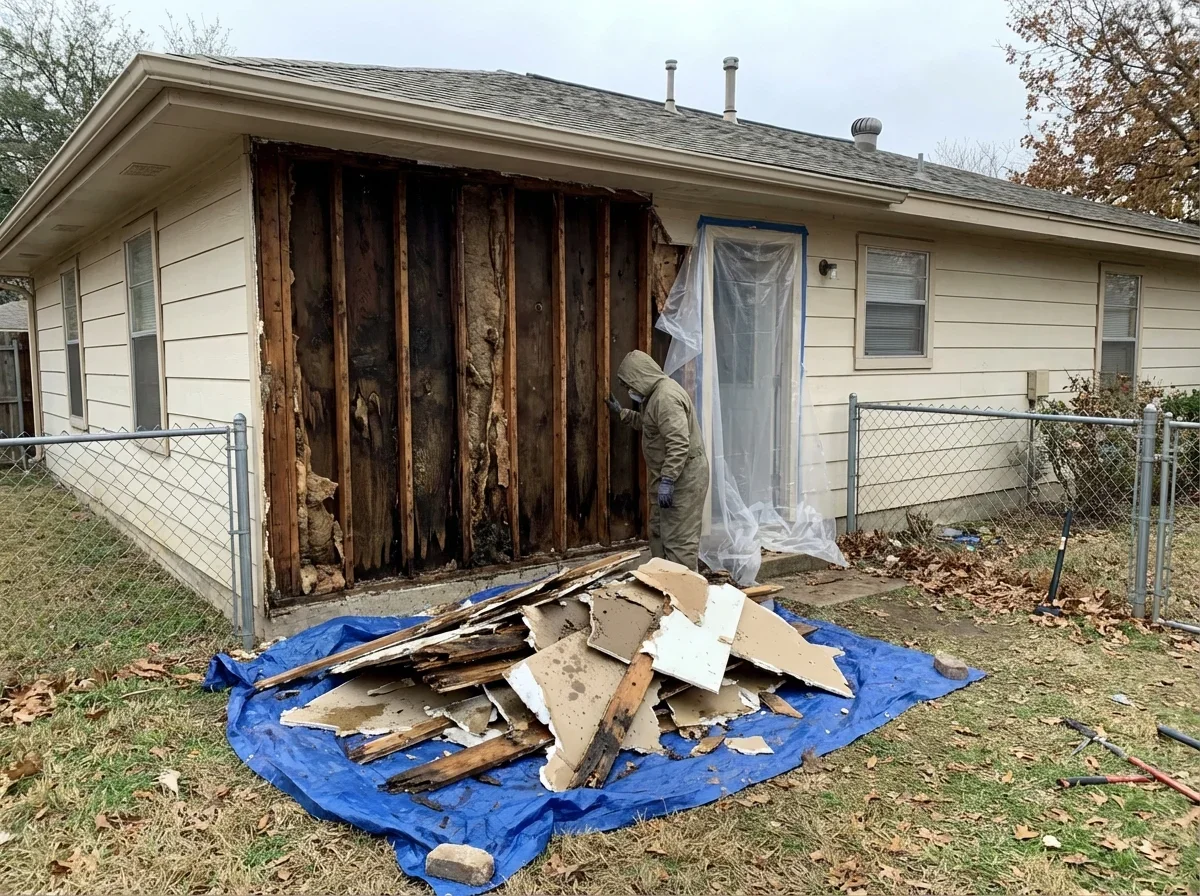
Wall cavity mold hides behind drywall, growing on insulation, studs, and the back of wall surfaces. In Texas, exterior walls facing south and west absorb intense heat while interior AC condenses moisture — creating ideal conditions for hidden mold growth year-round.
Warning Signs of Mold Inside Walls
You'll rarely see wall cavity mold until it's extensive. Watch for:
- Persistent musty smell in a room, strongest near baseboards or outlets
- Discoloration or water stains spreading across drywall with no visible leak
- Peeling paint or wallpaper that bubbles without recent water events
- Warped or soft drywall sections, especially on exterior walls
- Allergy symptoms (coughing, headaches, sinus irritation) that worsen in specific rooms
Bathroom perimeter walls, kitchen exterior walls, and rooms above crawl spaces show the highest mold rates in Houston and Dallas properties due to plumbing condensation and foundation moisture.
Wall cavity mold doesn't plateau. Once established in insulation, mold spreads laterally through wall studs at 1-2 feet per month in humid conditions, invisibly colonizing adjacent cavities until you open the walls.[3]
Health Risks of Hidden Mold Exposure
Mold spores circulate through wall cavities into living spaces via electrical outlets, baseboards, and HVAC returns. Prolonged exposure increases respiratory sensitization, particularly in children and immune-compromised individuals. Texas regulations recognize this risk — any remediation exceeding 25 contiguous square feet requires TDLR-licensed contractors to ensure proper containment and removal.[1]
$ Cost Guide
What Does Wall Cavity Mold Removal Cost in Texas?
Wall cavity remediation pricing reflects the extent of affected area, structural access difficulty, and required containment scope. Texas TDLR licensing adds oversight but prevents the budget disasters common with unlicensed work.
| Project Scope | Typical Texas Cost Range |
|---|---|
| Single wall cavity (8-12 linear feet) | $2,000 - $3,500 |
| Full room perimeter (bathroom/bedroom) | $5,000 - $8,000 |
| Multi-room or structural compromise | $10,000 - $18,000+ |
| Assessment and clearance testing | $400 - $800 (separate) |
Factors That Affect Wall Cavity Remediation Pricing
Affected square footage drives base cost — remediators charge $40-$65 per square foot of exposed wall surface in most Texas markets. Corpus Christi and Gulf Coast properties often hit the higher end due to persistent humidity requiring extended structural drying.
Containment complexity increases with occupied homes, multi-story access, or asbestos-era construction (pre-1980 homes require abatement testing before wall removal). Expect 20-30% premiums for second-floor exterior walls or homes requiring full household negative pressure systems.
Moisture source severity affects timeline and cost. Active leaks require plumbing or roofing repairs before remediation begins — often adding $800-$2,500 to total project cost depending on the issue.
Reconstruction specifications vary widely. Basic drywall replacement and texture-match paint runs $3-$5 per square foot; matching custom finishes or relocating electrical/plumbing during rebuild can double reconstruction costs.
Insurance Coverage for Hidden Mold Damage
Texas homeowners policies typically exclude gradual mold from long-term leaks but cover sudden water events (burst pipes, storm intrusion) if you file promptly. Wall cavity mold from a documented plumbing failure often qualifies for partial coverage.
Adjusters scrutinize moisture timelines — thermal imaging documentation showing recent water intrusion strengthens claims significantly. Expect insurance to cover remediation and reconstruction but rarely covers the initial assessment unless your policy includes specific mold riders.
Post-remediation verification documentation is essential for claim closure in Fort Worth and Dallas, where insurers increasingly require independent clearance before issuing final payments.
→ What to Expect
The Wall Cavity Mold Remediation Process
Texas law mandates a structured approach to wall cavity work, separating assessment from remediation to prevent conflicts of interest.
Inspection and Mold Extent Mapping
A TDLR-licensed mold assessor uses thermal imaging and moisture meters to map affected areas before any demolition. This identifies hidden moisture sources (leaking pipes, AC condensation lines, roof intrusion) and determines removal scope — preventing the "we found more once we opened it up" cost escalations that plague unlicensed work.
Expect inspection results within 24-48 hours. The assessor's protocol specifies exact removal boundaries, containment requirements, and clearance testing standards for the remediation contractor.
Containment and Drywall Removal
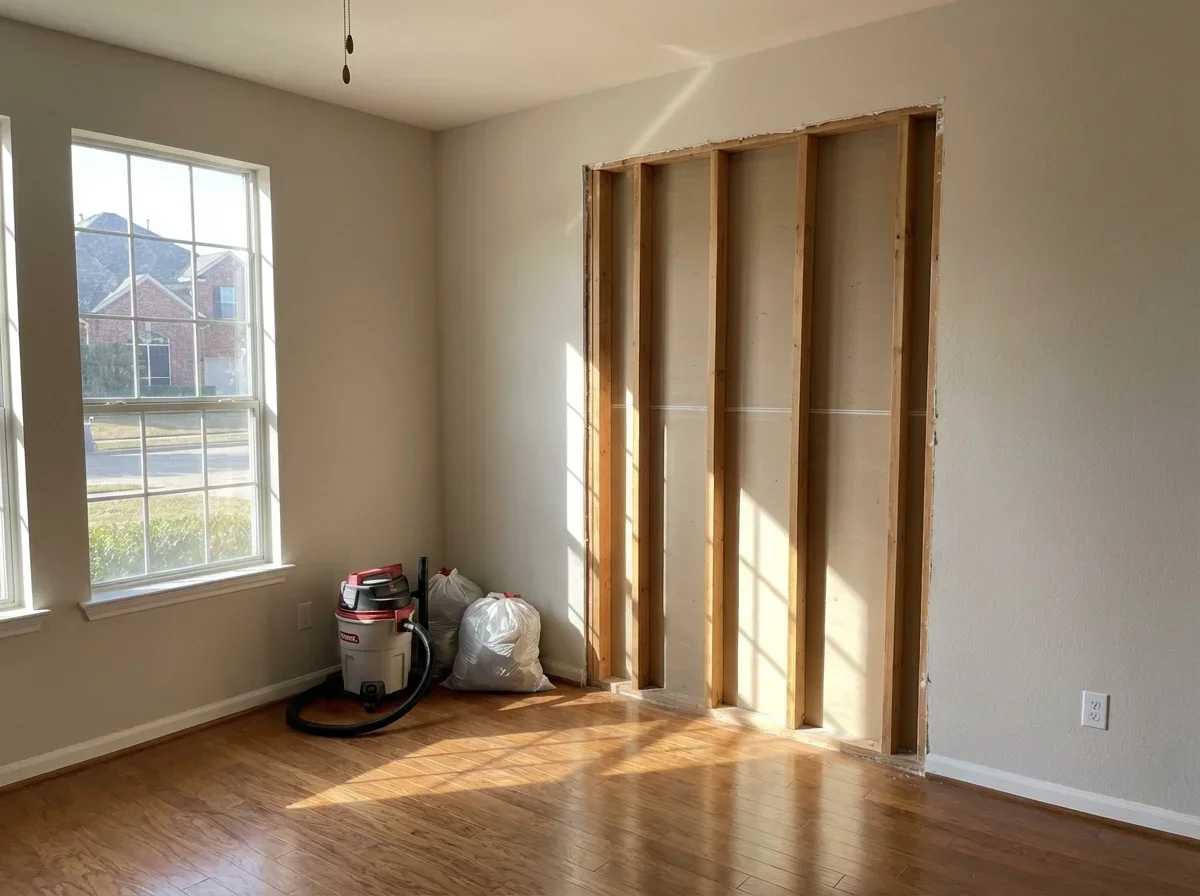
Licensed remediators establish negative air pressure containment with polyethylene barriers and HEPA air scrubbers before cutting drywall. This prevents spore dispersal into unaffected rooms — critical in occupied homes.
Contaminated drywall and insulation go straight into sealed disposal bags. Batts of fiberglass insulation hold moisture and spores indefinitely; they cannot be cleaned and must be replaced entirely.[3]
Timeline: Most single-wall projects take 2-3 days for removal and treatment; whole-room cavity work extends to 4-7 days.
Structural Treatment and Drying
Exposed studs receive HEPA vacuuming to remove surface mold, then antimicrobial treatment rated for porous wood surfaces. Commercial dehumidifiers and air movers run continuously until wood moisture content drops below 15% — the threshold where mold cannot reactivate.
San Antonio and Austin contractors often encounter live oak and cedar studs in older homes, which dry slower than standard pine framing. Add 1-2 days for hardwood stud drying in these markets.
Clearance Testing and Reconstruction
Texas requires independent post-remediation verification before reconstruction begins. A different TDLR assessor (not affiliated with the remediator) collects air and surface samples to confirm spore counts have returned to normal background levels.[2]
Only after receiving clearance documentation can you authorize drywall replacement and painting. Most contractors coordinate reconstruction, but clearance testing remains separate by law to protect homeowner interests.
✓ Choosing a Contractor
How to Choose a Wall Cavity Mold Remediation Contractor in Texas
Wall cavity work affects your home's structure and indoor air quality — choosing a properly licensed contractor isn't optional under Texas law.
Required TDLR Licensing and Credentials
Verify active TDLR licenses for both the assessor and remediator before signing any contract. Texas Chapter 295 requires separate licenses for mold assessment and remediation — a contractor cannot perform both roles on the same project to prevent conflict of interest.[2]
Check license status at tdlr.texas.gov/mold/mold.htm. Any contractor claiming "licensing isn't required for small jobs" is violating state law — Texas mandates licensing for any remediation exceeding 25 contiguous square feet, which virtually all wall cavity projects exceed.[1]
Questions to ask before hiring:
- What's your TDLR license number, and can I verify it independently?
- Will you provide a detailed remediation protocol before starting work?
- Who performs your post-remediation clearance testing (must be different company)?
- Do you carry pollution liability insurance specific to mold work?
- Can you provide references from wall cavity projects in the past 12 months?
- What warranty covers mold reoccurrence if moisture issues return?
Experience with Structural Mold Projects
Look for contractors who regularly handle structural drying and multi-phase containment work — not just surface cleaning crews pivoting into remediation. Ask how they handle moisture source identification and whether they coordinate with plumbers or roofers when needed.
Red flags that indicate inexperience or corner-cutting:
- Offering to start work without formal assessment and protocol documentation
- Claiming they can "test and remediate" themselves (illegal in Texas)
- No mention of containment barriers or negative air pressure systems
- Unable to explain clearance testing requirements or timeline
- Pressure to waive post-remediation verification "to save money"
Contractors experienced in water damage mold removal and whole house mold remediation typically demonstrate stronger protocols for wall cavity work than general handyman services attempting mold jobs.
Compare multiple licensed contractors through TX Mold Pros to evaluate response time, protocol thoroughness, and all-in pricing transparency before committing to wall cavity remediation.
Top Contractors for Wall Cavity Mold Removal
View all →

Frequently Asked Questions
- Texas Department of Housing and Community Affairs (TDHCA). "Mold Remediation in Texas Homes." https://www.tdhca.texas.gov/texas-mold-survey-report. Accessed April 02, 2026.
- Texas Department of Licensing and Regulation (TDLR). "Texas Mold Assessment and Remediation Rules (TMARR)." https://www.tdlr.texas.gov/mold/mold.htm. Accessed April 02, 2026.
- New York City Department of Health and Mental Hygiene (.gov). "Guidelines on Assessment and Remediation of Fungi in Indoor Environments." https://www.nyc.gov/assets/doh/downloads/pdf/epi/moldrpt.pdf. Accessed April 02, 2026.