Short Answer: Sometimes, and Only if Specific Conditions Are Met
You may be able to end a Texas lease over mold if the condition materially affects the physical health or safety of an ordinary tenant, you gave the required notice, you were current on rent, and the landlord had a reasonable time to make a diligent repair effort.[1]
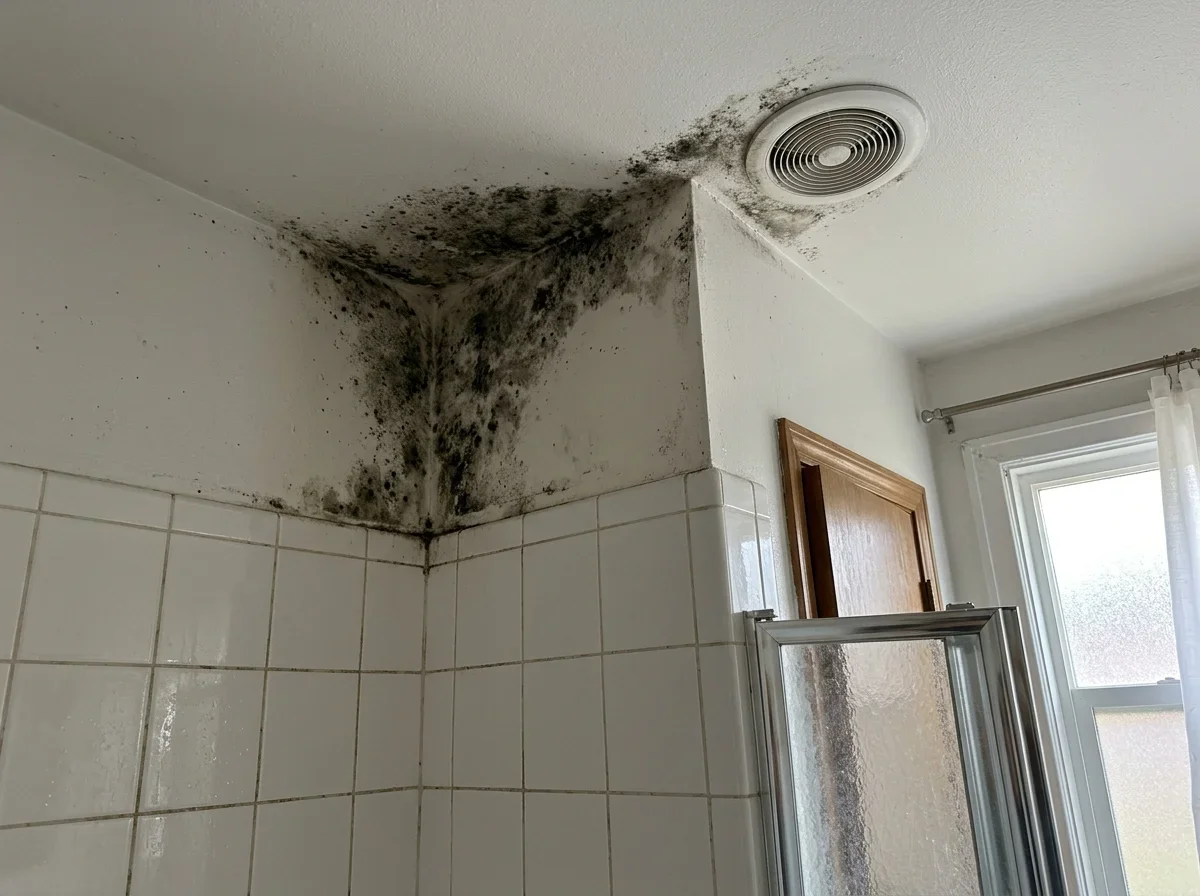
Texas has no mold-specific tenant statute. The right to leave comes from the general repair-duty rules in Property Code Chapter 92, Subchapter B.[2]
TDLR also notes that mold is generally handled under the lease and as a maintenance matter needing prompt written notice. It cannot advise tenants about breaking a lease, withholding rent or eviction.[5]
What Property Code 92.056 Requires Before a Tenant Can Terminate
Think of the statute as a gate with several latches. Each has to be open.
Conditions the tenant must meet
| Requirement | What it means | Common way tenants fail it |
|---|---|---|
| Condition | It materially affects physical health or safety of an ordinary tenant[1] | A minor patch of mildew, or a claim based on color alone |
| Notice | You gave the legally required notice[1] | Verbal complaints, or a method that leaves no proof |
| Rent status | You were current on rent when you gave notice[1] | Withholding rent first and complaining second |
| Reasonable time | The landlord had a reasonable time to repair[1] | Leaving before that time has passed |
Confirm the exact wording of the notice and timing rules in Chapter 92 on the Texas Legislature's statutes site before you act on any of this.[2]
Landlord's duty to repair
The landlord must make a diligent effort to repair conditions that materially affect health or safety. That duty has limits.
A condition the tenant caused is the usual example.
When Mold Counts as a Condition Affecting Health or Safety
The legal test is the effect on an ordinary tenant, not how scary the mold looks.
Why black mold is not automatically a valid reason
Color does not decide the test. A few spores of a dark mold won't carry a termination, while extensive growth of any color, tied to ongoing water intrusion, may support one.
For symptoms and identification, see signs of mold in a home and black mold health risks. If you are experiencing symptoms, a physician is the right person to ask.
| Stronger factual record | Weaker factual record |
|---|---|
| Repeated water intrusion | One small bathroom patch |
| A persistent leak or sewage backup | Isolated condensation on a window |
| Visible spread over time | Growth that cleaned off and stayed off |
| Documented failed repairs | No written report to the landlord |
Moisture source matters more than mold color
Texas conditions make certain sources common. Slab-on-grade homes hide plumbing under the floor, and hard water and shifting expansive clay can lead to slow leaks.
Warm floor spots, unexplained water bills and a musty smell are worth reporting in writing. With AC running eight or more months a year, condensation and drain-line problems recur.
The parts of the system
Common moisture sources behind rental mold
Under-slab plumbing
Slow leaks, warm floor spots
AC condensate drain or pan
Overflow and drain-line problems
Roof
Leaks into ceilings and walls
Sewage backup
Persistent water intrusion
| Usually points to a repair issue | May point to tenant housekeeping |
|---|---|
| Under-slab plumbing leaks | Poor shower ventilation habits |
| Clogged AC condensate drain or pan overflow | Unreported spills left to soak |
| Roof leaks | Blocked vents |
| Sewage backups | Ignoring visible condensation |
Giving Notice and Allowing Time to Repair
Check your lease first. It may require a particular notice method or add reporting duties beyond the statute.
What to put in the notice
Keep it factual. Do not draft it like a legal threat. Include:
- The location of the mold or water damage in the unit
- The suspected cause, such as a leak, AC drain or roof
- When you first noticed it and any earlier reports
- A clear request for repair
- A delivery method that creates proof, with a copy kept for yourself
How long a landlord has to fix mold
There is no fixed mold deadline. The statute uses a reasonable time, and the law presumes seven days is reasonable, although that presumption can be rebutted.[1] A large, complicated moisture problem can justify a different timeline than a simple one.
Pro tip
Keep proof of the date your written notice was delivered, so the reasonable repair time can be counted from it.
If the landlord starts repairs but the mold returns, send a new written notice describing the recurrence and keep documenting.
Documenting Mold for a Lease Dispute
A paper trail often decides these disputes. A positive test alone does not establish that the condition materially affects health or safety, or that the repair process was followed.
Step by step
Building your record
Photograph
Take dated photos and video before touching anything.
Measure
Add moisture readings if you can get them.
Notify
Send written notice by a method that creates proof.
Log
Keep a record of calls, visits and replies.
Assess
Consider a licensed assessor's report if the problem is disputed.
Follow up
Write again if repairs start and the mold returns.
Photos, dates and records
Work in this order:
- Take dated photos and video before touching anything.
- Add moisture readings if you can get them.
- Send written notice by a method that creates proof.
- Keep a contact log of calls, visits and replies.
- Consider a licensed assessor's report if the problem is disputed.
- Follow up in writing if repairs start and the mold returns.
Using a licensed mold assessor
You do not need a mold test before giving notice. TDLR says testing to identify the mold type is not required before cleanup or remediation.[4]
Still, a written report from a TDLR-licensed assessor can be stronger evidence than tenant photos alone. Texas requires a license for mold assessment, and the assessor and remediator on a project must be separate companies.
See Texas mold licensing rules from TDLR and ask for the license number and type. A rental property mold inspection is one route, and how to read a mold assessment report explains what you will receive.
Other Options When Terminating the Lease Is Risky
This is general information, not legal advice. Talk to a Texas tenant legal aid group or a licensed attorney before moving out, especially if you owe rent or have a security deposit at stake.
Repair-and-deduct and court remedies
The Attorney General notes that tenants who meet the statutory requirements may also repair and deduct, or sue for repairs.[1] Section 92.0561 allows a tenant to have a condition repaired and deduct the cost from later rent, but only under the statute's procedures and limits.[2]
Informal rent withholding is not that process. Do not stop paying rent unless a qualified attorney or official process tells you to.
Reporting to local authorities
An inspection by a city or county code enforcement office or health department can add weight to your record. How reporting works varies by location, so check with your own office.
TDLR does not require landlords to inspect or clean mold.[5]
What Happens After Mold Is Reported
A proper response starts with fixing the moisture source. Cleanup that ignores a leak, AC problem or water intrusion tends to fail.
How it works
What a proper response looks like
Step 1: Fix the moisture source
Leak, AC problem or water intrusion
Step 2: Clean or remediate the mold
Licensed remediator for larger projects
Step 3: Certificate of Mold Remediation
Provided within 10 days of completion
Remediation of 25 or more contiguous square feet of visible mold in residential properties with 10 or more units must be done by a licensed mold remediator.[4] A licensed assessor must provide the property owner a Certificate of Mold Remediation within 10 days of project completion, stating the contamination was remediated according to the protocol.[3]
See what the mold remediation process involves to know what a real fix looks like, and Texas tenant rights when there is mold for the wider picture.
Key takeaways
Color alone does not justify ending a lease
Written notice and current rent come first
The law presumes seven days is a reasonable repair time
Do not withhold rent informally
Get legal advice before moving out
FAQ
Is black mold a valid reason to break a lease in Texas?
Not by itself. The test is whether the condition materially affects the health or safety of an ordinary tenant, plus notice, current rent and a reasonable repair time.[1] Color is not the standard.
What are valid reasons to break a lease in Texas?
Unrepaired conditions that materially affect health or safety can qualify when the statutory steps are met.[1] Your lease may also contain early-termination terms, so read it first.
How long do landlords have to fix mold in Texas?
A reasonable time. The law presumes seven days is reasonable, but the landlord can rebut that.[1]
What should a landlord do if there is mold?
Can I withhold rent if my landlord won't fix mold?
Informal withholding is risky and can cost you your rights. The statute has specific procedures, so get legal advice first.[2]
Do I need a mold test before I give notice?
No. Notice turns on the condition, not a test.[4] A licensed mold inspection can still strengthen your record.
- Office of the Texas Attorney General. "Renter's Rights." https://www.texasattorneygeneral.gov/consumer-protection/home-real-estate-and-travel/renters-rights. Accessed October 17, 2026.
- Texas Legislature. "Texas Statutes, Property Code Chapter 92." https://statutes.capitol.texas.gov/Docs/PR/word/PR.92.docx. Accessed October 17, 2026.
- Texas Department of Licensing and Regulation. "Mold Assessors & Remediators At A Glance." https://www.tdlr.texas.gov/media/pdf/mold-assessors-and-remediators-at-a-glance.pdf. Accessed October 17, 2026.
- Texas Department of Licensing and Regulation. "Mold Assessors and Remediators FAQs." https://www.tdlr.texas.gov/mld/mldfaq.htm. Accessed October 17, 2026.
- Texas Department of Licensing and Regulation. "Consumer Protection — Mold." https://www.tdlr.texas.gov/media/pdf/consumer-protection-mld-2025.pdf. Accessed October 17, 2026.