Texas Has No Mold-Specific Tenant Law
Texas has no statute that sets a landlord's duties for mold prevention or cleanup. Claims that tenants have a right to a home "free from mold" overstate the law. Mold problems in rentals run through the general repair duties in Texas Property Code chapter 92, subchapter B, and the standard those duties use.
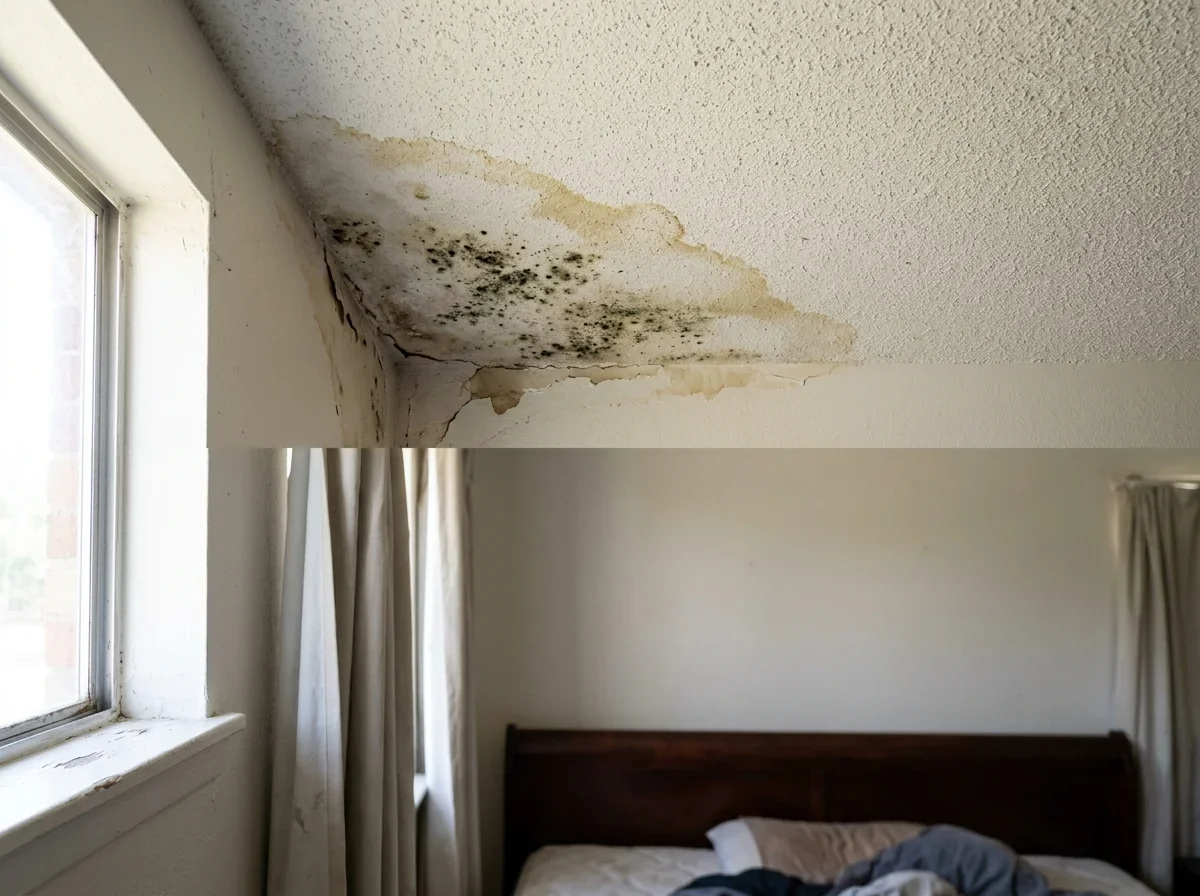
That standard focuses on conditions that materially affect the physical health or safety of an ordinary tenant. Read the exact wording on statutes.capitol.texas.gov and verify it against the current statute before you rely on it.
So the useful question usually isn't "Is this black mold?" It's "What caused the moisture, did the landlord know, and does the condition affect health or safety?"
When a Landlord Must Repair Mold and Moisture Problems
The repair duty attaches to a condition and its cause, not to the word "mold." A notice describing the source gives you a much stronger record than one that says only "mold in apartment."
Conditions That Can Trigger the Repair Duty
In Texas, mold usually traces back to water. Slab-on-grade construction puts supply and drain lines under the floor, so a hidden leak can run for months before it shows up as growth in a closet, on a baseboard or under flooring. Expansive clay soil shifts foundations and cracks plumbing, which is why a "fixed" leak can come back.
AC condensate line clogs and drain pan overflows are another common trigger. Roof leaks and storm intrusion round out the usual list.
The parts of the system
Common moisture sources behind rental mold
Slab plumbing
Supply and drain lines under the floor
Expansive clay soil
Shifts foundations and cracks pipes
AC condensate line
Clogs and drain pan overflows
Roof and storm intrusion
Signs worth naming in your notice include:
- Unexplained water bills
- Warm or damp spots on the floor
- A musty odor with no visible source
- A stained ceiling below an air handler or bathroom
Photograph the drain pan, the closet and the stain. If you want help spotting early indicators, see signs of mold in a home.
Statutory repair rights generally depend on you being current on rent, and a condition you caused may not qualify. Confirm both points in the statute.
What Counts as Uninhabitable
Texas doesn't use a fixed uninhabitability checklist or a mold measurement threshold. The framework is the health-or-safety standard above.
Nothing in the statute says mold, by itself, makes a unit legally uninhabitable or voids a lease.
Don't confuse the 25 contiguous square foot figure with a tenant-rights line. It's a TDLR licensing threshold for mold work, not a test for whether your landlord must act.[1]
How to Give Written Notice the Right Way
Send your request in writing and keep proof of when it was delivered. Check your lease first, since it may require a specific method. Then confirm in the statute what applies if the lease is silent.
A text or phone call leaves a weak record. So does a maintenance-portal entry with no screenshot. If a dispute ever lands in front of a judge, you want dates and delivery proof.
Include these items:
- Your unit address
- Where the mold and the leak are located
- The suspected moisture source (for example, "AC condensate line overflowing into the hall closet wall")
- Dates you noticed the problem and any earlier reports
- Photos
- A clear request for repair, plus a request for a written plan
Keep a dated log alongside the notice. Record conversations, inspections, repair attempts and any recurrences.
Checklist
What to put in your written notice
0 of 6 ticked
Tick them off as you go. Nothing is saved or sent.
Keep paying rent on time and report any worsening in writing too.
How Long a Landlord Has to Fix Mold
Texas sets a presumption of what counts as a reasonable time to repair. Under Property Code §92.056, it's tied to a number of days (commonly described as seven) and to conditions such as proper notice and your rent being current. Confirm the days and conditions in the current statute rather than trusting a summary.
Real timelines vary. Severity, contractor availability and parts all matter. After a hurricane or freeze, many units may need the same trades at once, and a landlord may raise that as a reason for delay.
Follow up in writing at set intervals so any delay is documented. If the period passes with no repair, remedies are tied to specific statutory steps, which may include a further notice before certain remedies attach. Verify those steps before acting.
Repair-and-Deduct and Other Tenant Remedies, With Their Limits
Remedies exist, but each has conditions. Acting too quickly can create a separate payment or eviction problem for you.
Repair-and-Deduct Limits
Repair-and-deduct lets a tenant, in qualifying cases, pay for a repair and subtract it from rent. It's governed by §92.0561, and the statute demands strict compliance. Notice, timing, cost limits and contractor requirements all matter, and substantial compliance may not be enough.
Mold adds a wrinkle. Remediation of 25 or more contiguous square feet in a residential property with 10 or more units must be done by a licensed remediator.[1][2] How that licensing rule interacts with repair-and-deduct isn't something to guess at.
Ask a lawyer before you hire anyone.
Other Remedies a Tenant May Have
The statute outlines other options at a high level, including lease termination, court orders and damages in qualifying situations. Don't assume confirmed mold automatically permits you to leave. For that path, read whether you can break a lease because of mold in Texas.
Why Mold Cleanup Is a Poor DIY Repair Project
TDLR generally exempts owners and lessees working on their own property from licensing, and visible mold under 25 contiguous square feet can generally be cleaned by unlicensed people.[1][3] DIY isn't illegal. But that exemption is about licensing, and it doesn't give you a repair-and-deduct right.
| Situation | Licensing rule |
|---|---|
| Visible mold under 25 contiguous square feet | Generally cleanable by unlicensed people |
| 25 or more contiguous square feet, property with 10 or more units | Licensed remediator required |
| Owner or lessee working on own property | Generally exempt from licensing |
Fixing a landlord's problem yourself carries risk: lease terms, liability for damage, no protocol or clearance, no certificate of mold remediation, and your own exposure. Wiping or painting over growth also leaves the moisture source in place. Compare options in DIY versus professional mold removal.
Retaliation and Landlord Entry Rules
Texas restricts a landlord from retaliating after a good-faith repair request. Section 92.331 and related provisions cover the protected acts and the penalties. Read them directly for current details.
Random inspections are a separate matter. Texas statute has no general entry-notice rule for landlords, so your lease usually controls. Verify against the Property Code.
In practice, read your lease's entry clause. Offer written access windows for repair visits, and keep a log of entry attempts. Pay rent on time and follow lease terms while requests are pending.
What TDLR Can and Cannot Do for Renters
TDLR is often mistaken for a housing enforcement agency. It isn't one.
What TDLR Does
The Texas Department of Licensing and Regulation licenses people and companies that inspect, test, clean and remove mold.[1] It takes complaints about licensees or unlicensed work, filed online within two years unless good cause is shown. For the process, see how to file a TDLR mold complaint.
If your landlord hires mold help, ask for these items:
- The TDLR license number, which you can check on the TDLR mold program page
- The Consumer Mold Information Sheet[3]
- The written protocol from the assessor
The assessor and remediator must be separate on one project. A certificate of mold remediation goes to the owner within 10 days of completion.
Timeline
Mold remediation paperwork on a TDLR-regulated job
Before work
License holders notify TDLR for remediation of 25 or more contiguous square feet
During the project
Assessor and remediator must be separate
Within 10 days of completion
Certificate of mold remediation goes to the owner
Because your landlord is the owner, ask for a copy, though the landlord isn't clearly required to hand it over. For remediation of 25 or more contiguous square feet, license holders notify TDLR in advance.[4][5] More detail is in Texas TDLR mold licensing rules.
What TDLR Does Not Do
TDLR does not inspect your home, order a landlord to remediate or enforce chapter 92 repair duties. For that, look to the Property Code process, your city or county code enforcement office, or legal aid.
Side by side
What TDLR does and does not do
TDLR does
- Licenses mold inspectors and remediators
- Takes complaints about licensees or unlicensed work
TDLR does not
- Inspect your home
- Order a landlord to remediate
- Enforce chapter 92 repair duties
Who to Call and What to Do First
Work in this order:
- Document the mold and its moisture source before any cleanup.
- Send written notice and keep proof of delivery.
- Wait the statutory period and follow up in writing.
- If the landlord disputes the problem, consider an independent TDLR-licensed assessor.
- Escalate to code enforcement, legal aid or a lawyer.
Check each office's official page for what it handles, since local response varies. TexasLawHelp.org and local legal aid are worth checking, and the Texas Attorney General's mold remediation page explains the certificate.
Step by step
What to do first
Document
Record the mold and its moisture source before any cleanup.
Send written notice
Keep proof of delivery.
Follow up
Wait the statutory period and follow up in writing.
Consider an assessor
If the landlord disputes the problem, use an independent TDLR-licensed assessor.
Escalate
Go to code enforcement, legal aid or a lawyer.
A rental property mold inspection or mold testing in Texas can give you independent documentation. A licensed assessor's findings carry more weight than a store kit. Still, your landlord may not accept the results, and testing alone doesn't trigger any statutory remedy.
If you must leave during remediation, get dates, rent treatment, relocation costs and reentry conditions in writing.
Quick answers
Does Texas have a mold law for tenants?
No. Texas has no statute that sets a landlord's duties for mold prevention or cleanup. Mold is handled through the general repair duties in Property Code chapter 92.
Does TDLR enforce landlord repair duties?
No. TDLR licenses mold professionals and takes complaints about licensees or unlicensed work. It does not inspect your home or enforce chapter 92.
Is the 25 square foot figure a tenant-rights threshold?
No. It is a TDLR licensing threshold for mold work, not a test for whether your landlord must act.
- Texas Department of Licensing and Regulation. "Mold Assessors and Remediators FAQs." https://www.tdlr.texas.gov/mld/mldfaq.htm. Accessed October 17, 2026.
- Texas Department of Licensing and Regulation. "Consumer Protection – Mold." https://www.tdlr.texas.gov/media/pdf/Consumer%20Protection%20-%20mold.pdf. Accessed October 17, 2026.
- Texas Department of Licensing and Regulation. "Consumer Mold Information Sheet." https://www.tdlr.texas.gov/mld/pdf/cmis.pdf. Accessed October 17, 2026.
- Texas Department of Licensing and Regulation. "Mold Assessors & Remediators At a Glance." https://www.tdlr.texas.gov/media/pdf/mold-assessors-and-remediators-at-a-glance.pdf. Accessed October 17, 2026.
- Texas Department of Licensing and Regulation. "Mold Remediation Notifications." https://www.tdlr.texas.gov/mld/mldnotifications.htm. Accessed October 17, 2026.