What a Musty Smell Usually Means
A musty smell usually means damp materials or microbial growth somewhere in the house. Both the EPA and TDLR treat musty odors as a prompt to look for mold and moisture, even when nothing is visible.[1][2]
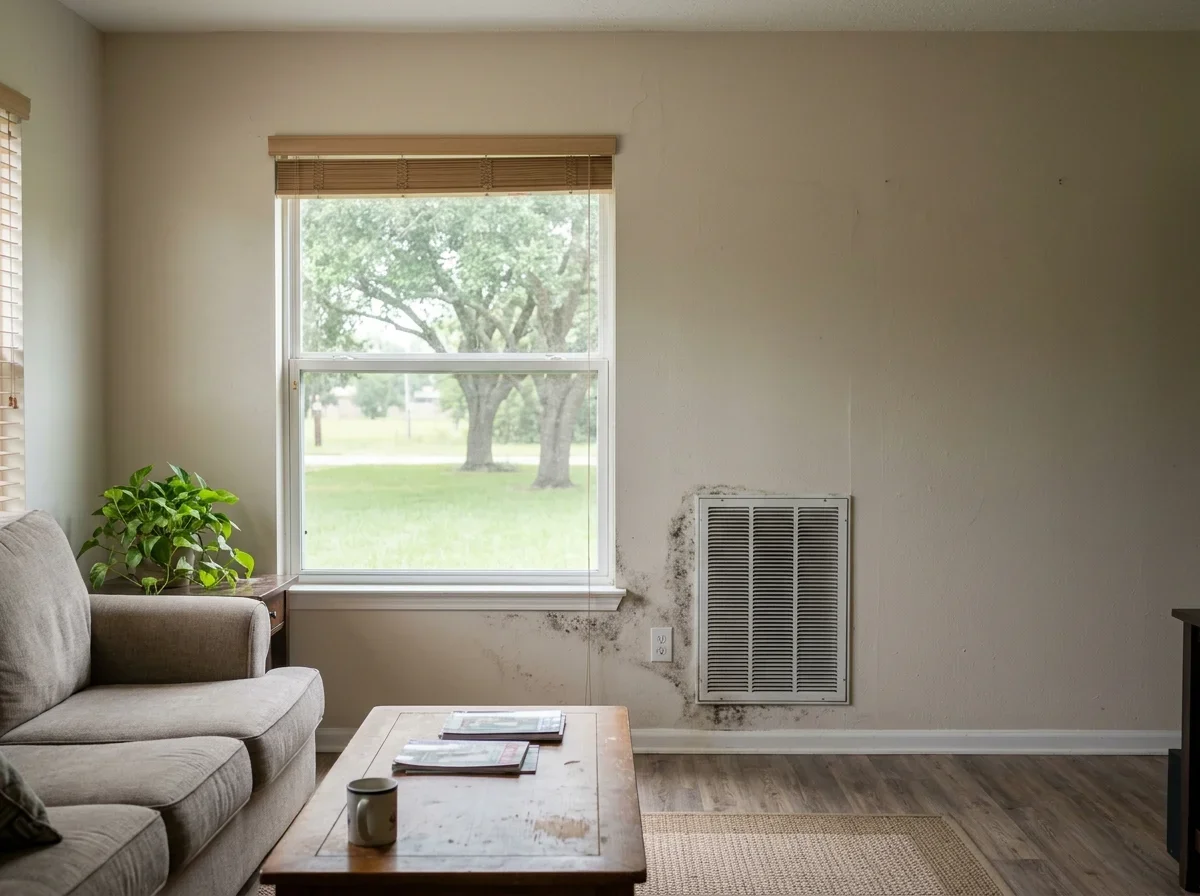
Not every odor is musty. The descriptor tells you where to start:
| Smell | Likely cause | First move |
|---|---|---|
| Stale | Closed-up house after travel, no air movement | Air out, run the AC, recheck in a day |
| Musty | Damp materials, microbial growth, humidity | Measure humidity, check the AC and leak spots |
| Sour | Damp fabric, a dishcloth, a drain, a fridge drip pan | Check the simple things first |
If it peaks when the AC starts, go to the AC section. If it comes and goes, think wall-cavity moisture or humidity swings.
Why Texas Homes Smell Musty
Texas gives moisture a lot of help. Long cooling seasons, humid air and slab foundations all work against a dry house.
Humidity and the Long AC Season
Along the Gulf Coast and in East Texas, outdoor humidity pushes indoor moisture up. An oversized AC makes it worse. It cools the air fast, shuts off before pulling much moisture out, and leaves the house cool but clammy.
Summer adds another layer. Cold AC surfaces meet humid air and produce condensation, which is why many homes only smell musty from May through October.
Buy a cheap hygrometer and check several rooms. The EPA recommends keeping indoor relative humidity below 60%, ideally between 30% and 50%.[4]
30% to 50%
ideal indoor relative humidity, and never above 60%
Slab Foundations and Closed-Up Houses
Slab homes have no crawlspace to vent, so a damp slab edge or an under-slab plumbing leak can go unnoticed for months.
A house shut for a week smells stale, not musty. Air it out and run the AC.
Check the AC System First
Start here because it is the easiest source to check. The EPA notes that moisture collects in air-handling systems through poor condensate-pan drainage and high humidity in ducts.[2]
OSHA likewise advises keeping HVAC drip pans clean, draining and unobstructed.[3]
Condensate Drain and Drain Pan
When the air handler sits in an attic or closet, a clogged condensate line or rusted pan can go unseen for a long time. Look for standing water, rust, stained insulation or a wet secondary pan.
The parts of the system
Where moisture collects in an AC system
Air handler
Often in an attic or closet
Drain pan
Look for standing water or rust
Condensate line
A clog backs water up
Return plenum
Ducts
Humid air can sweat inside
Air Handler, Return Plenum and Ducts
Stop at the visible parts. Don't open ducts or sealed cabinets.
The EPA advises against running a suspected contaminated HVAC system because it can spread contamination.[4] If the smell clearly rides the airflow, read about mold in your air conditioner, then call an HVAC professional for coil, plenum or duct cleaning.
Hidden Leaks in Walls, Floors and Under the Slab
TDLR lists pipe leaks, roof leaks, sewage backups and overflowing fixtures as common moisture sources behind mold.[1]
Plumbing and Slab Leak Clues
Watch for an unexplained jump in the water bill, the sound of running water with everything off, warm spots on the floor and damp baseboards. Then run a meter check:
- Turn off every fixture and appliance, including the ice maker.
- Read the water meter and note the leak indicator.
- Wait 30 to 60 minutes without using water.
- Check whether the reading or indicator moved.
Movement means water is going somewhere. Call a plumber or leak detection company.
How it works
The water meter check
Step 1: Turn off every fixture and appliance
Include the ice maker
Step 2: Read the meter and note the leak indicator
Step 3: Wait 30 to 60 minutes without using water
Step 4: Check whether the reading or indicator moved
Bathrooms, Kitchens and Water Heater Closets
A smell strongest near one wall, a bathroom or under a sink points to a local source. Check cabinets, supply lines and the water heater closet.
In an unused bathroom, run water to refill dried-out traps, since a dry trap can let sewer gas through. For smells with no visible cause, see where hidden mold tends to grow.
Attic, Crawlspace and Roof Sources
Attic air gets pulled into living space through the air handler, can lights and attic hatches. After a roof leak or with poor ventilation, that air carries the smell with it.
Older pier-and-beam homes add crawlspaces. Poor ventilation, bare soil and plumbing drips can all feed a musty smell that rises through the floor.
From the attic hatch, look for dark stains on the decking, wet or compressed insulation, and ducts that sweat. Stop at the hatch. Crawling through insulation risks falls, heat stress and disturbing contaminated material.
Pro tip
Look from the attic hatch with a bright flashlight and take photos of any staining. They help a professional without you stepping onto the insulation.
If you see staining, read about signs of mold in a Texas home and bring in a professional.
Dryer Vents, Carpet, Bedding and Other Everyday Sources
Plenty of musty smells have boring causes. Check these before you start opening walls.
Dryer Vent and Laundry Area
A lint-clogged or disconnected dryer vent pushes warm, moist air into walls, closets or the attic. The EPA says clothes dryers should vent outdoors where possible.[4]
Carpet, Pad and Under the Bed
Carpet and pad that stayed damp after a spill, pet accident or old leak smell stronger on humid days. See mold in carpet for details.
A musty smell under the bed usually means limited airflow. Mattresses on the floor or frames pushed against cold exterior walls trap moisture.
Then rule out the simple stuff: damp towels, a dishcloth, a slow drain, a trash can, the refrigerator drip pan.
When a Musty Smell Means Mold and When Testing Makes Sense
The odds go up with a known water event, visible staining, or a smell that fades when you're away from home. Mold versus mildew is a separate question, but either one points back to moisture.
Smell With No Visible Mold
A house can smell musty with no visible mold. Damp materials, bacteria or a dirty drain can all produce the odor. An air test alone won't tell you where the source is.
Find the moisture, fix it and dry the area first.
When to Call an Assessor
Call one when the smell lingers after the source is fixed and dried, when staining follows a known water event, or when you need paperwork.
Texas rules are specific. Mold assessment requires a TDLR-licensed assessor, and the same company can't assess and remediate the same project.[1]
Visible mold under 25 contiguous square feet may be handled by an unlicensed person, but then no certificate of mold remediation can be issued.[1] Ask for the license number and type, and check the Texas mold licensing rules. If you want a professional look, a licensed mold inspection is the next step.
Getting Rid of the Smell for Good
Fix the source first, then dry. Wet materials should be dried within 24 to 48 hours to help prevent mold growth.[4] Use airflow, a dehumidifier and AC repair as needed.
Deodorizers and air fresheners only mask the odor, and the smell returns if the moisture stays.
Day to day, keep humidity in the EPA's 30% to 50% range, run bath fans, and keep the AC serviced with a clear drain line.[4]
Once the area is dry and any growth is dealt with, mold odor removal can handle what's left.
Quick answers
How do you get musty smells out of your house?
Find and fix the moisture source, then dry the area with airflow, a dehumidifier or AC repair. Deodorizers only mask the smell.
Why do I randomly smell a musty smell?
Intermittent smells usually follow humidity swings, AC cycles, hot water use or the dryer running. Note when it appears: after rain, after showers, when the AC starts.
What causes a musty smell under my bed?
Limited airflow. Mattresses on the floor or frames against cold exterior walls trap moisture. Pull the bed away from the wall, lift the mattress and check for dampness or staining.
What could be causing my room to smell sour?
Sour smells tend to come from damp fabric, a dishcloth, a slow drain or a refrigerator drip pan. Check those before suspecting mold.
Can a house smell musty without any mold?
Yes. Damp materials, bacteria, a dirty drain or high humidity can all produce a musty smell with no visible mold.
Why does my house smell musty only in summer?
Cold AC surfaces meet humid air and produce condensation, and an oversized AC can short-cycle without removing much moisture. Check the drain pan, condensate line and filter, then measure humidity in several rooms.
- Texas Department of Licensing and Regulation. "Consumer Protection - Mold." https://www.tdlr.texas.gov/media/pdf/Consumer%20Protection%20-%20mold.pdf. Accessed October 21, 2026.
- U.S. Environmental Protection Agency. "Visible Mold." https://www.epa.gov/mold/mold-course-chapter-3. Accessed October 21, 2026.
- Occupational Safety and Health Administration. "A Brief Guide to Mold in the Workplace." https://www.osha.gov/publications/shib101003. Accessed October 21, 2026.
- U.S. Environmental Protection Agency. "A Brief Guide to Mold, Moisture, and Your Home." https://www.epa.gov/sites/default/files/2016-10/documents/moldguide12.pdf. Accessed October 21, 2026.